100 more books
Here is the cleaned and organised text, with book titles and authors in bold, grouped by genre with section headings.
Historical & Literary Fiction
- The Count of Monte Cristo by Alexandre Dumas — A man gets thrown in prison for a crime he didn't commit, escapes, gets rich, and spends the rest of the book destroying everyone who ruined his life.
- The Three Musketeers by Alexandre Dumas — It follows a young man who arrives in Paris with nothing and immediately falls in with the most entertaining group of friends in all of literature.
- Shogun by James Clavell — An English sailor gets shipwrecked in feudal Japan and the book pulls you so deep into that world that you forget you ever lived in a different one.
- Lonesome Dove by Larry McMurtry — It is a 900-page Western epic about two old cowboys and it is so alive and so full of characters you love that finishing it feels like losing actual friends.
- The Pillars of the Earth by Ken Follett — It follows the building of a cathedral in medieval England across decades and generations and it is one of the most compulsively readable historical novels ever written.
- All the Light We Cannot See by Anthony Doerr — It follows a blind French girl and a German soldier during World War II and it is written with such care and beauty that it pulls you forward effortlessly through 500 pages.
- The Shadow of the Wind by Carlos Ruiz Zafón — It is set in post-war Barcelona and follows a boy who finds a mysterious novel whose author seems to have been erased from history and it is one of the most atmospheric and addictive books ever written.
- The Name of the Wind by Patrick Rothfuss — It follows the most legendary figure in the world telling his own story and it is written with such beauty and momentum that readers have been demanding the final volume for over a decade.
- Wolf Hall by Hilary Mantel — It follows Thomas Cromwell through the court of Henry VIII, and it is written in such a distinctive and immediate present tense that it makes the Tudor court feel as alive as the room you are sitting in.
- Bring Up the Bodies by Hilary Mantel — It continues Cromwell's story through the fall of Anne Boleyn, and it won the Booker Prize and deserved every word of praise it received.
- The Name of the Rose by Umberto Eco — It is a medieval murder mystery set in a monastery with a labyrinthine library, and it is simultaneously a gripping thriller and a serious philosophical novel about knowledge, power, and forbidden texts.
- Exodus by Leon Uris — It tells the story of the founding of Israel through a cast of characters so vivid and a narrative so propulsive that it converted more people to caring about that history than any non-fiction account ever had.
- The Kite Runner by Khaled Hosseini — It follows two boys in Afghanistan whose friendship is destroyed by a single act of cowardice. And it is one of the most emotionally overwhelming novels of the last 20 years.
- A Thousand Splendid Suns by Khaled Hosseini — It follows two Afghan women across three decades of war and oppression. And it is one of the most devastating and ultimately redemptive novels ever written about female endurance.
- Pachinko by Min Jin Lee — It follows a Korean family across four generations in Japan. And it is one of the most devastating examinations of identity, sacrifice, and inherited shame in contemporary fiction.
- The Bronze Bow by Elizabeth George Speare — It follows a young Jewish rebel in Roman-occupied Palestine. And it is one of the most emotionally honest and historically alive young adult novels ever written.
- Gates of Fire by Steven Pressfield — It tells the story of the 300 Spartans at Thermopylae from the perspective of the one survivor. And it is the most visceral and morally serious military historical novel ever written.
Thrillers, Crime & Mystery
- Gone Girl by Gillian Flynn — It opens with a missing wife and a suspicious husband and it twists so hard that you will finish it in one sitting whether you plan to or not.
- The Girl with the Dragon Tattoo by Stieg Larsson — It is a Swedish crime novel about a disgraced journalist and a brilliant hacker that starts slow and then becomes completely impossible to put down.
- The Silence of the Lambs by Thomas Harris — It follows a young FBI trainee who must interview the most brilliant and dangerous killer alive to catch another one and it is the most perfectly constructed thriller ever written.
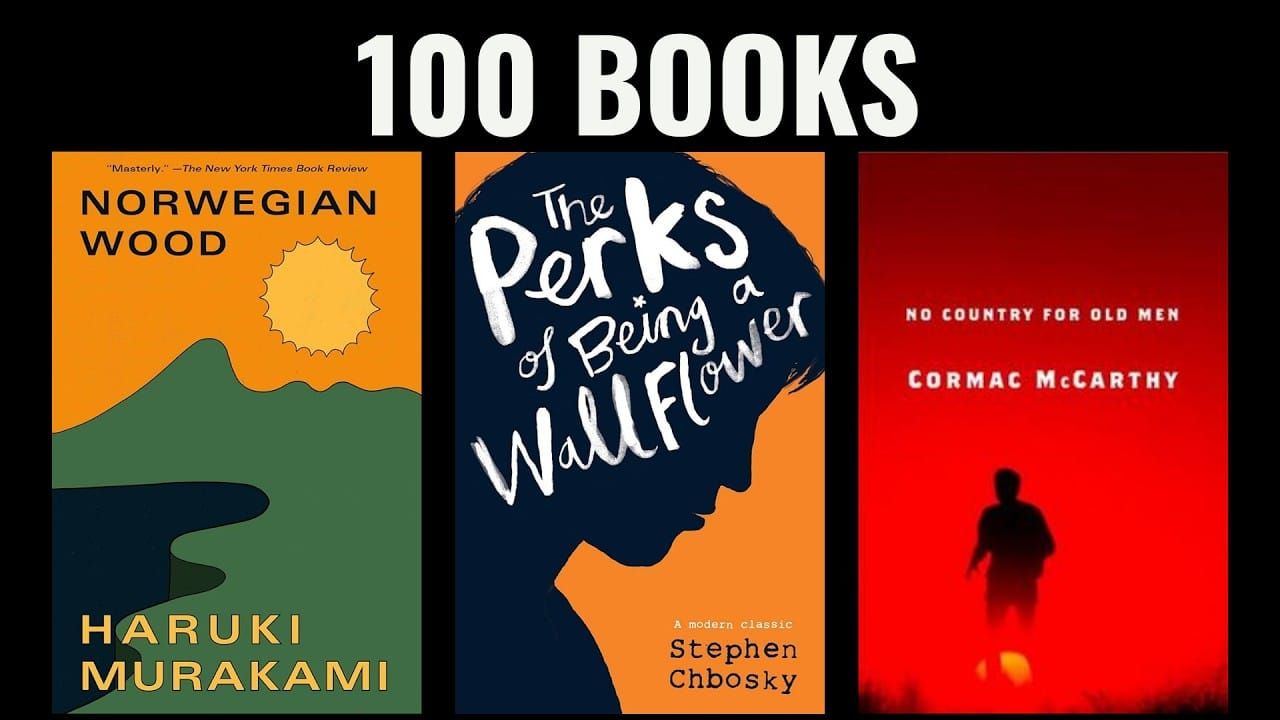
- No Country for Old Men by Cormac McCarthy — A hunter finds a bag of drug money in the desert and what follows is one of the most relentless and philosophically serious chase novels ever written.
- The Firm by John Grisham — A young lawyer takes a dream job at a perfect law firm and slowly realises the firm has a secret that will get him killed if he stays and killed if he leaves.
- The Da Vinci Code by Dan Brown — It has one of the most effective first chapters ever written for pure narrative momentum and whatever its literary flaws, it does the one thing a thriller must do. It makes you turn the page.
- Gone by Michael Grant — Every adult in the world suddenly disappears and the children left behind must survive without them and the first chapter will make you forget you had anything else to do.
- The Girl on the Train by Paula Hawkins — It follows a woman who watches the same couple from a commuter train every morning until the day she witnesses something she was not supposed to see.
- The Bourne Identity by Robert Ludlum — A man is pulled from the ocean with no memory and multiple bullet wounds and within 20 pages you are completely committed to finding out who he is.
- I Am Pilgrim by Terry Hayes — It is a debut thriller about a retired intelligence operative pulled back in to stop a bioterrorist attack and it is one of the most technically accomplished and addictive espionage novels of the last decade.
- The Spy Who Came in from the Cold by John le Carré — It is the greatest spy novel ever written and it works as a gripping thriller and a serious moral examination of what institutions ask people to sacrifice in the name of ideology.
- Red Dragon by Thomas Harris — It is the first Hannibal Lecter novel and it introduces one of the most terrifying villains in fiction through one of the most meticulously constructed crime narratives ever written.
- In Cold Blood by Truman Capote — It is the book that invented literary true crime and it follows the murder of a Kansas family and the two men who killed them with such depth and moral seriousness that it permanently changed journalism.
- The Big Sleep by Raymond Chandler — It follows Philip Marlowe through the corrupt underworld of 1930s Los Angeles and Chandler's prose is so sharp and so alive that you read it for the sentences as much as the plot.
- And Then There Were None by Agatha Christie — 10 strangers are invited to an island and start dying one by one and it is the most perfectly constructed mystery ever written and completely impossible to figure out before the end.
- The Secret History by Donna Tartt — It tells you on the first page that a murder happened and then spends 500 pages explaining why. And it is one of the most seductive and beautifully written crime novels in American literature.
- Sharp Objects by Gillian Flynn — It follows a journalist returning to her hometown to cover the murders of two young girls and it is one of the most psychologically intense and genuinely disturbing crime novels ever written.
- Mystic River by Dennis Lehane — It follows three childhood friends whose lives converge around a murder decades after a shared trauma and it is one of the most emotionally serious crime novels ever written.
- The Murders in the Rue Morgue by Edgar Allan Poe — It is the short story that invented the detective fiction genre and reading it knowing that fact makes it one of the most historically significant and still enjoyable reading experiences available.
- Tinker Tailor Soldier Spy by John le Carré — It is a slow, intricate, devastating spy novel about hunting a mole inside British intelligence and it rewards patient reading with one of the most complete and melancholy portraits of institutional betrayal ever written.
- The Girl Who Played with Fire by Stieg Larsson — It is the second Lisbeth Salander novel and it deepens everything the first one built while moving at a pace that makes it almost physically impossible to put down.
- Devil in the White City by Erik Larson — It tells two true stories simultaneously: the building of the 1893 Chicago World's Fair and a serial killer operating in its shadow and it reads with the momentum of a thriller despite being entirely factual.
Fantasy & Science Fiction
- The Lord of the Rings by J.R.R. Tolkien — It is the greatest world ever built in fiction and the moment you step into it, you will understand why millions of people have read it multiple times and still go back.
- Dune by Frank Herbert — It is one of the greatest novels ever written in any genre and its world is so complete and so complex that the first read is just orientation for everything that follows.
- The Way of Kings by Brandon Sanderson — It opens with one of the finest first chapters in fantasy fiction and builds a world of such depth and ambition that by the end you will immediately start the next volume.
- The Lies of Locke Lamora by Scott Lynch — It is a heist story set in a fantasy city, and it is so funny, so clever, and so emotionally devastating that it converts more non-fantasy readers than almost any other book in the genre.
- A Wizard of Earthsea by Ursula K. Le Guin — It is short, perfect, and written with such clarity and depth that it works on a 9-year-old and a 40-year-old in completely different ways simultaneously.
- The Night Circus by Erin Morgenstern — It describes a black and white circus that only appears at night with such sensory precision that you feel cold and smell popcorn while reading it.
- The Final Empire by Brandon Sanderson — It follows a teenage girl from the ash-covered slums recruited into a crew planning to overthrow an immortal god emperor, and it has one of the most satisfying magic systems ever conceived.
- American Gods by Neil Gaiman — It follows an ex-convict drawn into a war between old gods and new gods across the American landscape, and it is melancholy, strange, and completely impossible to forget.
- The Assassin's Apprentice by Robin Hobb — It follows a royal bastard trained as an assassin with such psychological depth and emotional honesty that it reads more like literary fiction than fantasy.
- The First Law by Joe Abercrombie — It starts as a standard fantasy quest and then slowly, methodically dismantles every expectation you built in the first 100 pages and replaces them with something far more interesting.
- Ender's Game by Orson Scott Card — It follows a child military genius being trained to fight an alien war and it is one of the most propulsive and emotionally devastating science fiction novels ever written.
- The Hitchhiker's Guide to the Galaxy by Douglas Adams — It is one of the genuinely funniest books ever written and it makes its philosophical points about existence so light that you absorb them before you realise what happened.
- 1984 by George Orwell — It imagines a totalitarian society with such precision and such dread that it permanently installs a set of concepts in your brain that you will use for the rest of your life.
- Brave New World by Aldous Huxley — It imagines a future where people are controlled not through pain but through pleasure and comfort and it is more relevant to the present moment than 1984 and far less discussed.
- The Handmaid's Tale by Margaret Atwood — It imagines a society built on the control of women's bodies, and it is written with such precision and dread that it grows more rather than less disturbing on every reread.
- Fahrenheit 451 by Ray Bradbury — It imagines a society where books are burned, and it is written with such lyrical intensity that it functions simultaneously as a warning and as a demonstration of everything it is defending.
- Flowers for Algernon by Daniel Keyes — A man with low intelligence undergoes an experiment that makes him a genius, and the journal entries he writes as his intelligence rises and then falls are one of the most heartbreaking documents in fiction.
- The Time Machine by H.G. Wells — It is a short propulsive novella that invented the concept of time travel as a narrative device, and it still raises questions about class, evolution, and the future of humanity that nobody has fully answered.
- Do Androids Dream of Electric Sheep? by Philip K. Dick — It asks what separates a human being from a perfect mechanical copy of one, and it does so through a bounty hunter tracking rogue androids with an urgency and strangeness that never lets up.
- Childhood's End by Arthur C. Clarke — It imagines the arrival of alien beings who solve every human problem, and then explains their true purpose, and the final third of this novel contains some of the most genuinely awe-inspiring ideas in all of science fiction.
Survival, Adventure & True Stories
- Into the Wild by Jon Krakauer — It is the true story of a young man who gave away everything he owned and walked into the Alaskan wilderness alone, and it will make you question every safe choice you have ever made.
- Into Thin Air by Jon Krakauer — It is a first-hand account of the deadliest disaster in Everest history, and it is so visceral and so immediate that you feel the cold and the altitude through the pages.
- Papillon by Henri Charrière — It is the true story of a man sentenced to a brutal penal colony who refused to stop escaping, and it is one of the most relentless and extraordinary human survival stories ever written.
- The Revenant by Michael Punke — A frontiersman is left for dead after a bear attack and crawls hundreds of miles through the wilderness for revenge, and the book is every bit as relentless as the journey it described.
- Unbroken by Laura Hillenbrand — It follows an Olympic athlete who survives a plane crash over the Pacific, drifts for 47 days on a raft, and then spends years in Japanese POW camps. And it is one of the most extraordinary true stories ever told.
- The Martian by Andy Weir — An astronaut is left for dead on Mars and has to science his way to survival using nothing but his own intelligence. And the voice of the narrator is so funny and alive that the danger feels real.
- Life of Pi by Yann Martel — A 16-year-old boy survives a shipwreck and spends 227 days on a lifeboat with a Bengal tiger. And the novel uses that premise to ask questions about truth, story, and what we need to believe to survive.
- Endurance by Alfred Lansing — It is the true story of Ernest Shackleton's Antarctic expedition and how he kept all 28 of his men alive after their ship was crushed by ice. And it is one of the greatest leadership and survival stories in human history.
- The Sea Wolf by Jack London — It follows a literary critic captured by a brutal sea captain and the conflict between them drives one of the most gripping and philosophically serious adventure novels ever written.
- Robinson Crusoe by Daniel Defoe — It is the original survival story. A man alone on an island building a life from nothing. And it is still completely compelling nearly 300 years after it was written.
Memoirs & Biography
- The Glass Castle by Jeannette Walls — It follows a woman who grew up with nomadic, eccentric, completely irresponsible parents. And it is one of the most compulsively readable and emotionally complex memoirs ever written.
- Educated by Tara Westover — It follows a woman who grew up in a survivalist family in Idaho with no formal education and taught herself into Cambridge and Harvard. And it reads with the momentum of a thriller.
- A Long Way Gone by Ishmael Beah — It is a memoir by a former child soldier that is so vivid and so honest about what was done to him and what he did that it permanently changes your understanding of what children are capable of surviving.
- I Know Why the Caged Bird Sings by Maya Angelou — It is one of the most beautifully written memoirs ever produced. And it handles trauma, race, and the discovery of a voice with a grace that makes it impossible to put down.
- The Diary of a Young Girl by Anne Frank — It is the most widely read diary in human history. And it is still the most immediate and devastating document ever produced about what it means to be young, alive, and in danger.
- Night by Elie Wiesel — It is a short memoir about surviving Auschwitz written with such restraint and such honesty that it lands harder than any book 10 times its length.
- The Color of Water by James McBride — It alternates between a black man's memoir and the story of his white Jewish mother, and it is one of the warmest and most genuinely moving books about identity and family ever written.
- Surely You're Joking, Mr. Feynman! by Richard Feynman — It follows one of the greatest scientific minds of the 20th century through a life of such curiosity, mischief, and joy that it makes you want to be more alive than you currently are.
Coming-of-Age & Young Adult
- The Catcher in the Rye by J.D. Salinger — It follows a 16-year-old boy wandering New York City after being expelled from school, and it captures the specific texture of adolescent alienation so precisely that it still makes teenagers feel understood.
- A Separate Peace by John Knowles — It follows two boys at a New England boarding school during World War II, and it is the most precise and honest novel ever written about envy, friendship, and the specific cruelty of adolescence.
- The Perks of Being a Wallflower by Stephen Chbosky — It is a short novel told in letters by a shy, intelligent teenager navigating high school and trauma, and it has quietly changed the lives of more young readers than almost any other book of the last 30 years.
- To Kill a Mockingbird by Harper Lee — It is one of the most readable great novels ever written, and it handles race, justice, and moral courage through the eyes of a child with a power that never diminishes.
- The Outsiders by S.E. Hinton — It was written by a 17-year-old girl, and it captures the loyalty, violence, and tenderness of young male friendship with an accuracy that most adult writers never achieve.
- Lord of the Flies by William Golding — It follows boys stranded on an island, dismantles every romantic idea about childhood innocence and human nature with cold and methodical precision.
- A Tree Grows in Brooklyn by Betty Smith — It follows a poor girl growing up in early 20th century Brooklyn with such warmth and specificity that it makes the small details of an ordinary life feel completely extraordinary.
- The Alchemist by Paulo Coelho — It is a simple fable about following what you actually want from life, and it has quietly redirected the lives of millions of young readers who found it at exactly the right moment.
- Norwegian Wood by Haruki Murakami — It is a quiet, melancholy coming-of-age novel about love, loss, and mental illness set in 1960s Tokyo, and it is the book that turned the entire Western world onto Murakami.
- The Bell Jar by Sylvia Plath — It captures the internal collapse of a young woman under the weight of expectation with such precision and such voice that it still feels like a confession rather than a novel.
Non-Fiction: Psychology, Science & Society
- Thinking, Fast and Slow by Daniel Kahneman — It explains the two systems running your brain, and once you understand them, you will never be able to think about your own thinking in the same way again.
- The Tipping Point by Malcolm Gladwell — It explains how ideas, products, and behaviours spread through society, and it is written with such energy and such a parade of fascinating examples that it is essentially impossible to stop reading.
- Outliers by Malcolm Gladwell — It dismantles the myth of individual genius by revealing the hidden factors behind extraordinary success, and the examples it uses are so well chosen that every chapter feels like a revelation.
- Freakonomics by Steven Levitt and Stephen Dubner — It applies economic thinking to questions nobody thought to ask economically, and every chapter forces you to completely reconsider something you thought you already understood.
- The Black Swan by Nassim Taleb — It argues that the biggest events in history are always the ones nobody predicted, and that human beings are systematically blind to this fact in ways that cost us dearly.
- Blink by Malcolm Gladwell — It examines the power of rapid cognition and the cases where trusting your instincts is the right call, and the cases where it will destroy you, and it does so through examples so vivid they stick permanently.
- The Power of Habit by Charles Duhigg — It explains how habits form and how they can be changed, and it is written with enough narrative drive and enough practical application that it functions as both a science book and a self-improvement manual.
- Man's Search for Meaning by Viktor Frankl — A man who survived four Nazi concentration camps wrote this book about the one thing that kept people alive, and it will fundamentally change what you think is necessary for a human life.