219 - Briefly in Belfast
Briefly back in Belfast for a school reunion. Exploring Narnia's Prince Caspian, powerful interviews with James Patrick and Dr Heather Lynn, AI-powered Linux server hardening, hardware attestation risks and Jason's untold story.


🇪🇸 🇬🇧 As this newsletter goes out, V and I are spending the weekend in Holywood. Friday evening, I'll be attending my old school re-union dinner with a couple of dozen survivors from my class and over a hundred others - it should be a great evening - maybe see you there!
During the week in Palma I had a couple of fun Bitcoiner meetups and we are doing our best to make the most of life on the island with V's injured toe. The weather was cooler and a bit cloudy but generally very pleasant. Spring is a good time to be in the Mediterranean. We have also been looking at extending our travel plans beyond October - that is work in progress.
Over the weekend we will be in and around Holywood - so if you missed me on Friday and you are nearby, do say Hello and let's meet!
Book of the week
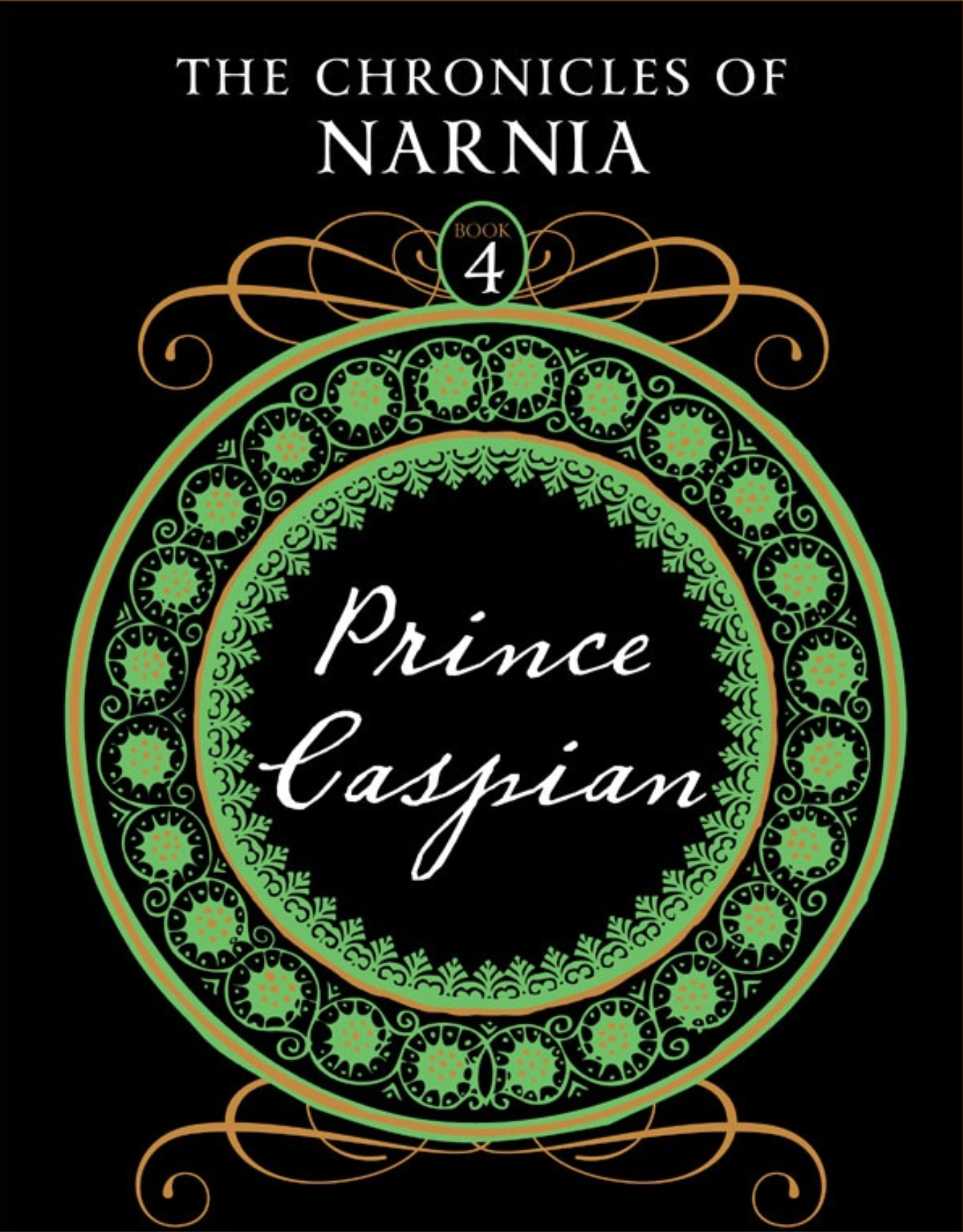
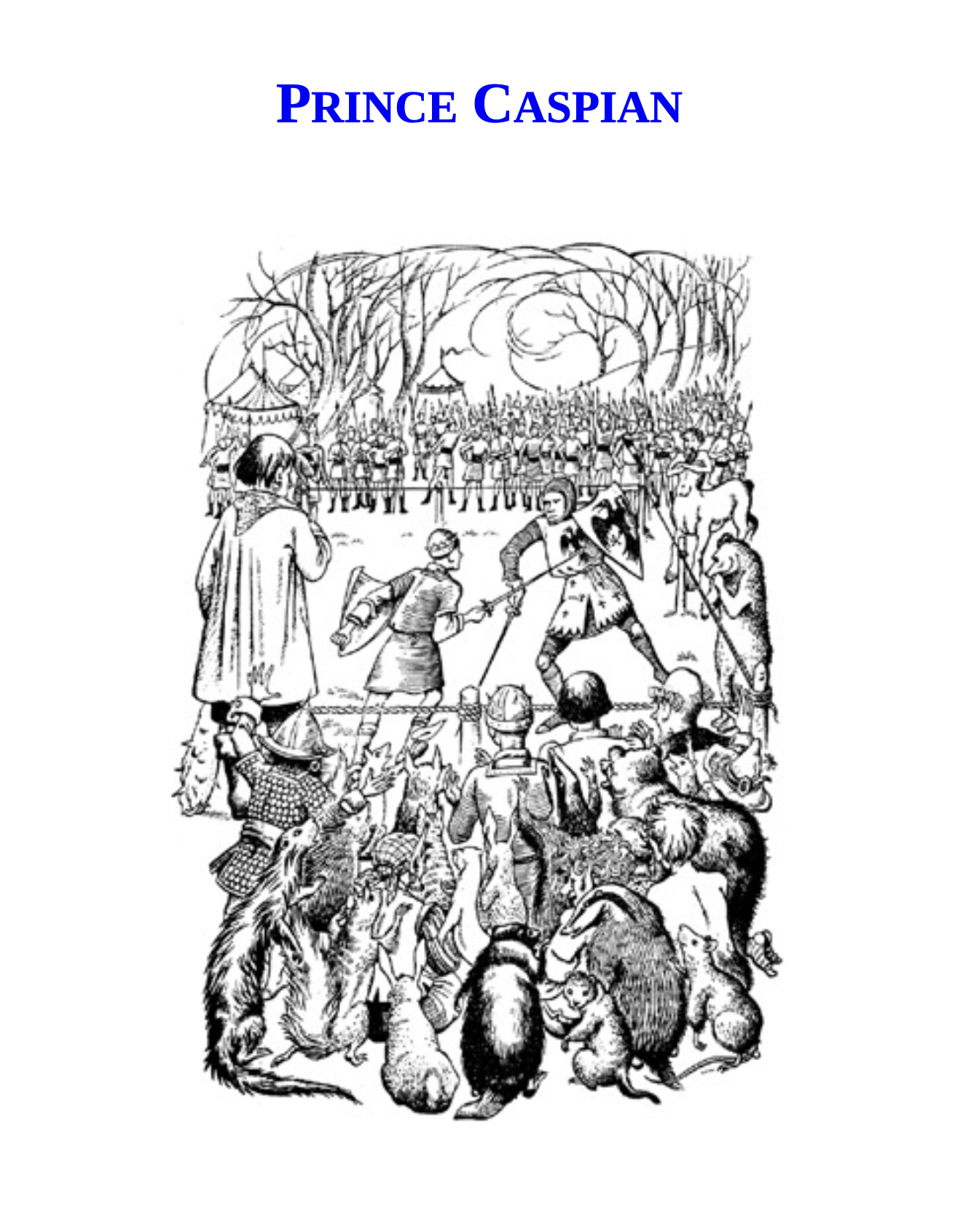
I have been continuing my read of the Chronicles of Narnia. Prince Caspian is the second published novel in the series and the fourth chronologically. It follows the four Pevensie children - Peter, Susan, Edmund, and Lucy - as they return to Narnia about a year after their first adventure, only to discover that 1,300 years have passed in the magical land.
It is a good read and rather enjoyable. For me the books after this in the series (chronologically) are not as good as the earlier ones. In the later books you get new characters introduced and in the final book there is a climax that you may well have seen coming. However, this is a good one - details below.
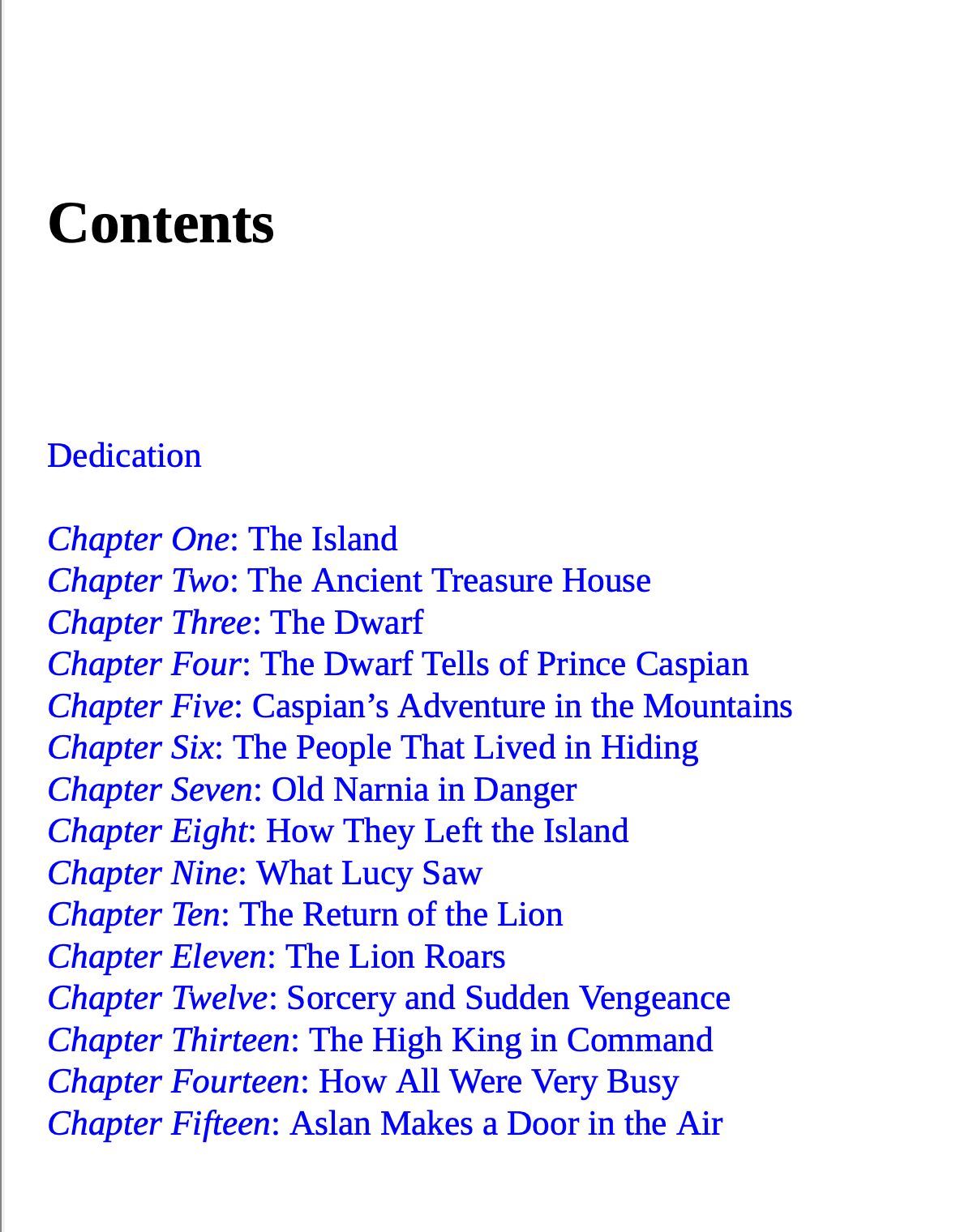
For an overview of the whole story and a chapter by chapter summary click below.
 Roger Price
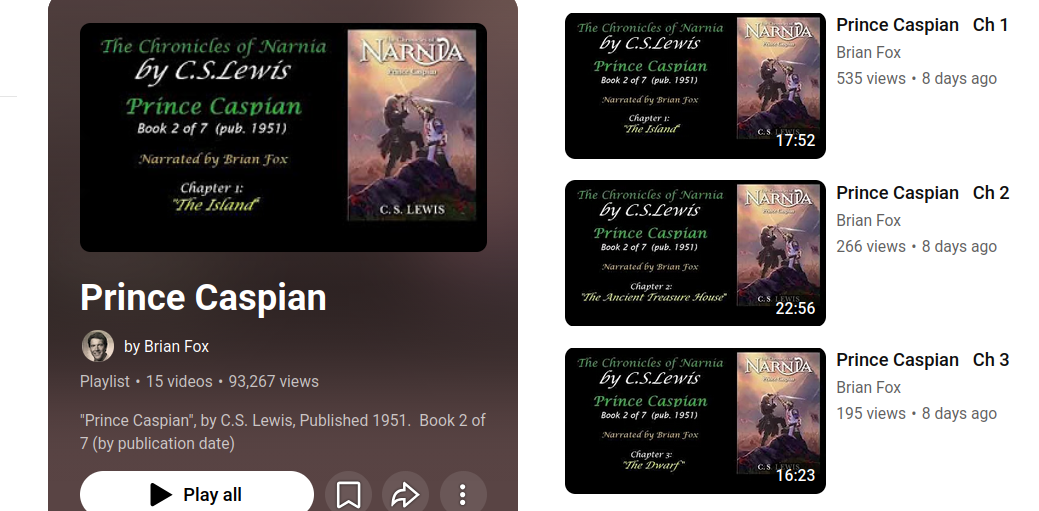
For those of you who prefer audiobooks I have to recommend this reading of the entire series. It is available free on YouTube and very well done.
Interviews of the week
I have a couple of interviews that are Must Watch this week. First up is Hrvoje discussing with filmmaker, Patrick James. After that Greg's Higherside Chat with Dr Heather Lynn discusses many related topics from a completely different perspective - one that you have surely never considered. Remember the benefits of Ethical Skepticism.
Roger Price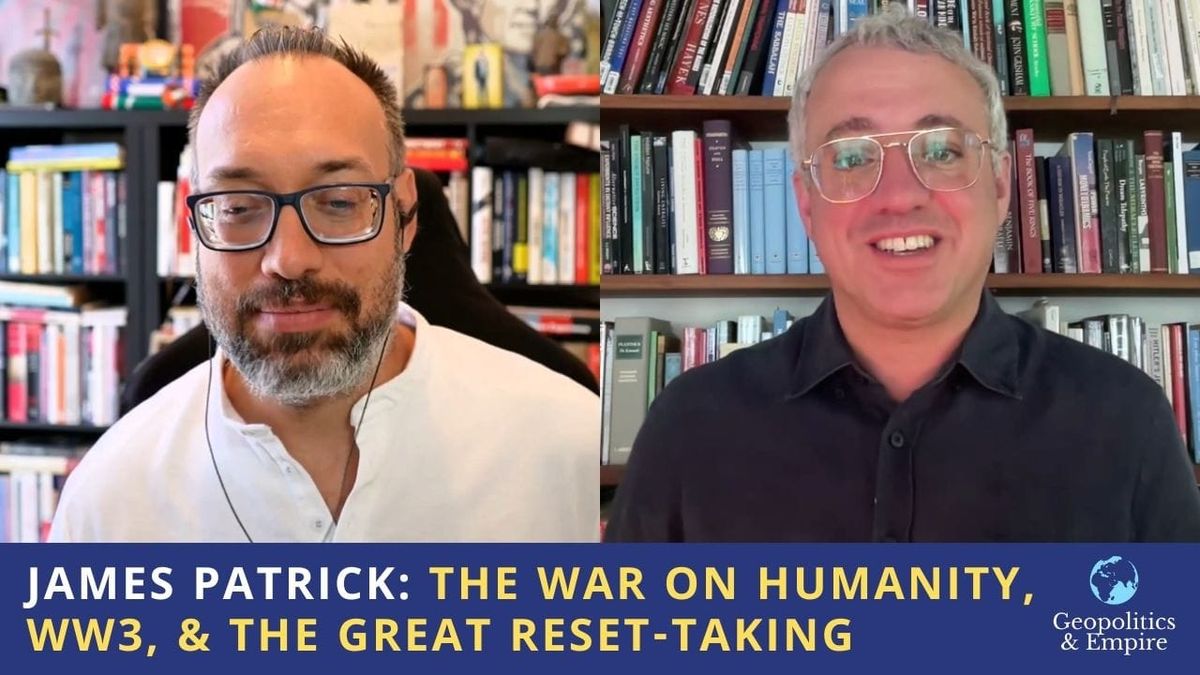
Click for summary and the full interview
In the article above I have included links to all James' movies that you should watch - do so and do and share them and show him some support.
Next up Dr. Heather Lynn, author and economic historian explains how elite "broker classes" have hijacked natural principles - particularly entropy - to extract wealth and control society. Her central thesis is that what appears as disparate phenomena (free energy research, financial systems, ritual sacrifice, and even makeup) are unified by a hidden mathematical framework governing energy transfer.
Roger Price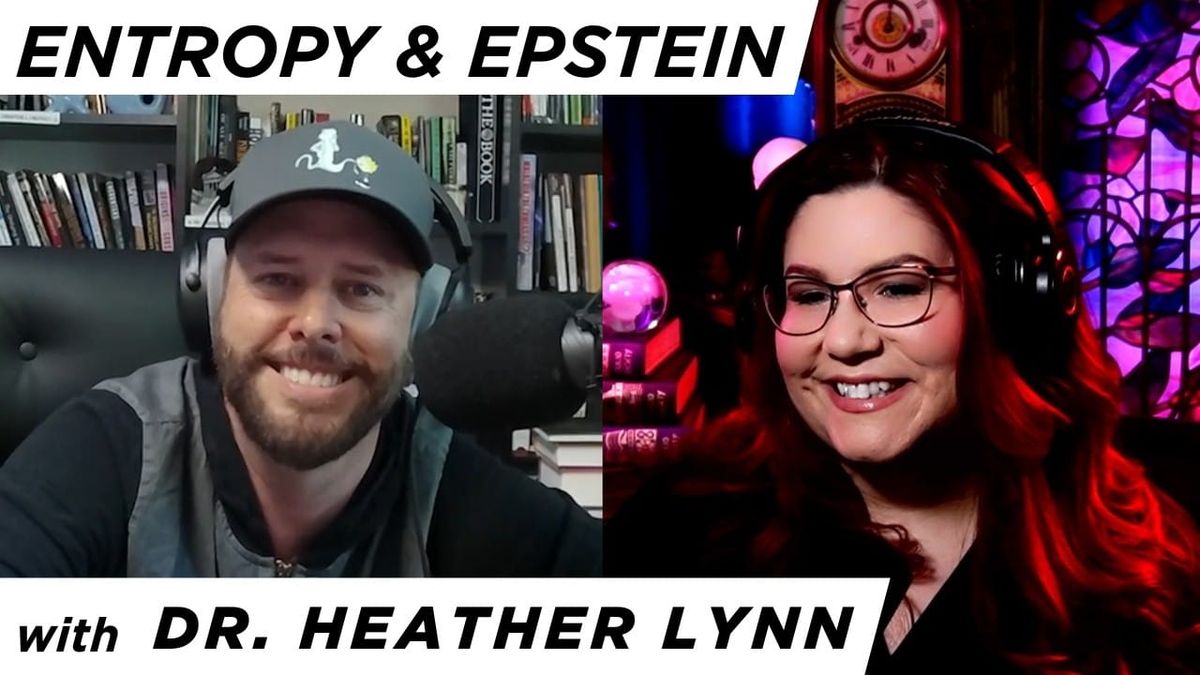
You might think this is a step too far - but do click above for the summary and to listen
This might sound "far out" but I encourage you to listen and reflect. You will see things that you had not previously understood and much more will make sense after this.
More in this issue
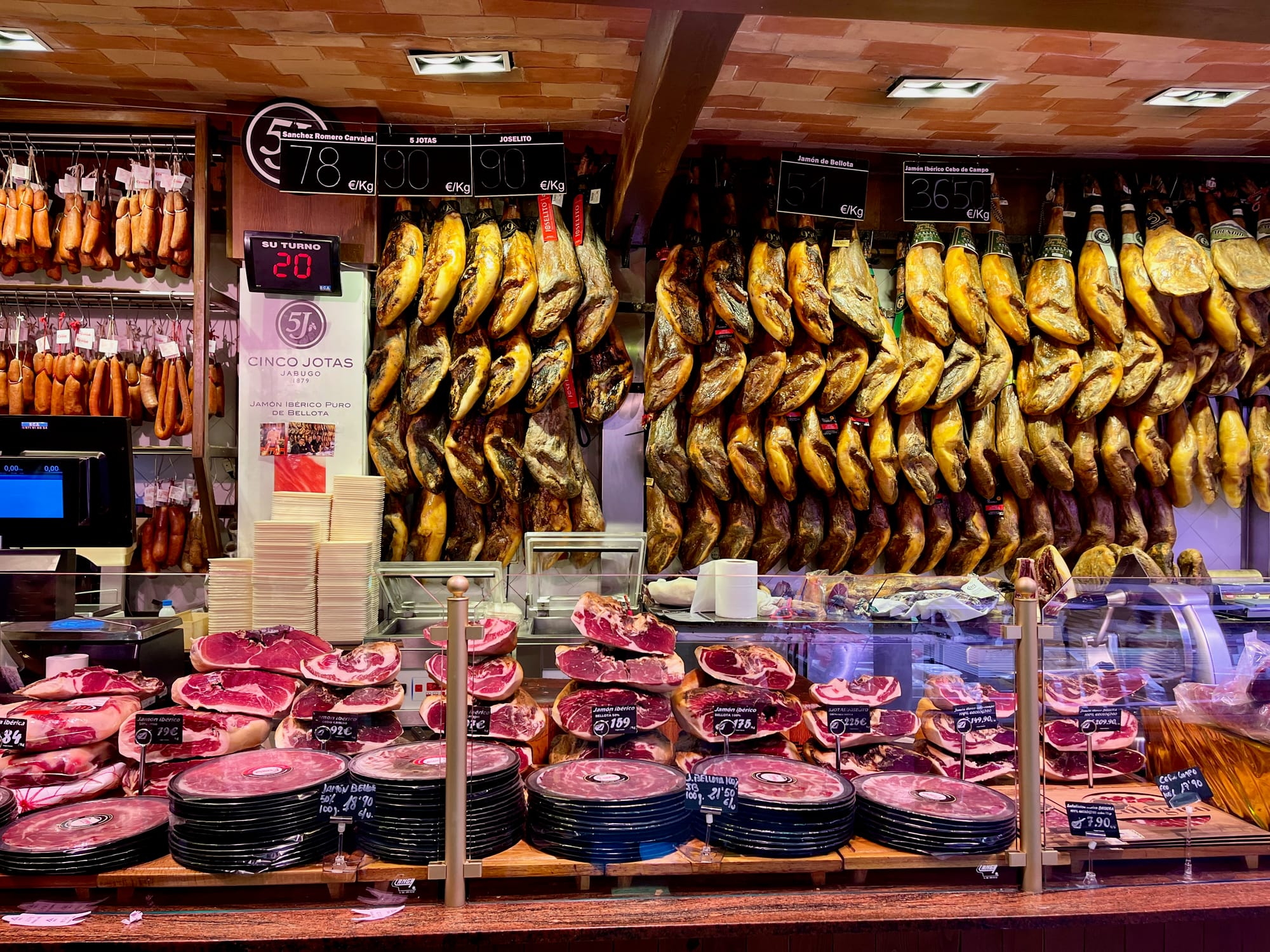
- Photo memories - Around Palma this week
- Project Updates - Linux server hardening and hardware attestation risks
- Plenty of useful links - don't say nobody told you!
- Closing out - A truly remarkable story



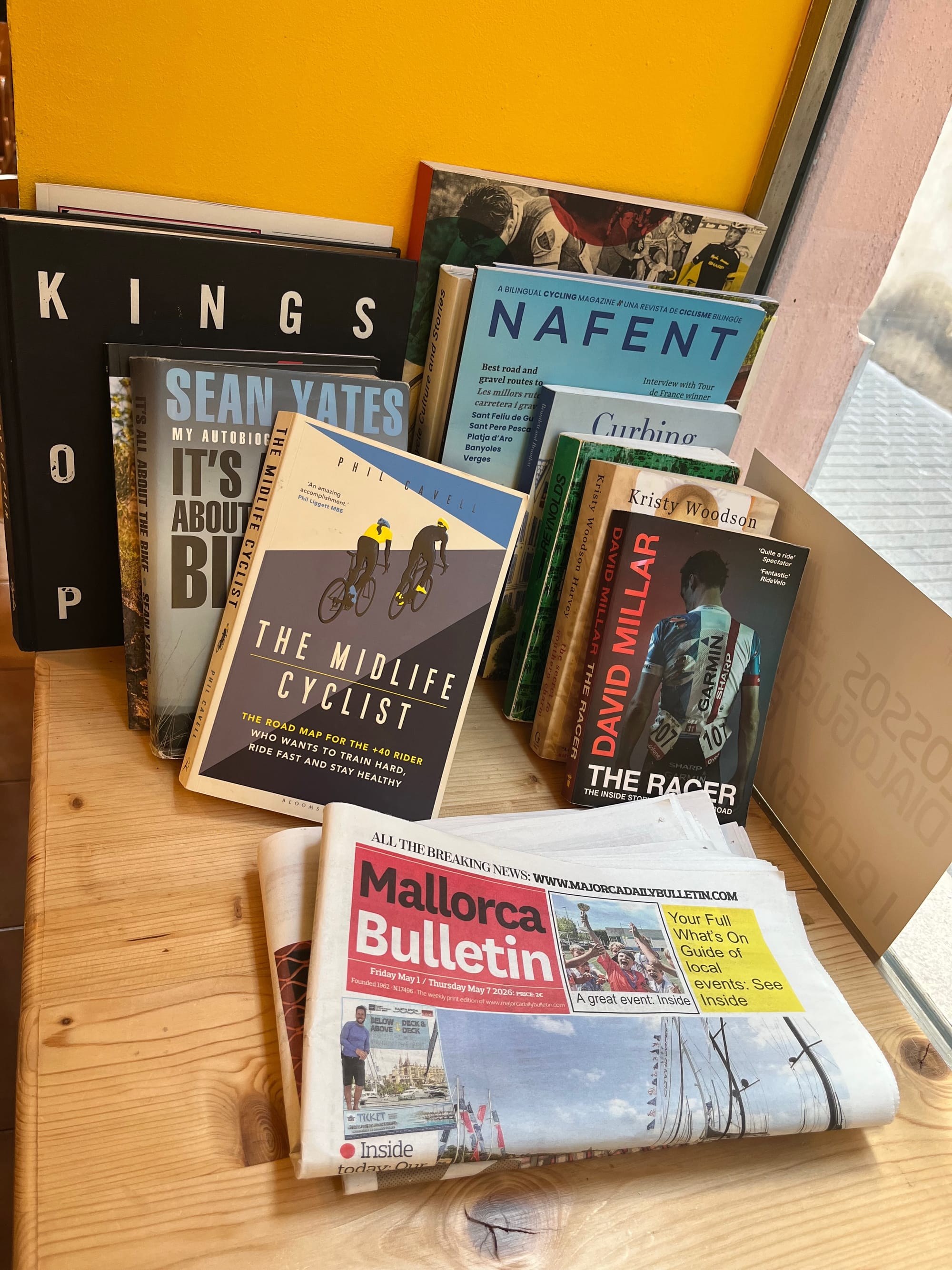


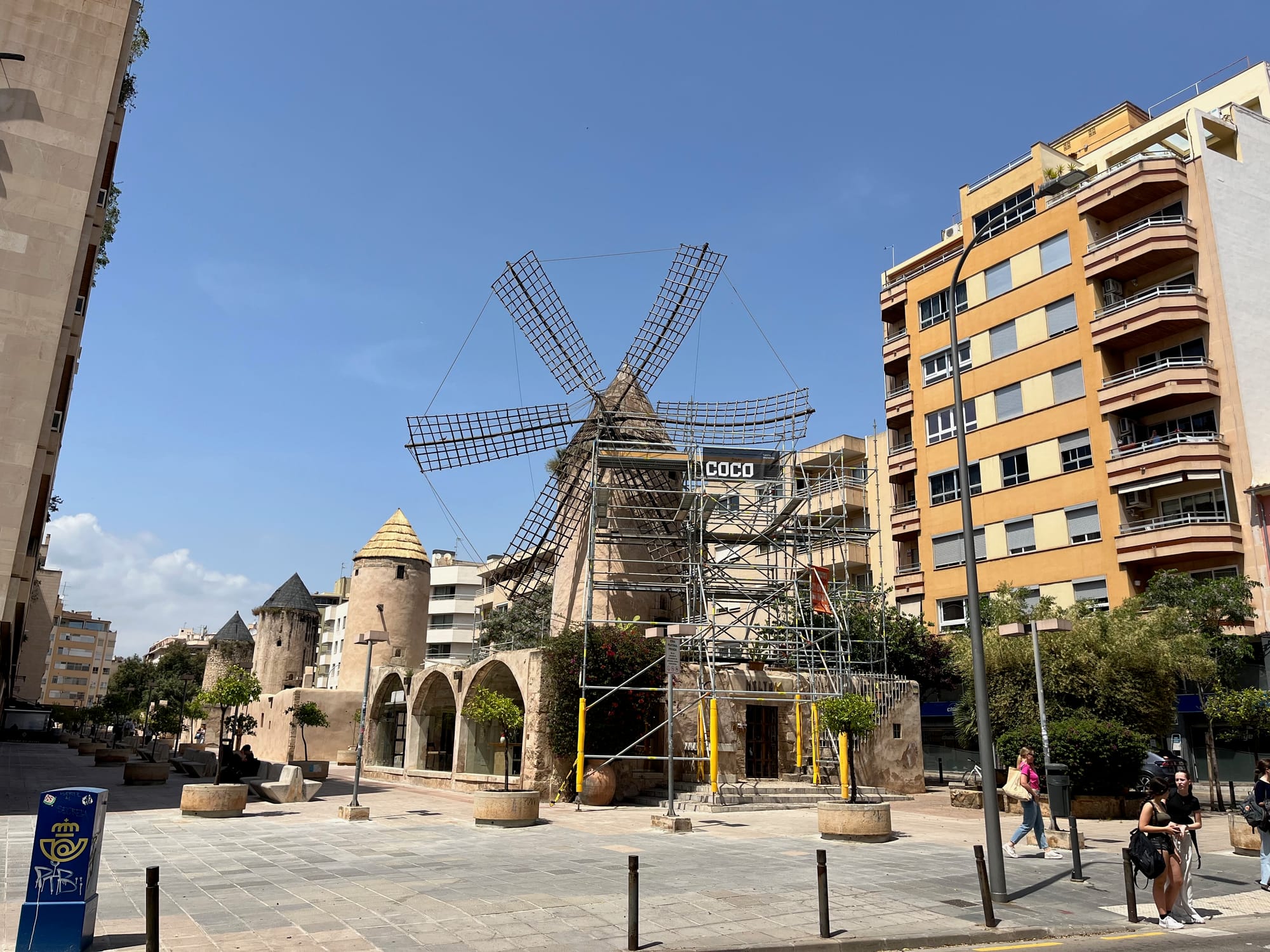

Around Palma this week
🛠️ Project Updates
I had an enjoyable and productive week doing hands-on work on my projects. I have been leveraging AI to do things that were previously impossible. It really is like having super-powers. What are you doing?
Linux server Security Audit and Hardening
First activity of the week was to do a comprehensive security audit and hardening on one of my remote Linux Servers, hosted in SE Asia. I was working with Kimi 2.5 accessed via NanoGPT and I just asked it to help me do a security audit.
It guided me step by step and quickly identified some high priority fixes needed. For those it gave me the commands and updates to make the fixes and then steps to test for completeness.
We went through all of my Docker configs and my Nginx, firewall rules, iptables, fail2ban, rate-limiting, logfiles, all certificates, as well as checking permissions and logging. It helped me to install active monitoring on the server and to configure alerts to my phone if/when any issues are detected as well as keeping a daily log of significant events.
It also helped me to solve some especially difficult connectivity issues that had left me stuck for years. With tools like this you really can do things that would otherwise be completely impossible. I did this over a couple of days and the total cost was USD 2, paid in Monero. The technology is not yet ready for unattended operation - you do need to baby-sit everything and you will need to be involved to sanity-check what it proposes but this is beyond-next level.
The best bit (apart from the negligible cost) is that it is superb at making user documentation about the setup. This will be incredibly useful going forward to me and to future AI conversations. Not only that but I learned so many things and got direct hands-on experience with all sorts of Linux situations as we debugged and improved the configuration.
Computers Aren’t What They Used to Be
The internet, initially an open platform with interchange protocols like TCP/IP and HTTP, is shifting towards closed platforms and app stores, restricting user control over devices. Platforms like X (formerly Twitter) and Facebook are increasingly limiting API access and restricting the use of third-party applications, forcing users to adopt official apps.
 Skip to the content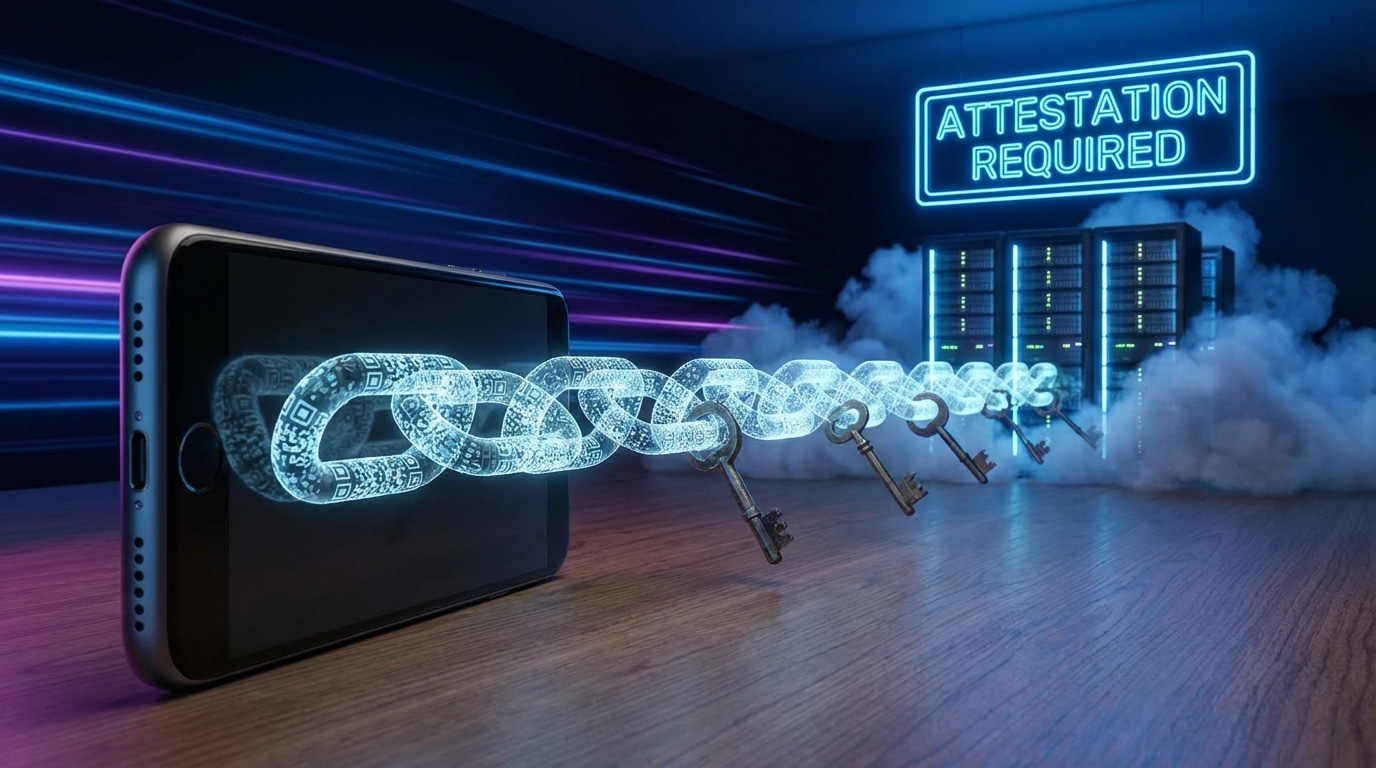
Juraj's article is an important read - don't skip it
A new threat is Hardware Attestation, where device processors verify the integrity of the operating system and applications using unique, factory-generated keys (eg Apple's Secure Enclave, ARM's TrustZone and Intel SGX). Claimed to be "for your safety", this technology is now also locking out users with custom operating systems (like GrapheneOS) or non-certified devices (like Huawei phones).
Google, Apple and Micro$lop will increasingly leverage hardware attestation to keep users within their ecosystems, forcing hardware upgrades they render older devices incompatible. This is why having and using open source computing and open hardware and so important - you need to opt-out. For app development, a return to open protocols and web technologies (like Progressive Web Apps) is a way to preserve user freedom and access to services.
🔗 Links for your edification
The following are links from my Liferea RSS feeds - learn, enjoy and share.
This should make you think
Carissa Véliz's "Power of Prophecy" argues that prophecy, from ancient oracles to AI, functions as a tool of power to shape the future rather than predict it! She strongly critiques AI's limitations, the ideology of effective altruism and long-termism and the dangers of statistical models and prediction markets. Her historical analysis (eg on the Oracle of Delphi and others) is independently corroborated by work done by Jason.
Roger Price
She makes some surprising claims - WDYT?
Despite these critiques, she sees potential in hybrid intelligence, where AI combines pattern recognition with logical reasoning, like using a calculator for math problems. Véliz urges us to question claims of inevitability, demand more from those in power and focus on fundamental human values like beauty and justice, reminding us that 'the stuff of life is mostly analog'.
Modern Money Only Works by Cheating
Modern money, called fiat money (money that a government has declared to be legal tender, but it is not backed by a physical commodity such as gold), works by 'cheating' – meaning it can bend rules to absorb crises by delaying pain and spreading losses. This approach, while keeping systems from collapsing, leads to inflation. This inflation disproportionately harms those with fewer assets, while benefiting those with mobile capital.
Tyler Durden
Click for a fascinating article on Zero Hedge - Guy will read it to you here
Historically, rigid monetary systems, like those tied strictly to gold, have struggled during economic crises, leading to severe outcomes like depression. More flexible fiat systems have proven better at absorbing shocks, even though they cause inflation or even hyperinflation.

Alex makes a good argument
Alex is right that AI is much over-hyped and it has fundamental limitations that Big Tech does not want you to recognise or be aware of. He also points out that this will be used for nefarious purposes by Governments - it already is.
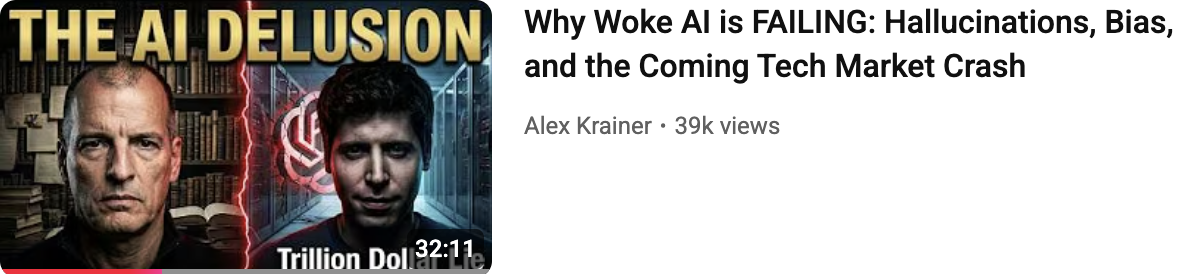
For me, the truth is in the middle somewhere between Alex's perspective and my experience above. We are undoubtedly in a temporary golden age where abundant AI is available and the companies are going all-out to acquire subscription-paying users. It is surely a bubble and it will burst - very reminiscent of DotCom in the early 2000's. That said, in the meantime you can get a lot of benefit from it and you disadvantage yourself not to participate. Accessing it through anonymous aggregators like NanoGPT is an excellent way to get broad access, cheaply and anonymously without the costs and drawbacks of subscriptions.
Interestingly, Sasha also has a worthwhile take on the situation and how it may even be that by being stuck with Siri and doing absolutely nothing about AI in recent years that Apple may turn out to be the winner of the "Mag Seven".

The AI bubble is just one more example of "late-stage fiat". All of the companies involved are involved in leveraged speculation in each other's shares and business. There will be a Great Deleveraging as described by Ray Dalio and it will likely not be "beautiful". It is a sad indictment of the Fiat World that to win you just need to be the one that does not play the game but does nothing.
🤔 Closing Thoughts
A couple of items from Jason to close out. First up is the most personal explainer he has ever done and that you will likely ever see. It is extraordinary and I encourage you to watch it - at least read the summary. After that I treat you to all Jason's 2021 material - this is when I became aware of Jason and his reaearch.
In this first video, Jason's describes his 26-year incarceration in the Texas prison system (1990–2016), framed through his bionumerics methodology—a system he developed to track life events through mathematical cycles and patterns. The monologue combines raw autobiographical narrative with detailed numerical analysis, demonstrating how he used arithmetic patterns to predict and understand significant dates in his life.
Roger Price
Click for a truly remarkable story
I have been following Jason and his work since 2021. He has recently released all of his 2021 material combined into one watchable video with all unnecessary intro and outro removed. Well worth listening and reflecting upon:
Roger Price
❤️ Enjoy this newsletter?
Forward to a friend and let them know where they can subscribe
No one can be told what The Matrix is. You have to see it for yourself.
- Morpheus to Neo in The Matrix
Any questions or anything else? Feel free to comment below!
You can also email me at: LetterFrom@rogerprice.me
- The Architect
💡Enjoy the newsletters in your own language: Spanish, Dutch, French, Italian, German, Serbian, Croatian, Chinese Traditional & Simplified, Burmese, Irish (Gaelic), Russian and Thai