All Gods allowed
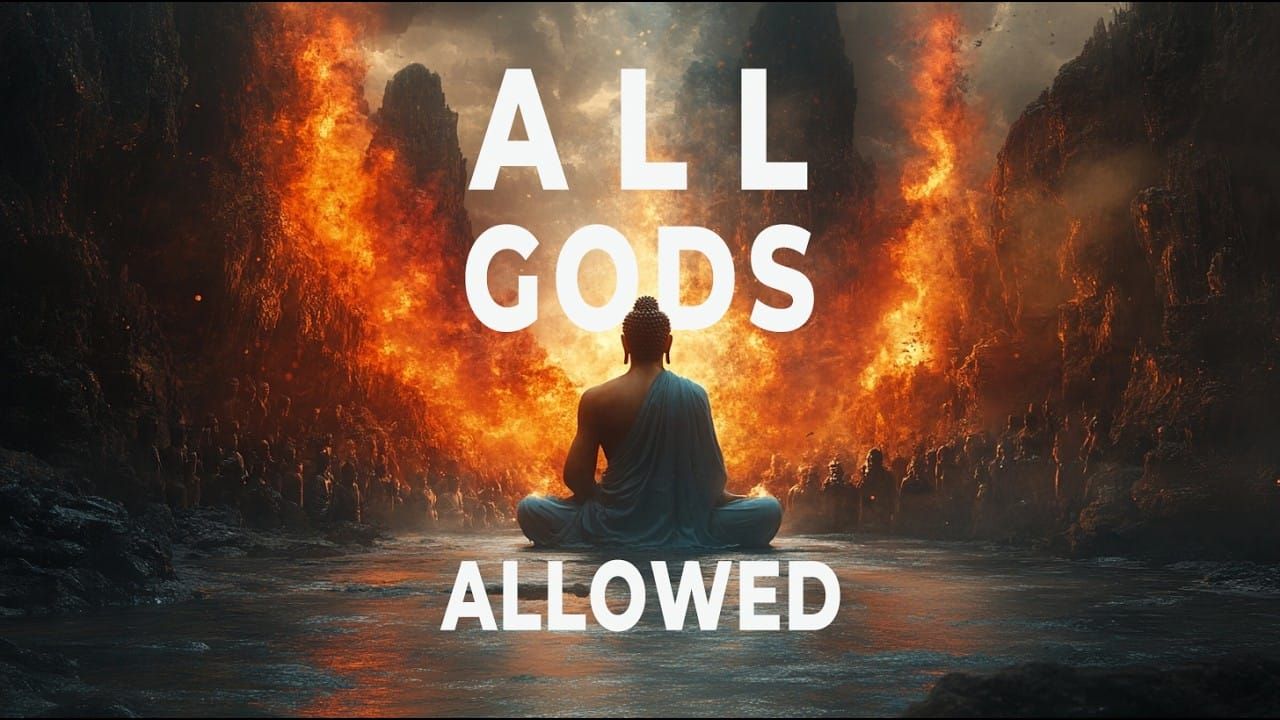
This transcript explores why Buddhism uniquely accepts other religions while most faiths claim exclusivity. The video argues that Buddha's approach was so revolutionary it transformed religious interaction across Asia and offers lessons for today's divided world.
The Historical Context
The narrative opens in ancient India, where competing religious traditions—Vedic priests performing fire rituals, Jains practicing extreme asceticism, and countless philosophical schools—each claimed exclusive access to truth. Choosing the "wrong" religion could ruin not just your life but your family's for generations.
Buddha's Revolutionary Strategy
When priests arrived to challenge Buddha, prepared for theological combat, he stunned them with one question: "Has following your practices actually ended your suffering?" This shifted debate from beliefs to results. When priests admitted they still struggled, Buddha didn't mock their rituals—he offered to enhance them: "Keep your rituals if they help you, but let me show you some additional tools."
The video highlights a striking example with fire worshippers. Instead of dismissing their sacred ceremonies, Buddha connected their practice to inner transformation: "Your sacred fire rituals—keep them. But let me show you another kind of inner fire you can cultivate," explaining that anger and greed are fires that burn us, while meditation teaches mastery over these inner flames.
Why Other Religions Couldn't Do This
The transcript identifies three structural barriers other religions faced:
- Survival necessity: For early Christians, Jews, and Muslims, exclusivity meant survival against persecution
- Political entanglement: Pharaohs claimed godhood; Roman emperors demanded worship; modern states base authority on defending "one true faith"—making religious pluralism akin to accepting rival kings
- Divine revelation claims: If Moses received the Ten Commandments, Muhammad the Quran, or Jesus taught as God's son, acknowledging other paths as equally valid undermines the foundation
Buddha avoided these constraints because he presented himself not as prophet or god, but as "a scientist saying 'here's what I discovered through meditation—try it yourself and see if it works.'"
The Proof: Buddhism's Spread Across Asia
The video documents Buddhism's remarkable cultural adaptability:
- In China: Teachers connected Buddhist meditation to experiencing the Tao more deeply, enhancing rather than replacing Taoism and Confucianism
- In Gandhara: Meeting Greek culture produced the first Buddha statues, modeled on Apollo
- In Tibet: Blended with local shamanic practices to create unique traditions
- In Japan: Temples remain both Buddhist and Shinto simultaneously—"same building, two religions, zero conflict" for over 1,000 years
Emperor Ashoka's Precedent
Perhaps most surprisingly, the 3rd century BCE Buddhist emperor built temples and monuments for all religions in his empire—not just Buddhism. The video calls him "history's first champion of religious freedom" while other regions fought religious wars.
Modern Applications
The transcript notes contemporary adoption:
- Silicon Valley tech companies using mindfulness for work culture
- Hospitals employing meditation for pain management
- US Marines learning Buddhist-inspired focus techniques
- Christian contemplatives, Muslim scholars, and Jewish meditation centers incorporating Buddhist practices while maintaining their traditions
Three Insights Explaining Buddha's Approach
- Fighting over beliefs is "like arguing about different paths up a mountain"—what matters is whether you're climbing
- Forced choices create resistance; tools for exploration enable natural growth
- Truth isn't believed but experienced—"like the difference between reading about honey and tasting it"
Practical Recommendations
The video concludes with three applications:
- Focus on practices, not beliefs—ask what reduces suffering
- Find common ground, as Buddha did with fire worshippers
- Validate through personal experience rather than accepting or rejecting ideas blindly