Better than Google search
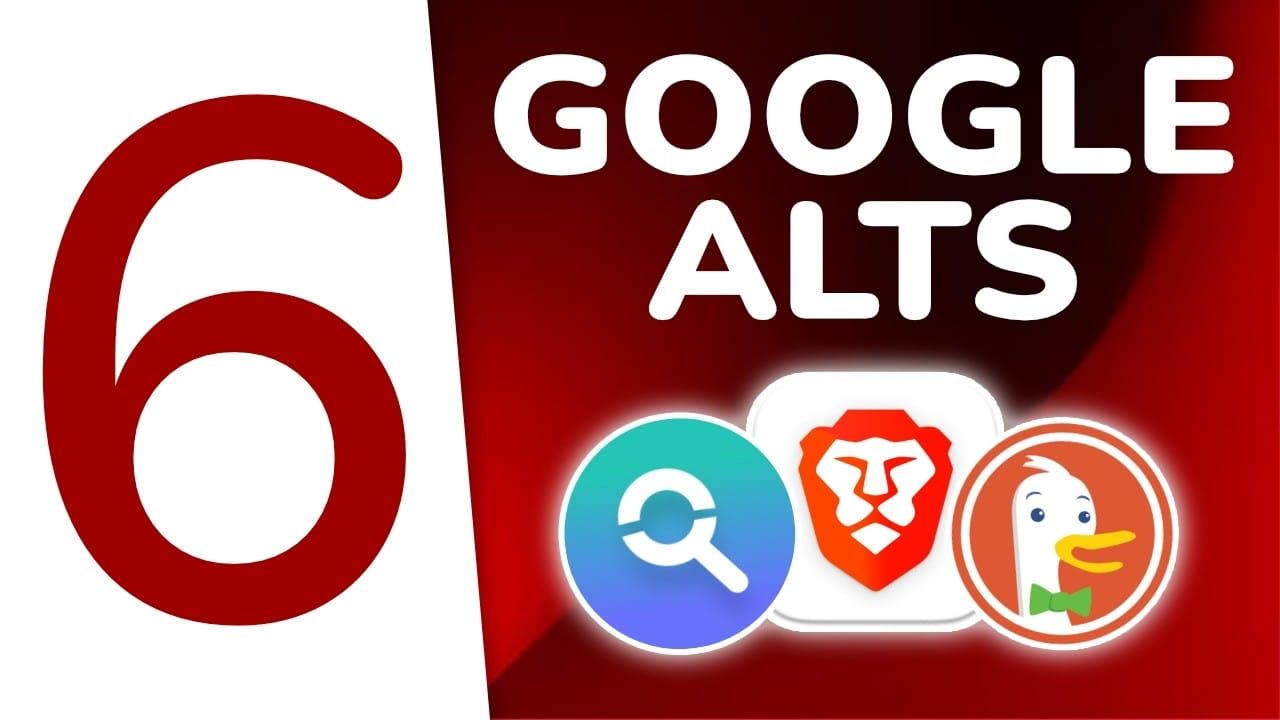
Google has formally revealed what it believes search is actually for—and "it's not really for you." Henry argues that Google's shift toward AI agents performing searches on users' behalf represents a fundamental change in whose interests search serves. These AI overviews now reach 2.5 billion users monthly, with Gemini Spark positioned to read Gmail, documents, and calendars - effectively stealing and abusing all your private data.

The core of the podcast is practical: there are genuine alternatives with completely different business models, and switching is easier than most people assume. My recommendation is Kagi - as we have discussed before it is excellent and keep getting better. I also learned about a couple of useful and complementary services you can use in addition. What recommendations do you have?
Recommended Alternatives
Henry evaluates six search engines, categorising them by accessibility and use case:
1. DuckDuckGo
- Sources results from Bing but never passes user identity to Microsoft.
- Offers contextual ads only—no profiling based on previous queries.
- Surprising feature: users can disable all AI elements by visiting
noai.duck.go.com, or keep them if preferred. - Available as a default option in Safari and most other browsers.
2. Brave Search
- Uses its own independent index rather than relying on Bing or Google.
- Henry calls this "overall the best quality search results for something that uses its own index right now in 2026."
- Business model is threefold:
- B2B sales of index access to other companies.
- Advertising within Brave Search.
- Paid subscriptions to remove ads.
3. Startpage
- Proxies Google results through a privacy-respecting mechanism—ideal for users who want Google's result quality without the surveillance.
- Revenue comes from contextual advertisements tied only to the current query.
- Standout feature: "Anonymous view" opens results via a proxy, hiding the user's IP address and reducing fingerprinting.
Henry identifies these three as the easiest entry points, estimating they deliver 80–100% of Google's utility with stronger user respect.
Advanced Options
4. Kagi - my recommendation!
- Fully paid subscription service—"you are the customer."
- Zero ads, zero data selling.
- Surprising claim: some users report results superior to Google's.
- Positioned as the "don't make me think" option for those willing to pay for search.
- They also offer an increasing portfolio of useful, privacy respecting tools and services
5. SearXNG
- The only open-source option discussed.
- A meta-search engine aggregating results from multiple engines (Google, Bing, etc.).
- Highly customisable: users can toggle which engines contribute to their results.
- Can be self-hosted for complete ownership, but public instances are available via
searx.spacefor those who prefer not to manage infrastructure. - Henry calls this "maybe objectively, the most powerful search engine you can possibly get your hands on."
6. Mojeek
- Another independent crawler with its own index.
- Smaller index than Brave; Henry admits limited personal experience and notes user feedback suggests it lags behind Brave in quality.
- Uses contextual ads as its revenue model.
- Includes search selection options to supplement its own index.
Practical Switching Strategy
A significant and under-discussed point: migration need not be all-or-nothing. Henry advocates using multiple engines simultaneously through bangs—shortcut commands appended to queries:
| Bang | Redirects to |
|---|---|
G! |
|
D! |
DuckDuckGo |
YT! |
YouTube |
Example: typing a query followed by G! instantly reroutes that exact search to Google without retyping. This lowers the barrier to switching—users can set Brave or DuckDuckGo as default and only fall back to Google when results disappoint.
The Business Model Argument
Henry's central thesis is structural: Google's profits depend on ad clicks, AI service usage, and data accumulation. Every alternative listed operates on fundamentally different incentives:
- Kagi profits from subscriptions, incentivising user satisfaction.
- DuckDuckGo profits from untracked contextual ads.
- Brave profits from B2B index licensing, optional ads, and subscriptions.
- Startpage profits from privacy-respecting contextual ads.
- SearXNG is open-source with no commercial incentive structure.
- Mojeek profits from contextual ads without profiling.
Henry concludes bluntly: "Google didn't just kill search. They changed whose interests it serves." Every engine on this list, he argues, is structurally prevented from exploiting users because their business models depend on serving them directly. His call to action is low-stakes: pick one, try it for a week, and use bangs to bridge the gap.