Common Sense
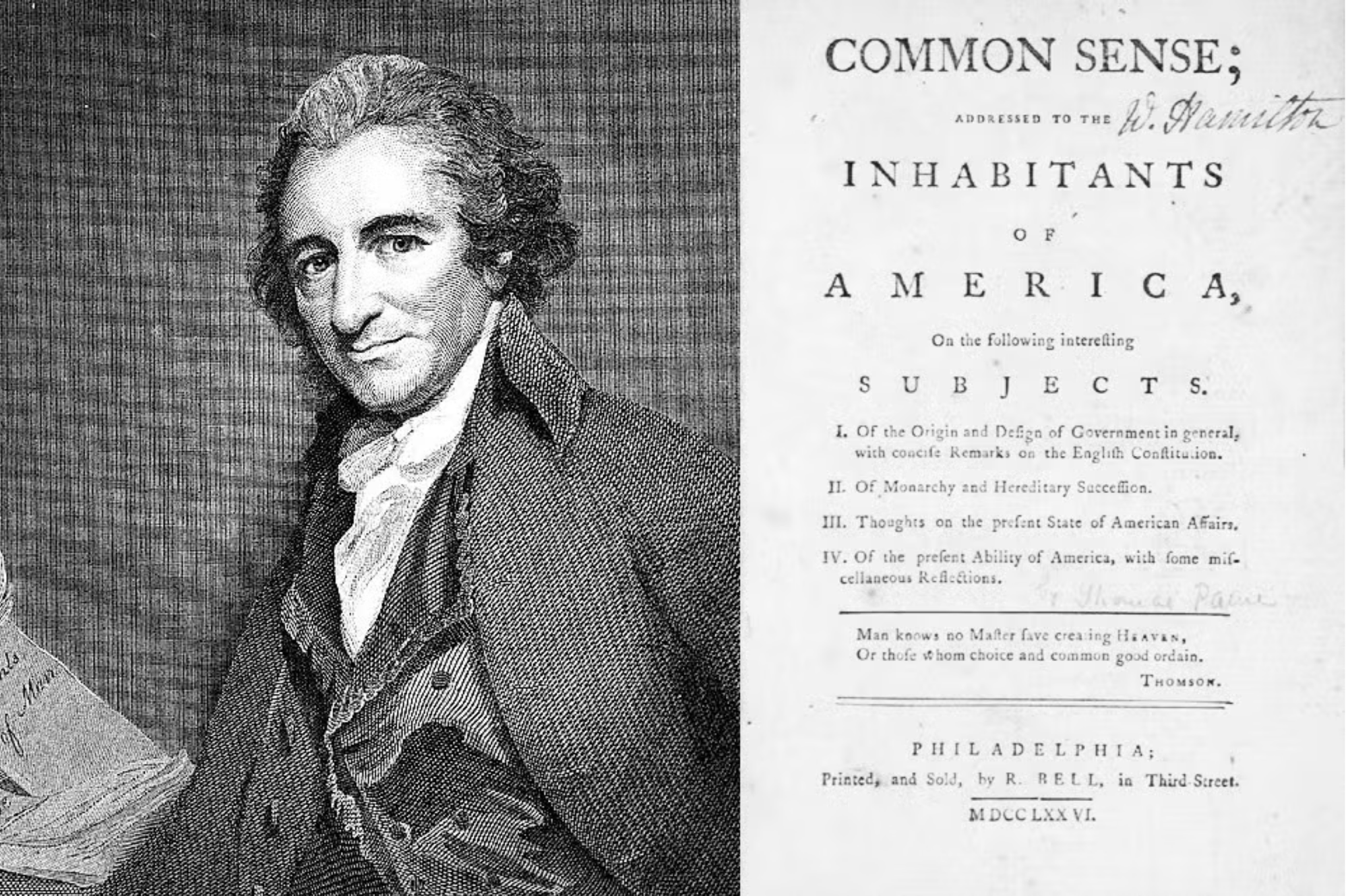
Common Sense by Thomas Paine is one of the most influential political pamphlets in history. Here's an overview:
Publication
- Author: Thomas Paine
- Published: January 9, 1776
- Format: Pamphlet (47 pages)
- Price: Originally sold for two shillings, later discounted to be more widely affordable
- Circulation: It became the best-selling work in American history relative to population — estimated 500,000 copies sold in its first year, in a colonial population of about 2.5 million. It was widely reprinted and read aloud in taverns and public gatherings.
Context
Written during the escalating conflict between the American colonies and Great Britain, the pamphlet appeared just months before the Declaration of Independence. At the time, many colonists still hoped for reconciliation with Britain rather than full independence. Paine's work helped shift public opinion decisively toward separation.
Key Arguments
The pamphlet is structured around several core themes:
- Critique of Monarchy and Hereditary Rule — Paine attacks the very concept of kingship, arguing that hereditary succession is unjust and produces leaders who are often "the ignorant, the incapable, or the wicked." He famously wrote that "of more worth is one honest man to society, and in the sight of God, than all the crowned ruffians that ever lived."
- Rejection of Reconciliation — He argues that reconciliation with Britain is neither desirable nor possible. He dismisses the idea that Britain's protection is necessary, comparing it to a thief breaking into a house and then offering to "protect" it.
- The Case for Independence — Paine makes a practical and moral case for American independence, arguing that the colonies have the right and the duty to break away. He contended that America's cause was in large measure "the cause of all mankind."
- A Vision for a New Government — He outlines a vision for a republican form of government based on democratic representation, law, and the consent of the governed — radical ideas at the time.
- Moral and Religious Arguments — Paine draws on Scripture and reason to undermine the divine right of kings, arguing that monarchy is an institution contrary to the equality of all people.
Why It Mattered
Common Sense was remarkable for several reasons:
- Accessible language: Paine wrote not for the educated elite but for ordinary people, using plain, direct, and passionate prose that could be understood by a broad audience.
- Timing: It appeared at a critical moment, helping to catalyze the move toward independence that culminated in the Declaration of Independence in July 1776.
- Mass influence: It reached a far wider audience than any political tract before it, helping to create a shared political consciousness among the colonists.
- Democratizing political thought: By addressing the general public rather than elites, it helped democratize political discourse in America.
Legacy
The pamphlet is widely regarded as a foundational document in American democratic thought and political philosophy. It helped establish the intellectual framework for the American Revolution and for republican government more broadly. Paine went on to write other influential works — most notably The American Crisis (1776–77), with its famous opening line, "These are the times that try men's souls" — and later The Rights of Man (1791) and The Age of Reason (1794).
Common Sense remains one of the most widely read and studied political texts from the era of the American Revolution, and its arguments for self-governance and against inherited authority continue to resonate.