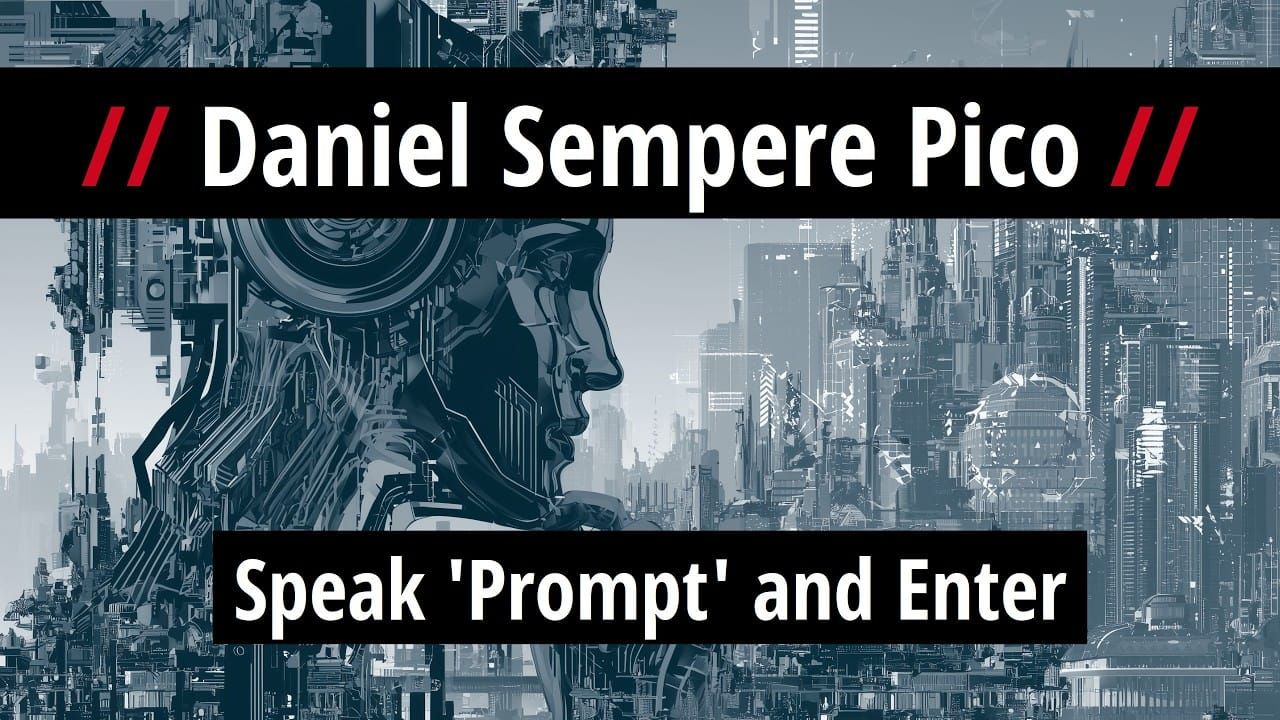
Daniel Sempere Pico, formerly known pseudonymously as BTC Gandalf, is a writer and AI commentator active on X (@DanSemperePico), with a YouTube channel planned.
Former real estate broker in Hong Kong for ~8–9 years; left in 2021, discovered Bitcoin, grew a following on Twitter, and worked for Bitcoin companies (including mining firm Braiins) before going independent at the end of 2023 and adopting his real name.
He doesn't regret dropping the pseudonym — if anything he wishes he'd used his real name and written about more topics from the start, noting a single-topic audience can "capture" you.
Has lived in Portugal (2 years), Brazil (6), Hong Kong (25), the UK (5), the Isle of Man (2), and Dubai since February 2024 — driven partly by tax considerations as a Bitcoin user and entrepreneur.
On the Iran conflict: despite the UAE being heavily targeted for about six weeks, daily life in Dubai was largely unaffected apart from phone missile alerts.
Click to listen to the full interview and discussion
Key Points on AI
The shift from prompting to agents
The biggest change has been agentic AI, which he attributes largely to "OpenClaw" (Claude Code), which became the fastest-growing open-source software around the beginning of the year.
Prompt engineering is largely obsolete: "the less you tell the AI or the more room you give it to pick the best path… the better it is" — describe the outcome, not the method.
Trying to keep up with every release is futile; skills, commands, and CLAUDE.md files will all eventually be "abstracted away." AI is "the first software where you don't even have to know how to use it — you can just ask it to tell you how you should use it."
His personal setup
OpenClaw (via Telegram): mainly a health and fitness bot — logs his food, workouts, and personal records (e.g. bench press progress since December).
Codex desktop app (OpenAI): his primary tool for copywriting (trained on clients' blogs and posts), admin tasks, and learning. Example: drafting an insurance email and having the agent find and attach the required documents itself.
Perplexity for search ("a better Google"); NotebookLM occasionally; a Plaud device on the back of his phone for voice-noting ideas (having previously built the Limitless Pen, later bought by Meta and shut down).
He values that his messy file system no longer matters — the AI can find anything.
Model preferences
Writing/editing: Gemini produces the most natural text; Anthropic's Claude models close behind; GPT/Codex models weakest. Gemini repeatedly produced fresh sentence variations after other models ran out.
Agentic tasks: OpenAI models good enough; Claude Code beat Gemini CLI on a Gmail task.
Front-end/design: Opus is best; Codex is "not a great designer."
Image AI: useful for prototyping and website design, but not final graphics. Many people already fall for AI-generated video (older family friends sharing fake videos as real).
Cost management
Subscribes to ChatGPT Pro (~$100), Claude Max (~$100), and Gemini via Google Workspace (~$20) — roughly $200/month, never hitting limits because he uses each for different purposes.
ChatGPT Pro can be used on third-party tools, providing "heavily subsidised" tokens; Anthropic doesn't allow this. He'd pay $1,000/month if needed, comparing the cost to hiring an assistant.
Previously managed on the $20 tiers until January this year.
Privacy, security and sovereignty
He abandoned de-Googling, Linux and GrapheneOS — the time cost outweighed the benefit, and he'd "rather just have the convenience."
Notes the privacy/convenience trade-off is direct: consumer Gmail/Drive and WhatsApp data are likely used for training (Google Workspace accounts are the exception).
His main motivation for local AI isn't privacy but access — not wanting intelligence "gatekept" by companies or governments, likening it to being banned from Google or social media.
Plans to buy the most powerful Mac Studio when new ones ship and run local models. Acknowledges the RAM/GPU price surge, estimating ~$10,000–15,000 for a 1 TB Mac Studio — worth it only for tinkerers or the self-sovereignty-minded. Most people are well served by smaller models (e.g. Google's Gemma 4) on reasonable hardware, and he expects phone-class Opus-level models within a decade.
Maintaining voice in writing
The only tool that truly replicates his voice is a custom OpenClaw skill ("Postie App") trained on ~63,000 of his tweets, used for short-form content.
Otherwise, he writes first and uses AI strictly as an editor, intervening on the smallest possible units — sentence by sentence, or asking for alternative words, logic gaps, and flow issues.
Argues AI can't fully ghost-write for you because you often don't know what the finished piece looks like until writing reveals it — asking AI to write like you would be "asking it to predict the future."
Advice for beginners
Forget tactics, skills, and prompt engineering: "Using AI is essentially just the skill of being able to describe an outcome that you would like to happen."
Speak to it as you would to another human, and ask of every daily task: "How can I do this with AI?"
Credits this tip to Dharmesh Shah, co-founder of HubSpot: try to use AI every time you need to do anything on a computer.
He now does AI consulting for corporate employees whose companies restrict AI use.
Notable Quotes
"It's almost the less you tell the AI, or the more room you give it to pick the best path to execute on what you want, the better it is."
"AI is almost the first software where you don't even have to know how to use it. You can just ask it to tell you how you should use it."
"For me, the reason why I would go for a fully local intelligence… it wouldn't be because of privacy, it would be because I don't want to have the intelligence gatekept from me by third parties."
"Using AI is essentially just the skill of being able to describe an outcome that you would like to happen."