Effrat Fenigson
Effrat Fenigson describes her "previous life" as a corporate chief marketing officer (or VP Marketing) at various Israeli technology companies. She was born and raised in Israel, but moved to Australia at age 21, where she lived for six years, obtained Australian citizenship, married an Australian, had a son, and later divorced. Her son — now nearly 17 — lives with his father in Australia, which she considers preferable given Israel's mandatory military drafting age. Both she and her son are dual Israeli–Australian citizens.
Her career began as a computer programmer after completing a computer science degree in Australia. She transitioned into marketing because she was "much more interested in telling the stories about technologies and understanding the bigger pictures and the systems that those technologies are integrated into."
Her political awakening came around 2020 during the COVID-19 response. She consciously chose to oppose lockdowns, mandates, masks and vaccines on grounds of freedom of choice, bodily autonomy, and parental authority, accepting the risk to her career, reputation and friendships. She began demonstrating in the streets of Israel against the government's invocation of an emergency or enabling act, which she argues "essentially cancelled democracy." Fenigson states she no longer believes democracy is real, calling it "an illusion" installed "in order to give people the fake hope and illusion of choice."
Her research eventually led her to the money system, which she identifies as the primary source of power used to control people. She traces the path from local Israeli political corruption to global organisations directing the systems shaping daily life. In 2022, she quit corporate life permanently, devoting herself to journalism, public speaking and interviewing. She launched her podcast in 2023 and has conducted approximately 150 interviews to date. She now lives as a digital nomad, travelling with a single suitcase, speaking on stages worldwide, and recording her podcast on the go.
October 7th Reporting
Fenigson gained significant international attention on 7 October 2023, when she posted a viral video on the day of the Hamas attack. Drawing on her IDF service 25 years earlier and intimate familiarity with the breach area, she argued there was a "very very low probability of this being an organic event," citing a security stand-down of minimum 6–8 hours in some locations and up to 30 hours in others. The video drew global awareness but also fierce criticism from Israelis who labelled her a traitor, accusing her of putting them and their families at risk.
Israel as a Technocratic State
Fenigson argues Israel can never be a freedom-maximising country, even in peacetime. The state's foundational narrative, she says, rests on the promise that "you are not safe; you will never be safe" — positioning Israel as the only relatively safe place, which she considers propaganda. She notes the irony that Israelis ask her whether she feels safe overseas, when Israel itself is "so not safe" — she describes sitting in Israel with rockets flying overhead, many places lacking public shelters, and living under constant existential threat.
She observes that each passing decade has brought Israel "less free, more technocratic, more surveilled, and more normalised in terms of how the state and the technology are pervasive in people's lives."
Key technocratic developments she identifies:
| Development | Details |
|---|---|
| Biometric digital ID | Launched approximately 12–15 years ago, before public awareness of the risks. ID cards are mandatory from age 16. All identification documents (ID card, driver's licence, passport) have been digitised under a biometric system. A centralised government portal (gov.il) consolidates pension, vehicle registration, travel entries/exits, address and banking details |
| CBDC and digital shekel | Israel's central bank is developing both a stablecoin (already approved and being tested) and a central bank digital currency (the digital shekel), in advanced stages. Fenigson expects rollout shortly after the digital euro launches, as the central bank is "signalling that they're waiting for one of the big other central banks" |
| Gaza as technocratic testbed | Fenigson predicts Palestinians will be the first "guinea pigs" for CBDC testing, given their reliance on the Israeli shekel and lack of their own central bank. She ties this to Trump's peace initiative (requiring a billion-dollar participation fee) and mentions Elon Musk visiting Israel for a briefing from Netanyahu as a government contractor involved in "build back better" plans including data centres, green technologies and solar farms |
| Business transaction monitoring | Israeli law requires pre-approval from tax authorities for business-to-business transactions above approximately $2,000 (accelerated from the originally planned 2028 timeline; originally set at 25,000 shekels / ~$8,000). The IRS can reject invoices before any money transfers, cutting off commerce at the intent stage |
| Capital controls | Fenigson anticipates capital controls as educated and wealthy Israelis increasingly emigrate. It is already difficult to sell real estate or liquidate assets from abroad |
She emphasises the importance of distinguishing between the Israeli people and the Israeli government/state, noting that conflating the two is a mistake she constantly encounters. She laments how easily people fall into "divide and conquer" dynamics on national, religious and ethnic grounds, describing "free floating anxiety" carried from one crisis to the next.
Cancel Culture and Deplatforming
Fenigson details multiple deplatforming experiences:
| Platform | Action | Details |
|---|---|---|
| Telegram | Account closed | Two channels (2,000 and 6,000 followers, Hebrew and English) shut down after four years. Stuck in an AI "dooms loop" appeal process — clicking appeal, writing, receiving rejection, repeating endlessly. No human contact available |
| Stripe | Account closed | Stripe's stated policy is not to work with Israeli businesses; the issue was her Israeli bank account. They held a Zoom call to clarify it was "not because I'm Israeli." She refused to open another bank account elsewhere, declaring "I'm in Bitcoin, I'm not going to open another bank account." She switched to Bitcoin-based payments via Zapright |
| YouTube, LinkedIn, Facebook, X | Shadowbanning | Described as worse than outright strikes because "you're there but no one can see you" |
She criticises Telegram's CEO for presenting the platform as a free-speech champion while being subject to government regulation, citing a 2023 UN directive from the head of the United Nations calling on all 193 member states to "put the pedal on the metal" in gating internet access under the pretext of combating disinformation, misinformation and hate speech, and advancing the Agenda 2030 sustainable development goals. She notes that nearly all countries now have legislation in place to enforce this.
Custodiet defends the utility of centralised platforms for reaching wider audiences, comparing it to accepting credit cards: most people are not on Nostr and only get exposed to sovereignty ideas through entry-level engagement on mainstream platforms. Fenigson agrees, calling the trade-off "a small price to pay" that does not fall into the "box of selling my soul," unlike decisions such as removing her son from Israel's military system.
Marketing and Personal Branding
Drawing on her marketing career, Fenigson offers several key principles:
- Distinguish marketing from advertising — advertising is merely one tactic; marketing is fundamentally about "providing the right value to your target audience."
- Build your brand identity first — most people skip this foundational step, which she calls "very expensive." This involves defining your values, mission, vision, voice, brand promise, brand essence, and purpose.
- Identity as the first layer of sovereignty — her "sovereignty framework," presented as a keynote at a conference in Prague, positions identity as the foundational layer. Tools (Bitcoin, privacy tools, Nostr) should be built on top of identity, not the reverse: "If you start with that without having that first foundational layer in place, it will be very easy to compromise you because you don't know what you stand for."
- Know thyself — understanding your unique combination of skills, characteristics and values creates an irreplaceable "signature" footprint that makes you "memorable, trustworthy, authentic, and consistent."
- Identity as a sovereignty shield — when adversaries cannot govern you (e.g., through Bitcoin self-custody), they attempt to control how others see you. A strong, authentic identity makes you harder to destabilise: "As long as I know who I am and I keep showing up consistently with my personal brand in an authentic way, people know that those are just attacks. They're not the truth."
She references her free lecture "Personal Branding 101" (approximately 2–3 hours) on her blog and the Prague keynote on YouTube for deeper exploration.
 Efrat Fenigson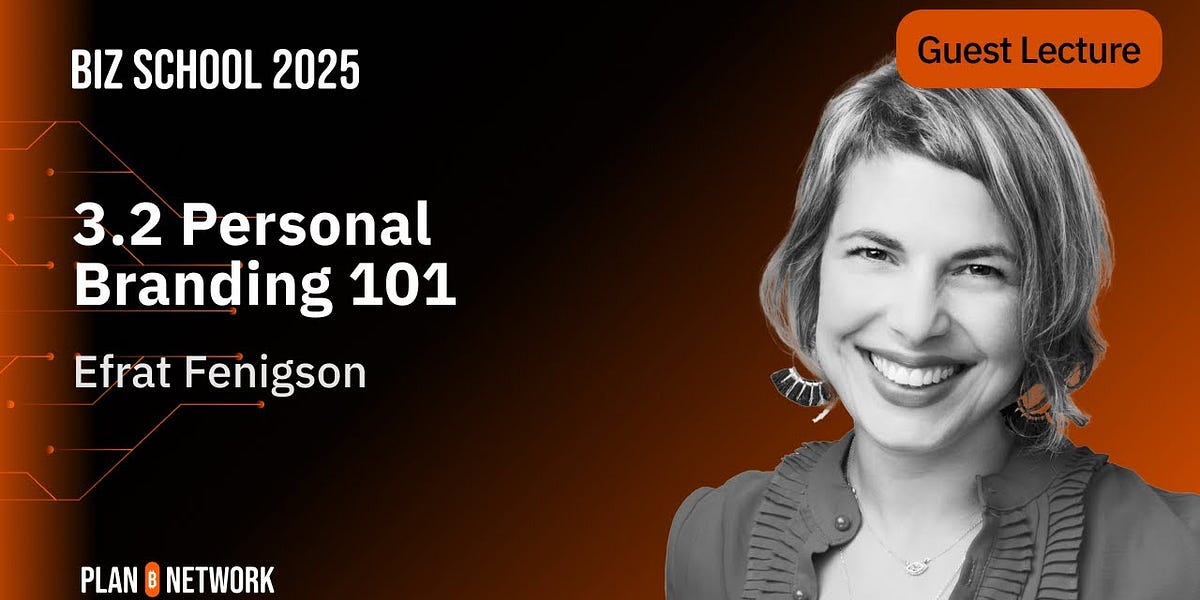
Click for the full Personal Branding 101 interview
Final Notes
Fenigson's podcast, You're the Voice, is described as primarily for freedom- and sovereignty-minded people — "not just a Bitcoin podcast." She has covered the Samurai Wallet developers' case extensively, including interviewing Kei two days before he went to prison and Lauren Rodriguez. She frames this case as "a very important precedent that we need to use to be aware of what kind of forces we are dealing with." The podcast features diverse guests including doctors, lawyers and freedom fighters beyond the Bitcoin space. Custodiet closes by recommending the show as "required" listening for those in Bitcoin, and praising her broader technocracy commentary. Fenigson invites audience engagement via DMs and comments, noting she reads all of them.