Forbidden Faith
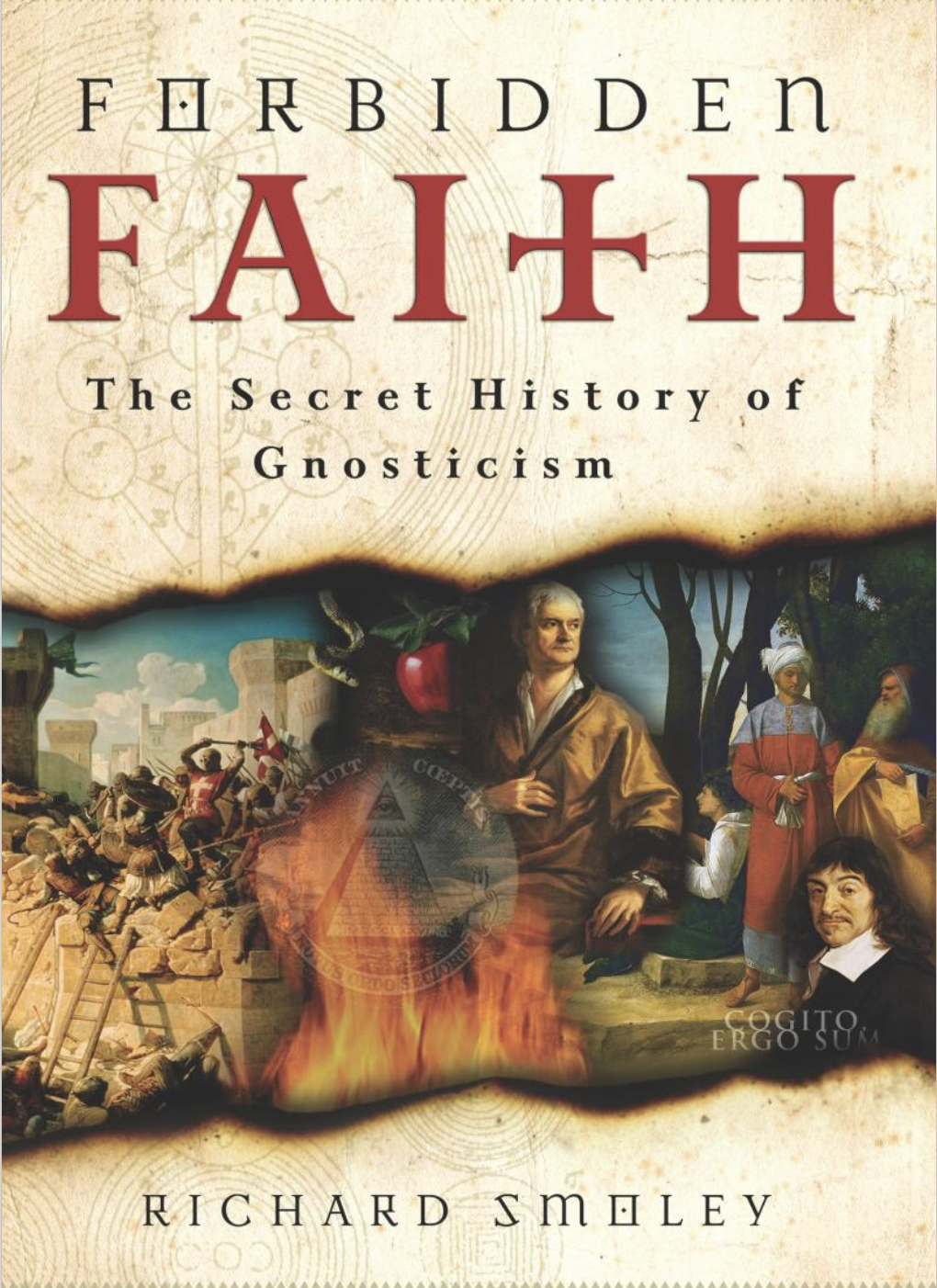
Richard Smoley’s Forbidden Faith: The Secret History of Gnosticism traces the origins, suppression, and surprising survival of Gnosticism. Smoley argues that Gnosticism is not just a dead heresy from late antiquity, but a dynamic, enduring undercurrent of Western esoteric thought that has profoundly influenced modern psychology, literature, and popular culture.
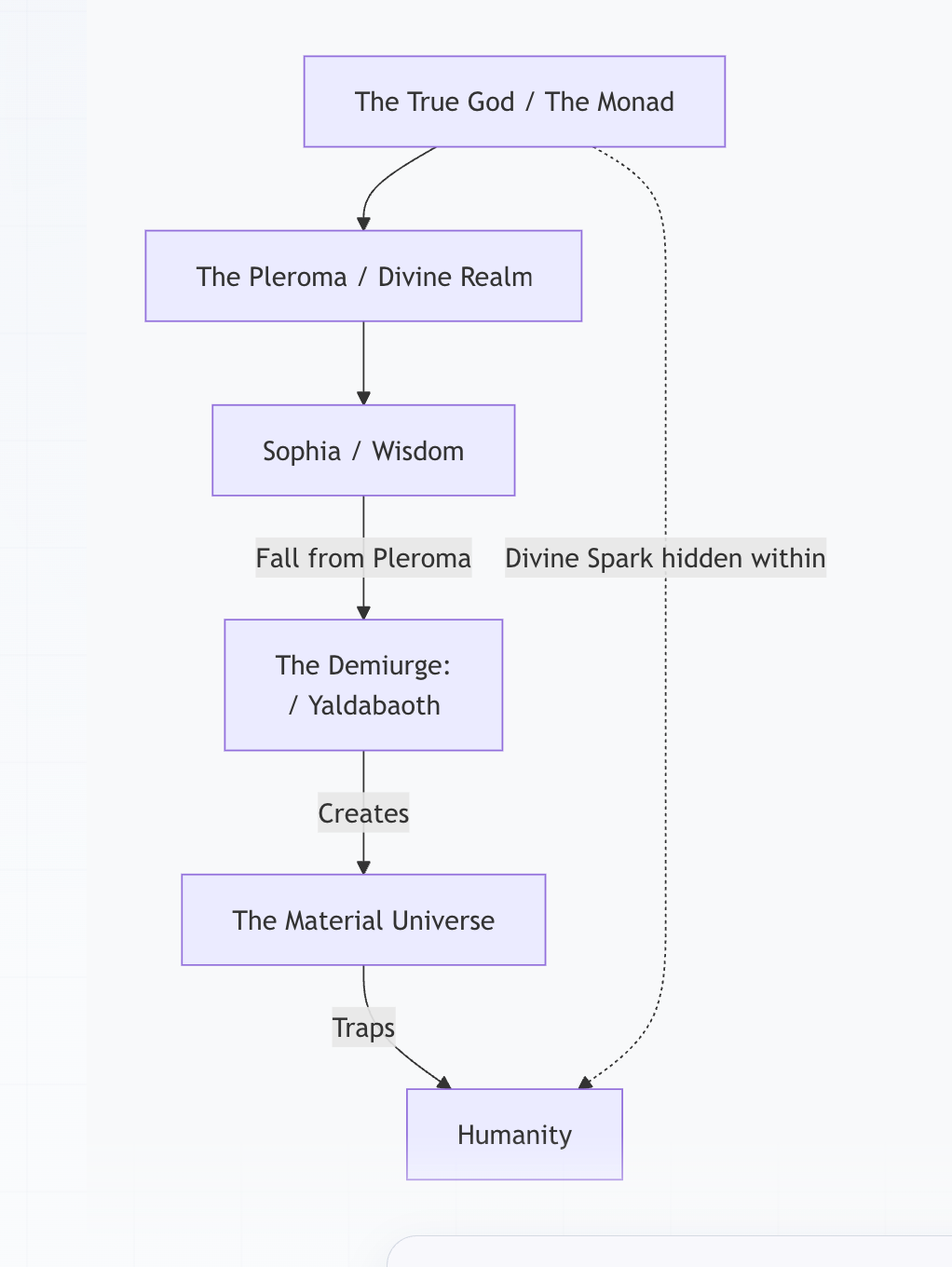
Chapter 1 outlines the radical cosmology that set Gnosticism apart from mainstream Christianity and Judaism. Gnostics looked at the suffering, cruelty, and imperfection of the material world and concluded that it could not possibly be the work of a perfect, loving Supreme Being. Instead, they posited that the physical universe was created by a lesser, ignorant, and sometimes malevolent deity known as the Demiurge. This false creator, often equated by Gnostics with the wrathful God of the Hebrew scriptures, trapped humanity within the physical confines of the material universe.
Despite this bleak view of the physical world, the Gnostic message is ultimately one of spiritual liberation. The chapter details the belief that a "divine spark" originating from the true, transcendent Supreme God is trapped within human beings. Salvation is achieved by waking up to this hidden reality.:
In this framework, Jesus is not viewed as a sacrificial savior who dies to atone for human sins, but rather as an enlightened messenger or revealer sent from the higher spiritual realm to awaken humanity from its state of ignorance and help the divine spark return to its true home.
For centuries, the Gnostics were known almost entirely through the hostile writings of proto-orthodox church fathers like Irenaeus, who branded them as dangerous heretics and systematically destroyed their texts. The chapter highlights the 1945 discovery of the Nag Hammadi library in Egypt as a watershed moment. This unearthing of original, buried Gnostic gospels allowed modern readers to finally hear the Gnostics in their own words, revealing a vibrant and highly mystical strain of early Christianity that was ultimately suppressed by the institutional church.
Core Differences Outlined in the Chapter
The fundamental friction between the proto-orthodox church and the Gnostic movements came down to conflicting interpretations of theology and cosmology.
| Concept | Proto-Orthodox View | Gnostic View |
|---|---|---|
| Material World | Created good by God | Inherently flawed creation of the Demiurge |
| Salvation | Achieved through faith and grace | Achieved through internal gnosis and awakening |
| Jesus Christ | Sacrificial lamb for human sin | Spiritual messenger bringing liberating knowledge |
| Creator God | The supreme perfect Father | An ignorant or arrogant lesser deity |
| Human Nature | Born in original sin needing redemption | Contains a trapped spark of true divinity |
The Gnostic Cosmological Hierarchy
To understand the Gnostic worldview introduced in the chapter, it is helpful to visualize the separation between the true spiritual realm and the flawed material prison.
Summary of Key Takeaways
- Direct Revelation: Gnostics valued personal spiritual experience over external church authority or literal interpretations of scripture.
- Dualism: They maintained a sharp divide between the pure, transcendent spiritual realm and the corrupt, corrupting material world.
- This dualism meant viewing the physical body and material wealth as illusions or traps meant to keep the soul asleep.
- It also led to a rejection of the mainstream doctrine regarding the resurrection of the physical body, viewing true resurrection as a spiritual awakening.
- Historical Suppression: The eventual triumph of orthodox Christianity led to a deliberate campaign to eradicate Gnostic thought, cementing them as the ultimate heretics in Christian history until modern archaeological discoveries revived their texts and vindicated their historical presence.
Chapter 9 explores how Gnostic themes, after centuries of surviving through underground esoteric currents have re-emerged as a powerful force in modern psychological, philosophical and cultural thought. Rather than appearing strictly as a religious revival, modern Gnosticism manifests as a profound sense of alienation from the material world, a distrust of orthodox reality and a quest for inner awakening.
Carl Jung and the Psychological Gnosis
A major focus of the chapter is the Swiss psychiatrist Carl Jung, who is credited with bringing Gnostic concepts into the modern intellectual mainstream by recognizing them as early, symbolic maps of the human psyche.
- The Collective Unconscious: Jung viewed Gnostic deities and archons not as literal beings, but as archetypes residing in the collective unconscious. He believed the ancient Gnostics were introspective pioneers exploring the depths of the human mind.
- Individuation: The Gnostic quest to liberate the divine spark from the flawed material realm closely parallels Jung's concept of individuation—the psychological process of integrating the fragmented, shadowy parts of the psyche to realize the unified "Self."
- The Seven Sermons to the Dead: Smoley highlights Jung's own mystical text, which explicitly channels ancient Gnostic cosmology and terminology (such as Abraxas and the Pleroma), demonstrating Jung's deep personal and professional affinity for the suppressed tradition.
Existentialism and the Alienated Spirit
The chapter examines the striking parallels between ancient Gnosticism and 20th-century existentialist philosophy. Smoley draws heavily on the work of philosopher Hans Jonas, who famously articulated this connection.
- "Thrownness" into the World: Both worldviews share the premise that human beings are "thrown" into an indifferent, often hostile universe that they did not create and do not fully understand.
- Cosmic Alienation: Just as the ancient Gnostic felt like an exiled alien trapped in the domain of the ignorant Demiurge, the modern existentialist experiences profound alienation in a godless, mechanized world. The primary difference is theological: while existentialists generally found only nothingness beyond the material world, Gnostics retained a belief in a transcendent, hidden realm of light.
Science Fiction and the Illusion of Reality
Smoley details how Gnostic paranoia—the suspicion that reality is a fake construct designed to keep humanity docile and ignorant—has deeply permeated modern science fiction and pop culture.
- Philip K. Dick: The influential sci-fi author is presented as a quintessential modern Gnostic visionary. Following a series of profound mystical experiences in 1974, Dick wrote extensively about a false, superimposed reality generated by a malevolent force (which he termed the "Black Iron Prison") and the sudden transmission of awakening knowledge from a higher divine source (VALIS).
- The Matrix and Cinema: The chapter points to films like The Matrix and The Truman Show as modern, secularized retellings of the Gnostic myth. The simulated reality of the Matrix perfectly mirrors the Demiurge's flawed material creation. The protagonist's choice to take the "red pill" represents the acquisition of gnosis—the sudden, liberating, and often painful realization of one's true nature and the illusory state of the surrounding world.
The Modern Appeal of Gnosticism
Ultimately, the chapter concludes that Gnosticism remains highly relevant today because it directly addresses modern anxieties. In an era marked by distrust of large institutions, technological alienation, and a widespread desire for personal, direct spiritual experience outside traditional religious dogma, the Gnostic mythos provides a compelling framework. It validates the modern feeling that the world is inherently flawed, while simultaneously offering hope for ultimate liberation through self-knowledge and inner illumination.