Frank on street photography
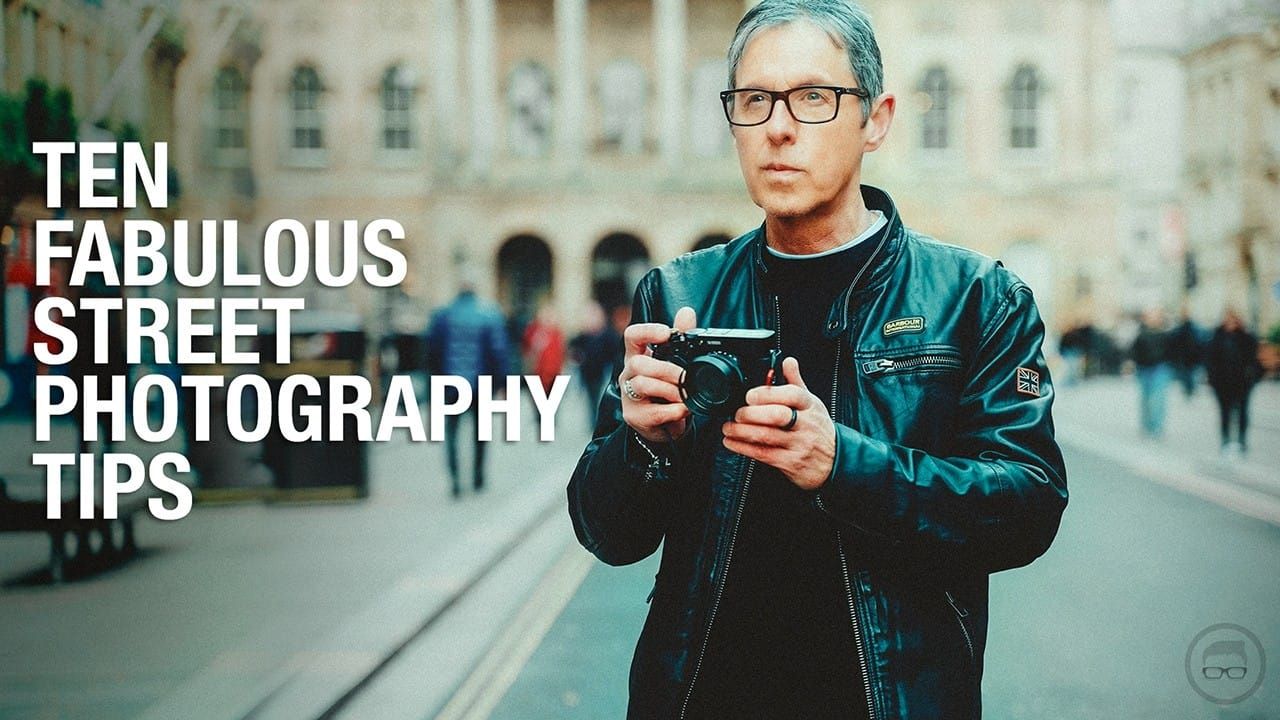
Frank opens by admitting his first attempts at street photography were unremarkable, and that the improvement came from a set of repeatable techniques rather than new gear. He stresses that the ten tips overlap and blend in practice — "a bit of that one mixed with a bit of that one" — and that the aim is for them to become instinctive [1]. No sponsor or advertising segment appears anywhere in the transcript, so none has been carried over below.
The ten tips at a glance
| # | Tip | Core technique |
|---|---|---|
| 1 | Walk with your camera | Screen flipped out, camera at waist level, focus limiter set to 2 m–infinity so you never have to focus manually |
| 2 | Wait in one location | Pick a spot with heavy footfall or activity, then wait for something interesting to enter the frame |
| 3 | Find an interesting background | Match a striking backdrop (mural, poster, shop front) with a subject that completes or contrasts with it |
| 4 | Use the light | Strong sun, hard shadows and silhouettes; shoot at the right time of day and in the right weather |
| 5 | Reflections | Mirrors, glass, large windows and water; wait for the subject to arrive |
| 6 | Isolation | A single figure alone in the frame — easiest when crowds are thin |
| 7 | Activities | Demonstrations, street performers, people at work, public events |
| 8 | Look up | Architecture, converging buildings, features overhead, aircraft |
| 9 | Create a collection | Set yourself one subject for the day (doorways, puddles, shop fronts) and shoot only that |
| 10 | Framing | Use columns, doorways, alley mouths and hatches to frame the subject |
The tips in detail
1. Walk with your camera. The screen is flipped out so he can shoot from the waist without raising the camera to his eye. A focus limiter (found in the camera menu) set from 2 m to infinity removes the need to focus at all, whether by back-button or otherwise. He demonstrates this while walking, catching a man in an Afghan coat, a man sitting on steps beside his mobility scooter, and a woman drinking coffee — then continues walking without breaking stride. He insists the hit rate is surprisingly good, but only if you stay "super observant."
2. Wait in one location. As he has grown older he increasingly prefers sitting still to walking. The requirement is an interesting location with plenty of activity or foot traffic. Examples:
- A wall in front of a famous library building, where children jumped up and walked towards him.
- A park bench by the sea, catching a man with a backpack against the Liverpool skyline.
- Outside a local cinema whose window displayed a large image of people in 3D glasses — he waited for an interesting passer-by to complete the shot.
3. Find an interesting background. Closely related to waiting, but the background leads. Examples include a street-art mural titled One Man, completed by one man walking into shot; a large poster at a bus stop with two men standing either side; a giant dog mural paired with a dog walker; a charity-shop worker outside on a cigarette break; and an old building sign reading "strippers" — in fact a paint-stripping firm — with a man nonchalantly walking a dog past.
4. Use the light. Hard, high-contrast sunlight produces shadows, hard edges and silhouettes, and he notes these print well for wall display. Time of day changes the shadows, so it must be learned. Examples: a huge doorway casting shadow on the Liverpool riverfront; a backlit skater; a shaft of light under an escalator catching two people beneath the stairs; a man eating an ice cream with a seagull sweeping in behind him; leading lines up to an angular museum; a "tale of two halves" with one figure emerging from shadow and another in harsh light; early-morning shadows from a handrail converging with steps; long shadows of a lone walker; and two men casting two identical shadows — "everything in double."
5. Reflections. He calls these easy: find a reflective surface — glass, mirrors or water — and wait. Techniques shown:
- Shooting into shop mirrors so the subject is framed inside the glass, unaware.
- Waiting for a figure to step onto a bridge above water.
- Learning where the reliable reflections are: large panes of glass, big windows.
- A fisheye shot of the Liver Building reflected in the glass opposite — he later sold the lens because he was nicknamed "Frank the fisheye photographer."
- A café shot reflecting the Albert Dock and a carousel, which he values as a piece of social history.
- A mask-wearing woman reflected in a gallery window during the tail end of the COVID epidemic.
- A Madrid "lake" that was in fact a wet pavement, roughly half an inch to an inch deep.
Caveat: puddle reflections need calm conditions — wind or chop destroys them.
6. Isolation. Find a subject entirely alone. Examples: a figure climbing steps by the seaside; an elderly woman isolated against a Madrid shop front, where the juxtaposition does the work; a woman reading on her own at the top of a leading line; a lone man in Liverpool's main shopping complex, only possible because the epidemic had emptied it; and a sulking boy who had walked away from his family — a shot that reminded Frank of his own childhood, when his mother insisted he wore a hat. He also singles out the flight of birds in one isolation frame.
7. Activities. Any street activity creates a "big jumble of interesting things." He adds a caution: be careful what you point your camera at, provided the demonstration is peaceful. Examples: Morris dancers in Mathew Street, including a young man in a dress and wig with hairy legs, apparently fundraising; a limbo performer under a flame, where the crowd's reactions make the picture; an LGBTQ demonstration; three women at Pride with flags draped round them, each looking a different way; a queue of Goths outside a shop in York (shot from waist height with the focus limiter, precisely because stopping to raise the camera might have provoked complaint); a woman being taught to skate by two helpers; and a man delivering potatoes — "a piece of social history."
8. Look up. We rarely do it. Mostly this yields architecture, but the results can be striking: three buildings converging against sky with clouds reflected in the windows; protruding glass panes that look like science fiction; a sharp high-contrast design feature; a doughnut truck angled so the Liver Building peeks over its roof; and a jet plane crossing above a colourful facade. One shot came from testing a zoom lens at a funfair ride on the riverfront.
9. Create a collection. Decide before leaving the house that you will photograph one thing only — doorways, puddles, reflections, market traders — which narrows your focus and forces you to work a theme. His Madrid set covered shop, bar and restaurant fronts with people included: two friends sharing stories outside a café; a repair shop with a woman hemming jeans; a barber's, lit by strong light through the window and layered with a reflection; an old man reading a newspaper; and mannequins' legs beside two older women chatting.
10. Framing. Use existing structure to enclose the subject: two cast-iron Victorian columns on the seafront; an alleyway between two shops; a serving hatch in his local gallery; the mouth of an alley with walls framing the figure at its end — where, with deliberate irony, a blind man walked through "a blind alley." He calls that serendipity: "if you wait, if you plan, these things can happen." A final example at Anfield Stadium uses tiled vanishing-point lines leading up to a figure at the top of the stairs.
References
- 01d8343657fd-10 Street Photography Tips You Need to Know (37%) ↩︎
- Martin Parr (38%) ↩︎
- New Brighton’s lasting tribute to photographer who put town on world ... (25%) ↩︎