Greg and Jay
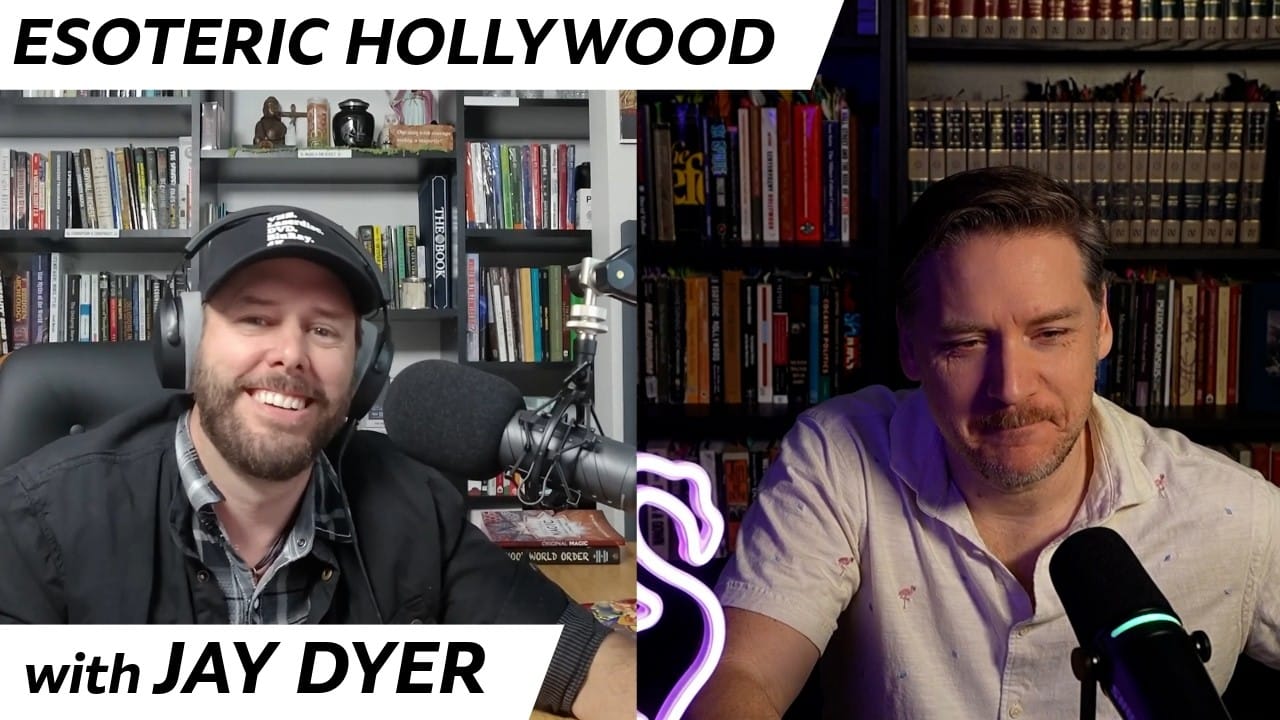
This interview marks Jay Dyer's fourth appearance on The Higherside Chats, celebrating the completion of his Esoteric Hollywood trilogy ten years after his first appearance. The wide-ranging conversation covers Hollywood's deep connections to intelligence agencies, predictive programming in film, and detailed analysis of specific movies and directors.
Dave McGowan and Laurel Canyon
Dyer opens by discussing Dave McGowan's Weird Scenes Inside the Canyon, which exposes Lookout Mountain Laboratory—a secret Air Force film studio in Laurel Canyon that was technologically superior to major studios in the 1940s-1960s. Dyer visited the site (now owned by Jared Leto) and notes its proximity to Mulholland Drive and Manson murder locations. The facility produced atomic bomb test footage and had access given to figures like Marilyn Monroe, Walt Disney, and Jimmy Stewart. This establishes the thesis of Hollywood's deep state connections.
Hollywood Spies List
Dyer compiled a chapter on actors who worked as actual intelligence operatives. The list includes:
- Harry Houdini — Spy for Scotland Yard
- Josephine Baker — Spied for French Resistance
- Audrey Hepburn — Worked with anti-Nazi resistance
- Marlene Dietrich — Attempted to spy for OSS
- Cary Grant — Informed on potential Nazi sympathizers like Errol Flynn
- Sterling Hayden — OSS operative and war hero
- John Ford — Made OSS documentaries
- Julia Child — OSS spy
- Tom Cruise — Post-9/11 alliance with CIA for pro-national security films
- George Clooney and Angelina Jolie — Open CFR members involved in UN activities
Dyer notes Ben Affleck's Argo and Zero Dark Thirty were made with direct CIA consultation, with FOIA documents confirming agency involvement.
Predictive Programming Discussion
A significant portion examines whether fictional media predicts real events. The Dean Koontz novel Eyes of Darkness (1981) originally featured a Russian virus called "Gorki-400," but a 1989 revision changed it to "Wuhan-400" from a Chinese military lab. The British series Utopia depicts a bio weapon release followed by a sterilizing vaccine—eerily similar to COVID scenarios.
Dyer offers multiple explanations: some correlations may be coincidence; some writers have inside knowledge; some practice ritual magic seriously. He notes British spy fiction traditionally encoded real secrets because the Official Secrets Act prevented direct disclosure.
Brian De Palma's Pedigree
The conversation covers Brian De Palma films including The Fury (CIA psychic programs), Raising Cain (explicit trauma-based mind control), Dressed to Kill, Body Double, and Scarface. De Palma's birthday is September 11, 1940—a coincidence that gains significance given his films' themes.
Leave the World Behind Analysis
The Obama-produced Netflix film receives detailed analysis. Dyer highlights its anti-prepper propaganda and a telling line where a defense contractor character claims "nobody's in charge" and the elite don't run anything—absurd propaganda given events like Davos. Hidden elements include "BALE" spelled by actor names, a 666 mug visible in the opening, and "DIE 666" visible when a scene is inverted.
Tom Cruise and Gnostic Themes
Dyer identifies a consistent Gnostic pattern across Cruise's filmography: Oblivion, Edge of Tomorrow, and Mission Impossible films cast Cruise as a Promethean figure rebelling against an archon-like creator deity. This aligns with Scientology's roots in OTO teachings. The TET station in Oblivion references the Tetragrammaton, paralleling Equilibrium's use of the term.
Subliminal Techniques
Carlwood and Dyer discuss how directors with advertising backgrounds employ subliminal techniques. The Exorcist inserted single-frame demonic images. Books visible in films carry intentional meaning—Rosemary's Baby shows a Sammy Davis Jr. biography; The Shining reveals Wendy reading occult texts; National Treasure features a mainstream architecture book about DC's Masonic design.
Joseph Campbell and Hero's Journey
Dyer critiques Campbell's framework as derivative of Carl Jung, who explicitly drew from Gnosticism and Platonism. Dyer notes Campbell's Masonic affiliations and argues that the "hero's journey" pattern itself isn't problematic—the issue is what the hero fights against and what worldview the narrative promotes.
Significant Items
Lookout Mountain Laboratory — A secret Air Force film facility more advanced than major studios, with A-list access.
Wuhan revision in Dean Koontz novel — The 1989 edit changing "Gorki-400" to "Wuhan-400" appears to be intentional predictive programming.
Tom Cruise's Gnostic filmography — Consistent pattern of playing rebel figures against archon-creator deities across multiple franchises.
Julia Child as OSS spy — Unexpected inclusion among Hollywood figures with intelligence backgrounds.
Direct CIA film consultation — FOIA requests confirm agency involvement in Argo, Zero Dark Thirty, and other productions.
Surprising Items
Harry Houdini as Scotland Yard spy — His sleight-of-hand skills and fame made him valuable for espionage work.
Cary Grant informed on Errol Flynn — Grant reported on suspected Nazi sympathizers in Hollywood.
George Clooney's CFR membership — He openly attends Council on Foreign Relations meetings and participates in UN initiatives.
Tom Cruise's post-9/11 CIA alliance — Mainstream news reported his agreement to promote national security narratives through film.
Demon Seed's Crowley connections — The film based on Dean Koontz's work was directed by someone whose father wrote a Crowley biography, embedding explicit Crowleyan ideology.
Brian De Palma's September 11 birthday — Born 9/11/1940, his films consistently explore deep state themes including false flags and mind control.