Hyperion - Dan Simmons
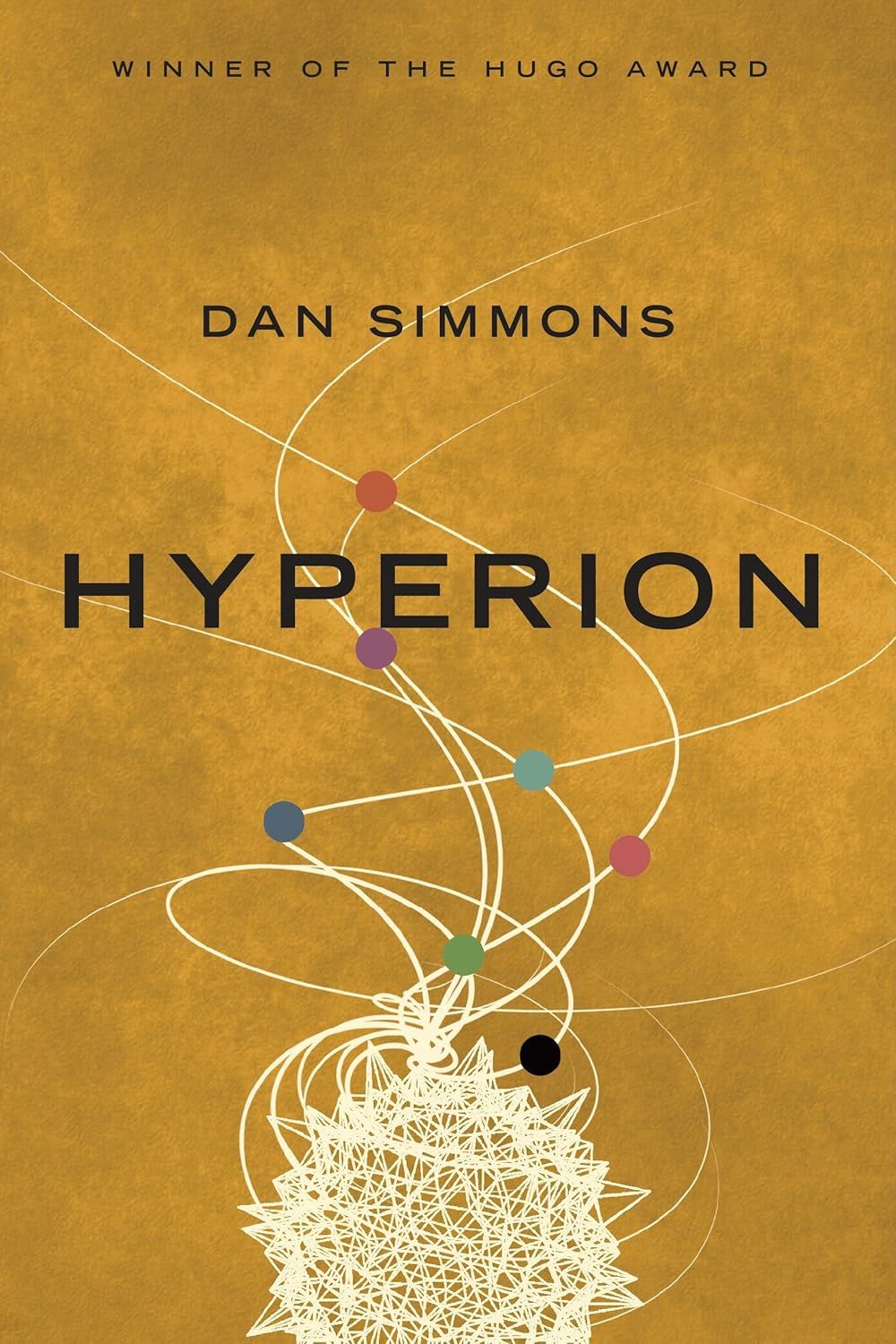
Dylan describes how his interest in science fiction was sparked by a friend's recommendation of A Canticle for Leibowitz by Walter Miller, which led him to discover the Hugo Award — the most prestigious literary award in science fiction, named after Hugo Gernsback, one of the fathers of the genre.
- The first Hugo Award was given in 1953 to Alfred Bester for The Demolished Man.
- While browsing a secondhand bookshop's sci-fi section in December 2023, he found Hyperion by Dan Simmons, which won the Hugo Award in 1990.
- The video promises no major spoilers, giving only enough detail to pique interest.

Literary Inspiration
- Hyperion is structurally modelled on Geoffrey Chaucer's The Canterbury Tales (written before Chaucer's death in 1400, 79 years after Dante).
- In The Canterbury Tales, 31 pilgrims travel from London to Canterbury to visit St Thomas Becket's shrine, each sharing their story along the way.
- Hyperion adopts this frame: seven pilgrims travel to the planet Hyperion, each sharing their story en route. Their destination, however, is not a saint's shrine but something "far more mysterious and horrifying."
The Five Reasons
Reason 1 — The Characters Feel Alive
- Unlike films where underdeveloped characters fail to earn emotional investment, Hyperion develops each pilgrim through their own story, so you come to understand their motivations and want them to succeed.
- The longer time spent reading (weeks versus a 90-minute film) allows concepts to "reverberate through our thinking" — you speculate about outcomes even when not reading.
- By the end of each pilgrim's tale, the character occupies a "much grander space in your mind," and subsequent comments feel "loaded" with an entire personality.
- The comparison is drawn to video game worlds that feel as though they keep running even when switched off.
Reason 2 — It Appeals to Various Types of Readers
- Each pilgrim's story reads like a novel within the novel, feeling as if a different author wrote each one.
| Pilgrim | Role | Tale's Genre/Feel |
|---|---|---|
| Lenar Hoyt | Catholic priest | Sci-fi horror |
| Fedmahn Kassad | Soldier | Action romance film |
| Martin Silenus | Poet | Written as if by a poet from the future |
| Het Masteen | Templar | (not individually characterised in the transcript) |
| Saul Weintraub & Rachel | Scholar and infant daughter | Emotional tale — "will have you calling your parents" |
| Brawne Lamia | Private detective | Murder mystery |
| The Consul | Consul | (not individually characterised in the transcript) |
- Despite the genre variety, all stories share a common thread — something that has placed each pilgrim on this pilgrimage.
- Even if you don't typically like sci-fi, Hyperion is described as "a wonderful starting point."
Reason 3 — The Narrative Is Jaw-Dropping
- The individual tales are compelling, but the real substance is the larger narrative connecting them — the group dynamic and the overarching journey.
- A pervasive sense of dread and mystery surrounds the final destination, whether travelling by ship or spending an evening in a bar.
- Simmons reveals "just enough to keep you interested without ever losing control," leaving you with key unanswered questions:
- What is the Shrike and what does it want?
- What do all the pilgrims' tales have in common?
- What is the cruciform?
- Simmons is praised for his "masterful attention to detail" — using the "up close and personal" as a bridge to understand "the abstract and the incredible."
Reason 4 — The Priest's Tale
- If you were to read only one pilgrim's tale, the narrator recommends Father Hoyt's tale "10 times out of 10."
- The priest searches for an almost mythical group called the Bikura and discovers a horrifying secret:
- There are always exactly 70 of them.
- He cannot identify any children.
- He cannot distinguish males from females.
- They seem to have "no rhyme or reason."
- The tale reads like a blend of sci-fi horror, adventure, and on-the-ground journalism — "nothing quite like it."
- The narrator speculates Simmons may be Catholic or was raised so, because the priest's "actions, thoughts, prayers and wishes all felt so real and sincere," as if reading the actual diary of a priest in a horrific situation on a distant planet.
- "You are not ready for it, but you will be grateful you weren't."
Reason 5 — It's a Surprisingly Easy Read
- Despite sci-fi's reputation for being complicated, Hyperion "often surprised me with how smoothly it read."
- Simmons' writing is descriptive without being overly dense; he takes time to develop characters and ideas.
- His ideas are "so unique and strange" they leave you wondering if you've "ever really used your imagination before."
- The novel feels "both strange and familiar," prompting existential questions about what it means to be human while remaining richly entertaining.