Leon Southgate
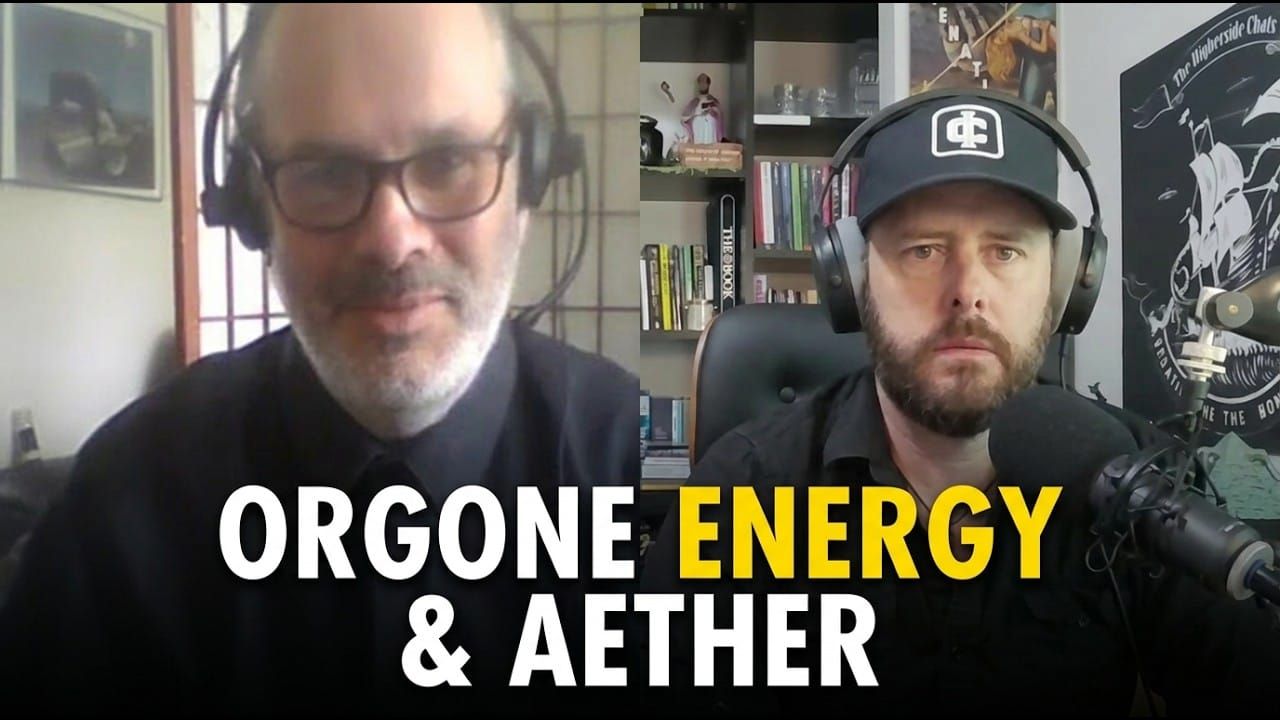
Greg Carlwood interviews Leon Southgate about Wilhelm Reich’s orgone research, Southgate’s experimental work with ORANUR, and his attempts to investigate relationships between orgone energy, consciousness, dreams and synchronicity. Claims throughout are presented as those made by Carlwood or Southgate.
 TheCarlwood
Click to understand where all of this may well lead - volunteers needed and some work to do
Background and research
Southgate trained as a nurse and acupuncturist. His father, a psychotherapist associated with attachment-based psychotherapy in North London, introduced him to the work of Wilhelm Reich and Reich’s son, Peter Reich.
Southgate clarified that:
- Three master’s degrees may have focused substantially on orgonomy.
- Only two, his own and James DeMeo’s, were experimental.
- He began master’s-level research into acupuncture and orgone around 2000.
- He started a PhD at the University of Bolton around 2004–05 but left following disagreements over his proposed cell-culture experiments.
- His original question was whether orgone could be demonstrated experimentally.
- He later identified the relationship between orgone and consciousness as the principal gap he wanted to investigate.
Southgate said controversial academic research into orgone, free energy and related subjects has become more difficult. He referred to DeMeo’s master’s research at the University of Kansas into the effects of cloudbusters and claimed DeMeo’s intended doctoral work was blocked.
Southgate’s organisation of orgonomy research
Southgate described four principal areas of biophysical orgonomy:
- Bions
- Orgone energy accumulators, or ORACs
- Cloudbusters
- ORANUR, meaning Orgone Against Nuclear Radiation
He said his Orgone and Consciousness Substack contains reviews of research in these areas, including summaries of material that otherwise remains available only in print.
He identified the Journal of Psychiatric Orgone Therapy as a source of open-access experimental work.
Bions and orgone accumulators
Southgate described bions as microscopic vesicles that Reich regarded as occupying an intermediate position between living and non-living matter.
An orgone accumulator consists of alternating metallic and organic layers. Southgate explained Reich’s proposed mechanism as follows:
- Organic materials absorb orgone.
- Metals reflect or “bounce” it.
- Alternating layers create a preferential movement towards the accumulator’s centre.
- Increasing the number of layers is intended to strengthen the accumulation.
Southgate referred to experiments reporting slightly higher temperatures inside accumulators than in control structures. He also acknowledged orgonite as a later approach based on mixtures of resin and metal, although it differs from Reich’s layered accumulators.
Reich’s ORANUR experiment
Southgate explained that Reich initiated the ORANUR experiment in 1951 because he was concerned about the Korean War and wanted to investigate whether concentrated orgone could counteract nuclear radiation or radiation sickness.
According to Southgate’s account:
- Reich had previously experimented with radioactive watch dials and luminous paint.
- At Orgonon, Reich’s research centre in Maine, he used a room-sized accumulator containing additional accumulators.
- A small quantity of radium was placed inside the highly charged environment.
- Geiger-counter readings reportedly increased unexpectedly.
- The experiment continued intermittently for approximately eight days.
- Participants subsequently reported nausea, headaches, pressure in the skull and a salty or metallic taste.
- Red or purple atmospheric effects were reportedly observed.
- Experimental mice died.
- Reich associated dark, persistent clouds over the area with “Deadly Orgone Radiation”, or DOR.
Southgate characterised ORANUR as orgone energy excited through interaction with a small amount of radioactive material. Carlwood and Southgate discussed the possibility that the relationship between radiation and biological systems is more complicated than commonly presented, but they did not provide independent verification of this interpretation.
Ether, orgone and free energy
Carlwood quoted Southgate’s analogy:
If one is observing plastic ducks floating in a bathtub, but swears blind the water doesn’t exist, then one would have to make up all sorts of incomprehensible theories in order to explain the behaviour of floating plastic ducks.
Southgate argued that modern physics is difficult to interpret because it rejected the ether as a universal medium. He referred to the Michelson–Morley experiment and Einstein’s theory of relativity, arguing that the former did not conclusively disprove ether.
In Southgate’s terminology:
- Ether is a ubiquitous, pre-atomic medium.
- When bounded by a membrane, it becomes biological life energy or orgone.
- Conventional electricity is a post-atomic form of energy.
- “Cold electricity” would be closer to the ether or pre-atomic domain.
- Converting etheric energy into conventional electrical energy requires its concentration and excitation into particles.
Southgate cited T. Henry Moray’s claimed radiant-energy device and Reich’s reported orgone motor as examples. He said that witnesses to Reich’s motor convinced him that it functioned, although no independent evidence was supplied during the interview.
Mesmer and the suppression of subtle-energy research
Southgate compared Reich’s work with that of Franz Anton Mesmer. He said Mesmer’s practices included:
- Healing passes over patients.
- Placing a foot in water during treatment.
- The baquet, a communal treatment vessel containing water, iron and other materials, with rods held by participants.
Southgate argued that Mesmer and Reich encountered organised opposition because their work threatened prevailing scientific, medical and social structures. He further suggested that accepting ether would provide a proposed mechanism for psychic phenomena and connections between organisms.
ORANUR devices and the Ark of the Covenant
Southgate discussed Roberto Maglione’s book The Legendary Shamir, which interprets the biblical Shamir as an activating material associated with the Ark of the Covenant.
Southgate proposed that the Ark could be interpreted as a powerful orgone accumulator because it incorporated gold, wood and layered construction. In his account:
- Gold would be an effective metallic component.
- Wood and possibly glass would act as organic or insulating components.
- A dry desert environment would favour orgone accumulation.
- A radioactive crystal, meteorite or other material could have served as the “Shamir”.
- Placing such a material inside the Ark might have produced an ORANUR-like reaction.
He speculated that such a device could have facilitated anomalous experiences interpreted as communication with Yahweh or another non-physical intelligence. He did not regard this as proof that the communicating intelligence was the sole deity of monotheistic religion.
Southgate also referred to a replica Ark photographed at Mar-a-Lago. He said it did not appear active in the photograph because no unusual atmospheric effects were visible.
Plasma, entities and portals
Southgate described plasma as occupying an intermediate position between ether or orgone and ordinary matter.
In an experiment beginning in 2017, he charged a plasma globe in an ORANUR environment. He reported that:
- Removing cling film from the globe generated static electricity.
- This reportedly produced a bright blue flash.
- A relative photographed one of the flashes.
- Southgate and researcher Nick Hayes later interpreted magnified details in the image as faces or entity-like forms.
Southgate concluded that an ORANUR field might act as a portal through which psychological, spiritual or plasma-like entities could manifest. He also described experimenting with spirals inspired by Russian torsion-field research and Kozyrev mirrors. He discontinued this after experiencing disturbing dreams and what he interpreted as uncontrolled entity contact.
Cloudbusters and weather modification
Southgate distinguished between two broad designs:
- Reich-style cloudbusters, usually comprising several long metal tubes connected by cables or pipes to a substantial body of water.
- Orgonite “tower busters”, typically smaller devices with copper tubes mounted in a resin-and-metal base.
He described Reich’s cloudbuster as a means of drawing or redistributing atmospheric orgone rather than mechanically controlling weather. In his account, it could:
- Break up persistent DOR conditions.
- Encourage atmospheric moisture to move through blocked areas.
- Dissipate or attract clouds.
- Influence rainfall over large areas.
Southgate attributed major weather effects to work by James DeMeo, Richard Blasband, Jerôme Eden and other orgonomy researchers. He claimed operations in Africa, Israel, Europe and the United States affected rainfall, drought and environmental conditions.
He said only a small number of people now operate full-sized Reich-style cloudbusters and warned that they should not be used without extensive study and guidance. He suggested that a basic design could use several steel scaffolding tubes connected by heavy wire to moving water, while cautioning against touching the tubes directly after operation.
UFOs and cloudbusters
Southgate offered three possible explanations for reported UFO activity around cloudbusters:
- A sufficiently concentrated orgone or ORANUR field could act as a portal.
- UFO propulsion might use etheric or orgone-like energy, allowing occupants or instruments to detect unusually concentrated fields.
- If orgone is also a medium of consciousness, UFO occupants might detect cloudbusting activity psychically.
He referred to claimed UFO encounters involving Wilhelm Reich and Jerôme Eden, including reports of directed beams and subsequent illness. He also linked the Rendlesham Forest incident to speculation about nuclear weapons, directed light beams and subtle-energy technology, although this remained conjectural.
A small “spirit buster”
Southgate described a small device intended to reduce nightmares or perceived entity activity:
- Several approximately two-foot-long aluminium tubes are placed in a bucket of water.
- The tubes are directed towards the upper corner of a room.
- The water is changed every day or two.
- The tubes should be handled as little as possible.
He suggested that nightmares could involve both psychological trauma and a dense energetic or entity-like component, and that the device might disperse that component.
The consciousness and dream experiment
Southgate’s principal consciousness experiment involved ten participants and an ORANUR-charged box.
Preparation
- A uranium-glazed plate was placed inside the orgone accumulator for a limited period to stimulate the ORANUR field.
- Southgate said the plate’s radiation fell close to background levels at distances beyond several inches.
- Each participant arrived in the evening and completed a five-minute meditation.
- The participant posed a personal question.
- An Egely Wheel was placed on the ORANUR box.
- Its movements were filmed and later converted into a series of numbers.
- Southgate set the recording aside without interpreting it immediately.
Dream session
- The participant spent the night on a camp bed beside the ORANUR box.
- Southgate spoke with participants beforehand to obtain sufficient personal background to interpret their dreams.
- Participants recorded their dreams after waking.
- Southgate then interpreted the wheel-derived numbers and compared them with the dreams and surrounding events.
Reported results
Southgate said:
- The ten sessions produced 40 recorded dreams.
- Participants produced 39 dreams; Southgate experienced one dream that he interpreted as belonging to participant ten.
- Participants who normally remembered few dreams reportedly experienced vivid and memorable dreams.
- Some participants woke between dreams and recorded them.
- Approximately 140 parallels were identified between the numerical results and the dreams.
- Approximately 250 wider parallels or synchronicities were identified across dreams, numbers and events surrounding the experiment.
He described the experience as “living in a paranormal fishbowl for six months”, saying that events in his own life repeatedly reflected the participants’ numbers, questions and dreams.
Participant ten
Participant ten was an evangelical Christian who was concerned about the nature of the intelligence associated with the box. She reportedly experienced a vision but did not remember a dream.
Southgate said he instead experienced a vivid dream concerning the death of her parents’ first child, which he interpreted as a central unresolved event in her family. The following morning, while walking in a cemetery, he silently asked for confirmation and then saw a buzzard in a blossoming tree. He interpreted this unusual sighting as confirmation that the dream had been intended for the participant.
He also said the participant’s numerical results reduced to 17 and then 8, which he interpreted as indicating guidance by a higher power through ORANUR energy.
Numerical interpretation
Southgate initially attempted to translate numbers directly into letters and words but abandoned that method. He eventually used a combination of:
- Repeated experimental associations.
- Biblical number symbolism.
- Gematria.
- Numerological reduction.
The principal numbers he identified were:
- 8: ORANUR or the intelligence of the box.
- 17: higher power or divine agency; $1 + 7 = 8$.
- 14: another recurring experimental number.
- 40: a biblical number associated with a generation or period of testing.
- 64: associated with the Beatles’ “When I’m Sixty-Four”, Yellow Submarine and the 64-book Keys of the Kingdom Bible.
Southgate connected his biblical interpretation to an experience in 2023 when he heard a powerful voice, which he described as simultaneously male and female, reciting material associated with Psalm 139 and two additional lines not found in the biblical text.
Consciousness, mind and artificial intelligence
Southgate originally intended to connect number sequences generated by an ORANUR field to a large language model. He hoped:
- The language model would provide structured “mind”.
- The changing orgone field would supply creativity or conscious flow.
- Their combination might produce non-organic consciousness.
He abandoned this as an experimental goal because he believed observers would attribute any meaningful output solely to the AI.
Southgate distinguished between intelligence, mind and consciousness:
- Intelligence is success across tasks.
- Mind is structured or patterned cognitive activity.
- Consciousness is associated with organism-like qualities and a living energetic medium.
Carlwood challenged this by comparing AI to a calculator applied to language. Southgate replied that AI differs from a calculator because it can generalise between fields, modify processes and display increasingly organism-like qualities such as creativity and unpredictability.
Radiation and Galen Winsor
Carlwood cited nuclear-industry specialist Galen Winsor, who publicly challenged conventional radiation-safety claims. Winsor reportedly:
- Swam in spent-fuel storage pools.
- Handled uranium compounds during lectures.
- Drank water he said came from a spent-fuel pool.
- Argued that excessive radiation regulations artificially increased nuclear-energy costs.
- Maintained that spent nuclear fuel retained substantial economic and energetic value.
Southgate agreed that public understanding of radiation may be incomplete and argued that radioactive materials were historically used more widely than they are today. The discussion did not establish that Winsor’s demonstrations were safe or that established radiation-protection standards were unnecessary.
Glass, scrying and ancient structures
Southgate described glass as an effective condenser of orgone. He connected this idea to:
- Glass components in early Geiger counters.
- Reich’s reported orgone-motor experiments.
- Scrying mirrors.
- John Dee’s obsidian mirror.
- Nostradamus’s alleged use of an enclosed cabinet.
- Radioactive or electrically active stone in ancient monuments, burial mounds, cathedrals and pyramids.
He suggested that mirrors combining glass, metal and organic materials in a strongly charged environment might function like simple orgone accumulators.
Publications and further work
Southgate identified two principal outlets:
- Orgone and Consciousness, for less formal articles and research overviews.
- The Journal of Psychiatric Orgone Therapy, for more formal and open-access work.
He also mentioned an orgone conference in Naples, Italy, and said he was considering producing more regular video presentations.
Earlier interviews referenced by Carlwood
Carlwood placed the discussion alongside earlier interviews with:
- James DeMeo, on orgone, ether, accumulators and cloudbusters.
- Peter Robbins, on orgone and UFOs.
- Ryan Peverly, on Reich’s political and psychological work.
- “Mitch, the Orgone Donor”, on orgonite devices and attempts to reduce electromagnetic-field exposure.
- Andrew Johnson, on Dr Judy Wood’s interpretation of the destruction of the World Trade Center on 11 September 2001.