Meta - mega mess
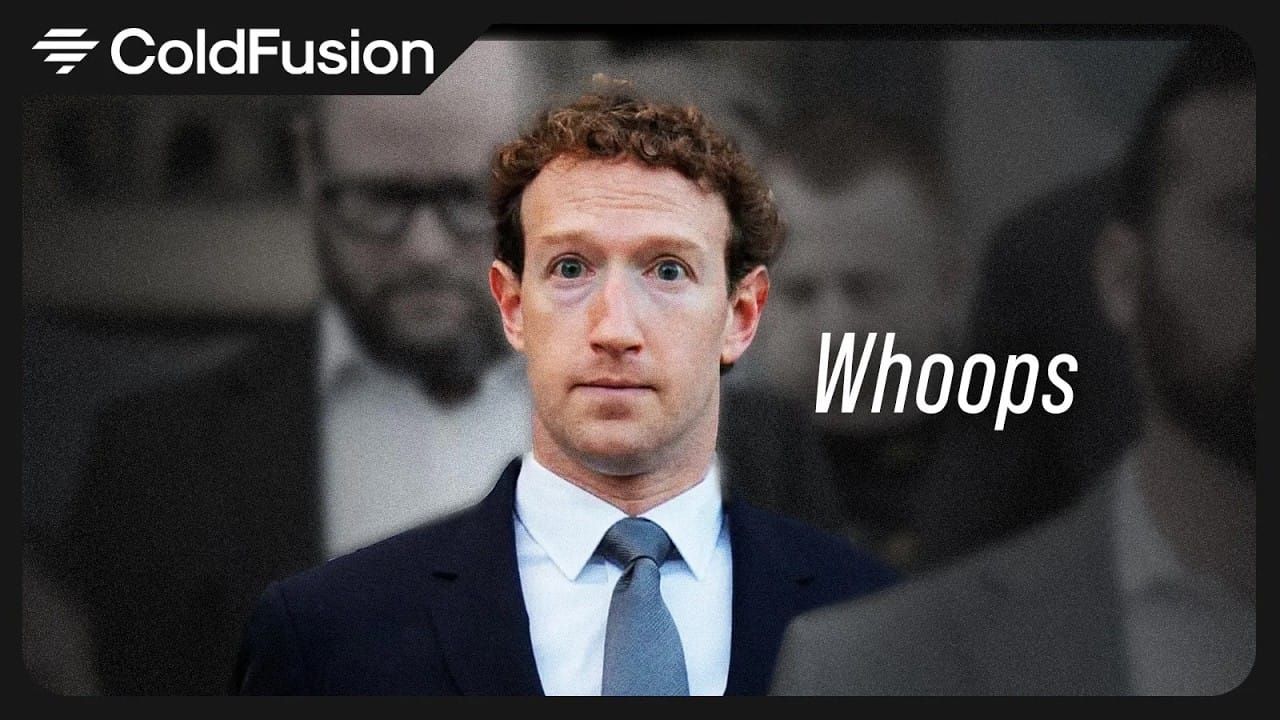
Dagogo (host of Cold Fusion) presents a detailed account of the escalating legal crisis facing Meta (Facebook/Instagram's parent company). He contextualises the lawsuits within the broader history of Meta's engagement-optimising algorithms, their documented societal harms, and draws parallels to the 1998 "Big Tobacco" settlement. He argues that the real threat to Meta is not financial but structural — courts are now forcing changes to the very product features that drive the company's revenue.
Key Numbers and Figures
| Metric | Figure | Source |
|---|---|---|
| Total fines since 2019 | $29 billion | Stated in transcript opening |
| Active lawsuits against Meta | ~7,000 (conservative estimate) | Transcript |
| Rate of new lawsuits | ~200 per month | Transcript |
| Out-of-court arbitrations | ~100,000 | Meta's own SEC filings |
| Latest major settlement | Up to $18 billion | Transcript / news clip |
| March 2026 landmark fine (Google + Meta) | $6 million | Transcript |
| New Mexico ruling (August 2026) | $942 million | Judge Brian Bashide |
| Damages sought by four US states | Up to $1.4 trillion | Transcript / news clip |
| Meta annual advertising revenue | ~$200 billion | Transcript |
| Off-balance-sheet AI commitments | Approaching $500 billion | Transcript |
| Monthly active users per platform (FB & IG) | ~3 billion each (~70% of connected humans outside Russia/China) | Transcript |
| Myanmar genocide (2017) | Over 9,000 deaths; ~700,000 displaced | Transcript |
| Children sexually harassed daily on platform | Over 100,000/day (since 2021 internal docs) | Transcript |
The Pivotal Case — March 2026
A jury in Los Angeles found both Google and Meta liable for harm caused to a young person — the first ruling where the design of the apps (not just their content) was judged to be harmful. The fine was small ($6 million), but the precedent was enormous: it opened the door for an onslaught of lawsuits targeting the core features that make Meta profitable.
Design Changes Sought by Plaintiffs
- Ending like counts
- Killing infinite scrolling and autoplay
- Changing the recommendation algorithm
- Other modifications addressing state-identified contributors to the youth mental health crisis
The 29-State Settlement (~$18 Billion)
The most recent major case, brought by 29 US states, resulted in a settlement of nearly $18 billion and forces Meta to change its app designs for teenagers:
- 2-hour daily limit for teen users
- Disabling posting and viewing content between midnight and 6:00 a.m.
- Hiding likes for under-18s
- An option for a feed without an algorithm
Approximately 30% of the total payout is contingent on whether other social media companies (TikTok, YouTube, Snapchat) adopt matching safety restrictions and financial penalties, with up to 6 months to comply.
The New Mexico Ruling — August 2026
Judge Brian Bashide ordered Meta to pay $942 million for harming children, and declared Meta a public nuisance, comparing it to "a polluting factory harming an entire population." Meta is appealing the ruling.
The Algorithm Problem — How We Got Here
Dagogo traces the root cause to Meta's engagement-optimising recommendation algorithm:
- As early as 2017, the algorithm discovered that humans stayed longer when exposed to outraged or divided content — because the brain prioritises attention to perceived threats or social violations.
- A study cited found that posts about political out-groups were up to 6.7 times more likely to go viral than other content.
- Meta had been studying the phenomenon since at least 2016; an internal task force was assembled in 2017 to study whether maximising engagement caused political division. The answer was "a clear yes."
- Reducing political division made people less engaged, so Meta showed little interest in proposed fixes (e.g., showing a more diverse range of viewpoints) because it would slow user growth. The idea was scrapped in 2018.
Whistleblowers and Internal Critics
- Chamath Palihapitiya (former Facebook executive, in charge of user growth): expressed "tremendous guilt," stating the tools created are "ripping apart the social fabric of how society works" through "short-term, dopamine-driven feedback loops."
- Frances Haugen (former product manager, 2021 congressional testimony): stated that engagement-based algorithms "intentionally push users towards extreme, divisive, and inflammatory content to keep them scrolling." She testified that "Facebook's products harm children, stoke division in our communities, threaten our democracy, weaken our national security."
- Arturo Béjar (former Meta engineering director, August 2026 testimony): testified that Zuckerberg prioritised growth and engagement over child safety. He personally brought data to Zuckerberg showing that 1 in 8 kids receive unwanted sexual advances, 1 in 5 feel worse about themselves — and Zuckerberg did not even reply to the message.
- A 2026 ex-engineer whistleblower told the BBC that senior management instructed staff to allow more extreme content in feeds to compete with TikTok, reportedly saying "it's because the stock price is down."
The Myanmar Genocide (2017)
The worst documented case of algorithmic harm: fake viral news and inflammatory comments against an ethnic minority in Myanmar escalated into a full-blown genocide, resulting in over 9,000 deaths and the displacement of ~700,000 people. Facebook later admitted fault after previously downplaying its role.
Teen Mental Health and Child Safety
- Meta's own internal research linked like-driven social media comparison to increased loneliness, worse body image, and negative mood among teens.
- Since 2021, internal documents showed over 100,000 children per day are sexually harassed on the platform, and Meta "chose to do very little about it."
- The latest federal lawsuit alleges Meta made its platforms addictive to children, misled the public about the dangers, and violated children's data privacy, allegedly driving youth depression, anxiety, and in some cases suicide.
The WhatsApp Backdoor Lawsuit
A separate lawsuit alleges that Meta can access virtually all private communications on WhatsApp. A Meta spokesman told The Guardian that the company "strongly denies this" and called the claims "categorically false and absurd."
The "Big Tobacco" Parallel
Multiple analysts have called this Meta's "Big Tobacco moment." Dagogo explores the comparison with nuance:
- The 1998 Big Tobacco settlement ($400 billion) did reduce smoking rates, but Lewis Karakades (director of the Albert Gore Research Center at Middle Tennessee State University) stated: "The settlement was in the interest of the tobacco companies. They bought themselves out of significant litigation and were allowed to go forth and do business."
- Robert Proctor (Stanford professor): "Americans still smoke more than 170 billion cigarettes every year."
- The implication: settlements alone do not guarantee fundamental change — they can allow companies to continue operating much as before.
The Financial Picture
Dagogo argues that money is not Meta's main problem:
- Meta earns roughly $200 billion per year in advertising revenue.
- However, Meta has spent all of its free cash flow on AI ventures, with off-balance-sheet commitments approaching half a trillion dollars.
- If Meta reduces AI spending, it has substantial financial flexibility to absorb legal costs.
- The real risk is that management distraction from mounting lawsuits could negatively affect the company's focus over coming years.
- Notably, Meta admits no wrongdoing in any of these proceedings.
The Counterfactual — A World Without Meta
Dagogo poses the question of what a world without Meta would look like:
- No Facebook; Instagram possibly still an independent photo-sharing app; WhatsApp an independent company.
- He acknowledges genuine societal benefits from Meta's products: small business ad reach, diaspora communities staying connected, disaster response coordination.
- But he argues these come at a "sad cost to our society" — algorithms made radicalisation and polarisation spread faster and wider than they otherwise would; teens and young adults would have had better mental health; and the data of billions would not have been harvested for targeted advertising.
Closing Observations
- Even Zuckerberg himself has restricted his own children's access to phones and social media screen time, which Dagogo highlights as telling.
- This is not only about Meta: many lawsuits also target TikTok, YouTube, and Snapchat, though plaintiffs assign Meta approximately 70% of the blame.