Mythos - Stephen Fry
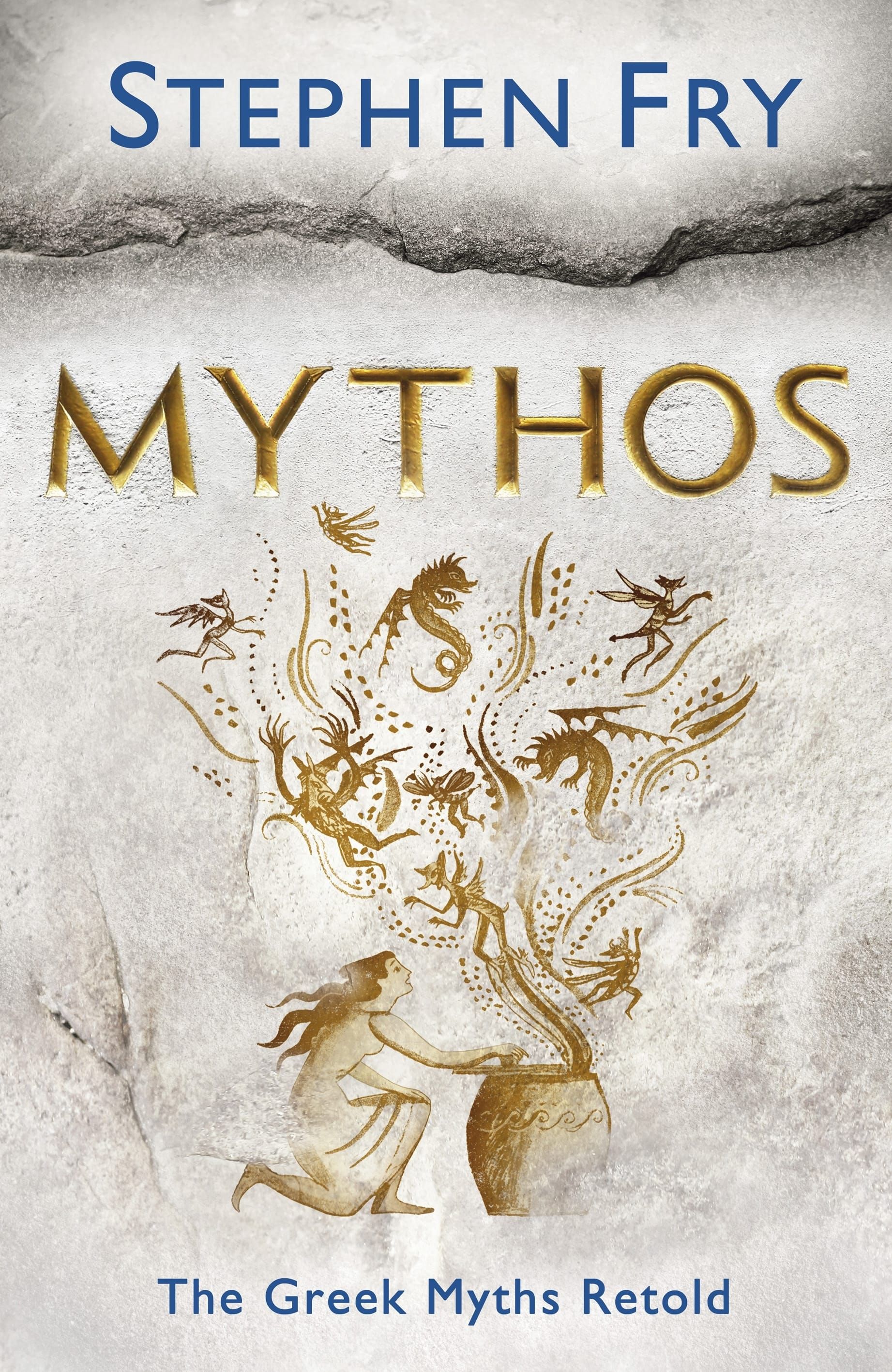
1. Creation from Chaos
The book opens at the very beginning — not with a fiery explosion, but with Chaos, a vast yawning void. From this nothingness emerge the primordial forces: Erebus (darkness) and Nyx (night), who then produce Hemera (day) and Aether (light). Then comes Gaia (Earth) and Tartarus (the depths). Fry compares Chaos to things like "computer upgrades" and describes the cosmos as messy as "a teenager's bedroom," making these abstract forces feel tangible and funny [1].
2. Kronos Castrates Ouranos — and Aphrodite Is Born
Gaia (Earth) and Ouranos (Sky) produce the Titans — six male, six female — plus monstrous triplets: the one-eyed Cyclopes and the hundred-handed Hecatonchires. Disgusted by his weird children, Ouranos shoves them back into Gaia's womb. In agony and rage, Gaia forges a great adamantine sickle and recruits her youngest Titan son, Kronos, to overthrow his father. Kronos ambushes Ouranos and castrates him. From the blood soaking the earth spring the Erinyes (Furies), the Gigantes, and ash-tree nymphs. And from the sea foam where Ouranos's severed genitals land rises Aphrodite — beauty born from violence. Fry brands Kronos "Old Father Time – or Old Father Timer," a pun on the Greek root of "chronology" [1:1].
3. The Birth of Athena
Zeus swallows the wise Titaness Metis so she can serve as his permanent inner counselor — but she's already pregnant. Soon, Athena, goddess of wisdom and strategy, erupts fully armed from Zeus's skull. In Fry's vivid retelling, you "gaze in wonder" as the great head of Zeus cracks open and out strides the warrior goddess[2].
4. Prometheus and the Theft of Fire
Prometheus crafts humans from clay and brings them to life. He then steals fire from the gods to give to humanity — an act of defiant generosity. Zeus's vengeance is brutal: Prometheus is chained to a rock in the Caucasus Mountains, where an eagle (or vulture) tears out his liver every day; it regenerates each night, ensuring perpetual torment[1:2].
5. Pandora's Jar (Not a Box!)
As part of his punishment of humanity, Zeus commands Hephaestus to fashion the first woman, Pandora, endowed with beauty and cunning by the gods. She's presented with a sealed jar (Fry insists it's a jar, not a box — the "box" came from a later mistranslation) with a strict "do not open" warning. Hermes delivers her to Prometheus's brother Epimetheus, who marries her. Unable to resist, Pandora opens the jar, releasing all sorrows, diseases, and evils into the world. Only Hope (Elpis) remains trapped inside[3].
6. Persephone and the Seasons
Hades abducts Persephone, daughter of the harvest goddess Demeter. Demeter's grief is so profound that the earth grows barren — nothing grows, and famine threatens. Zeus is forced to broker a compromise: Persephone spends six months underground with Hades (during which Demeter mourns and the earth is barren — winter) and six months above (spring and summer return). Thus the myth explains the cycle of seasons[1:3].
7. Eros and Psyche
The god of love, Eros, falls for a mortal princess, Psyche. Through betrayal and jealousy, he loses her, and Psyche must endure a series of impossible trials set by Eros's mother Aphrodite. Ultimately, Zeus intervenes, making Psyche immortal, and the two are reunited — one of the few myths with a genuinely happy ending.
8. King Midas — The Golden Touch (and the Donkey's Ears)
King Midas of Phrygia wishes that everything he touches turn to gold — then watches in horror as his food, his wife, and even his infant daughter become cold, lifeless metal. Dionysus eventually lifts the curse. But Midas doesn't learn: he later judges the rustic pipes of Pan superior to Apollo's lyre. The insulted Apollo gives him donkey's ears. When a barber whispers the secret into the ground, a reed grows and spreads the news on the wind. The humiliated king drinks poison and dies.
9. Other Notable Tales
| Story | What Happens |
|---|---|
| Phaeton | The son of the sun god borrows the sun chariot, loses control, and crashes — scorching the Sahara [1:4] |
| Arachne | A mortal weaver boasts she's better than Athena; she's turned into a spider [1:5] |
| Sisyphus | Condemned to push a boulder up a hill forever — it always rolls back down [1:6] |
| Echo | Punished by Hera to only repeat others' words; she fades until nothing remains but her voice |
| Dionysus | The "Twice-Born" god of wine, revelry, and theatre [1:7] |
What Makes Fry's Versions Special
Fry doesn't just recount — he animates. His gods sulk, shriek, and quip like dysfunctional family members. He uses modern slang, hilarious asides, and anachronisms to make these ancient stories feel fresh. He balances the big cosmic drama (castrations, the Titan war) with intimate, quirky tales (Phaeton's joyride, Midas's golden disaster), knowing exactly when to speed through genealogies and when to slow down for emotional impact — like Prometheus's torment or Pandora's fateful choice [1:8].
He also doesn't sanitize the myths — the violence, sex, and dark themes remain, but the humor keeps it from feeling grim. As he writes, these stories are "addictive, entertaining, approachable and astonishingly human" [1:9].
References