Omarchy will win
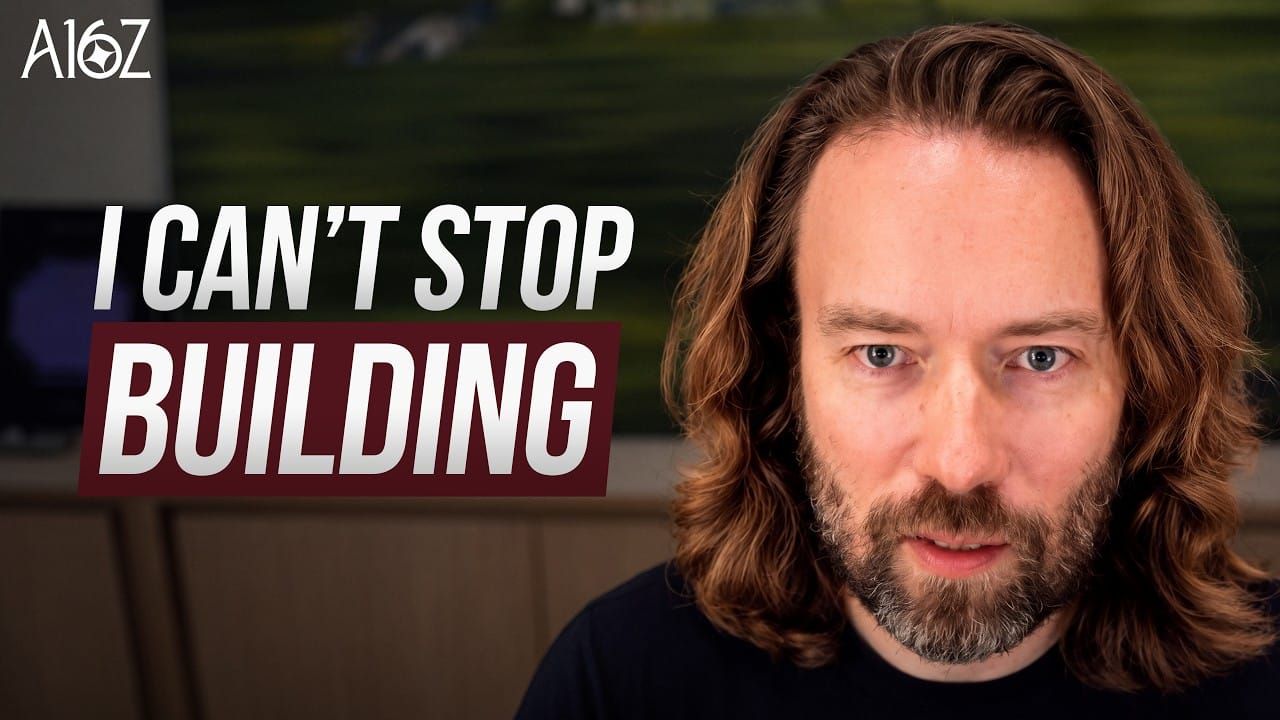
A long-form interview with David Heinemeier Hansson (DHH) — creator of Ruby on Rails, co-founder of 37signals (Basecamp, HEY) and now creator of the Omarchy Linux distribution — about why he believes macOS and Windows are structurally unfit for the "age of agents", and what that has done to his own working habits.
1. Background, in DHH's own words
- Roughly 30 years building for the internet; ~23 of them at 37signals (about 60 people).
- Basecamp launched "the day before or the day after Facebook went live"; now on version 5.
- Ruby on Rails was extracted from Basecamp and went on to power Twitter, GitHub, Shopify, Airbnb and Coinbase; Rails is now on version 8.
- HEY launched five years ago; four books including Rework, Remote and It Doesn't Have to Be Crazy at Work.
- Current project: Omarchy, "the first native OS for the age of agents" — a Linux distribution aimed at pulling users off Windows and macOS.
2. The core argument: macOS and Windows are "unfit for the age of agents"
DHH's reasoning is that the three historical weaknesses of Linux have become its decisive advantages:
| Historic Linux complaint | Why agents love it |
|---|---|
| Terminal-heavy | Agents want a command-line interface for everything |
| Obscure config files | Agents want predictable files they can edit directly |
| "Inscrutable" error messages | Agents want all the detail in the error output |
His concrete illustration: remapping workspace hotkeys on macOS requires clicking through a settings app field by field — "You cannot do that agentically," except via clumsy computer-use. On Linux, it is a config edit. He reports that anyone who experiences an OS where "the entire operating system is malleable" — new start menu, moved clock, a feature added by prompt — finds it "deeply intoxicating" and does not go back.
He frames Apple's position bluntly: "Apple is running the risk right now of becoming the AOL of the agent era" — a walled garden offering "Genmoji" and a watered-down assistant instead of real frontier agents. He also cites Apple tightening macOS restrictions on agent access to files.
His personal trigger for leaving the Mac was not AI but developer relations: Apple's addiction to 30% service revenue ("You don't even have to innovate… you can launch a huge flop of a ski mask") and its deteriorating treatment of developers. He had used macOS since the OS X public beta in 2001; his first desktop Linux distro was Ubuntu, about two and a half years ago (he had run Linux on servers since the 1990s).
3. Omarchy is itself built by agents
- The entire OS has been developed by agents for roughly the last five to six months; DHH says he has not written a single line of code by hand, but has written "hundreds of thousands of lines" through agents.
- The earlier hand-built version (little bash scripts, "swearing at bash") was made over about two and a half months, part-time, by DHH and his main partner Ryan Hughes. That is the version that "took off like crazy" — now competing with the output of thousands of Microsoft engineers.
- The agent-first Quattro release put agents in users' hands and, per DHH, brought in hundreds of thousands of users.
4. Why ecosystems no longer need app catalogues
The traditional lock-in argument was application availability ("Linux was never going to succeed because it did not have Microsoft Word, Adobe Photoshop…"). DHH argues agents dissolve this:
- Lightroom: a community member recreated the one app DHH kept a Mac for — including his plugins and camera presets — in about two weeks, and "made it better than Adobe" managed in a decade and a half.
- Word processors: he no longer opens one. Contracts for the non-profit are drafted by an agent, reviewed in Markdown, exported to PDF, and even signed and emailed by the agent using his signature.
- Photos: "Why are you going to spend hundreds of hours learning Photoshop?" Agents remove people from photos on request. Photoshop, he notes, was "not just an application, it was a profession" — and agents "eradicate entire classes of applications".
- Rather than replicate every app, agents can often do the job natively — the app becomes unnecessary.
Applied to mobile: the lock-in is app availability, and if software is effectively free to produce, that lock breaks. His motto: "First we take Manhattan [desktop], then we take Berlin [mobile]."
5. Speed: tokens per second and the disappearance of moats
- Today's models run at ~50 tokens/second, or ~120 in "ultra fast" mode — "not enough for things to feel live."
- Fireworks demonstrated 1,500 tokens/second two weeks before the interview: a Tetris game from prompt to playable in four seconds, then a side-scroller that mutated live on request ("add lasers", "add bombs", "bigger monsters").
- Extrapolating to 100,000 or a million tokens/second, DHH concludes the historic barriers to launching a new ecosystem disappear.
- On model progress within his own project: Opus 4.8 → "Saul" (Sonnet) → Opus 5.5, with another release likely before Christmas or early next year — and the hops are accelerating.
- Hence: "Anyone who still thinks that there is a moat in source code, even millions of lines of it… are delusional."
6. Craft, taste and the 16-hour days
The interviewer pushes back: DHH has always been a craftsman, and software quality lives in "the long tail design choices", not lines of code. DHH agrees and goes further — the bottleneck between spotting a flaw and fixing it has collapsed, so "any piece of software that is not perfect has an opportunity to go problem until it's perfect. This is why I'm working 16 hours a day right now."
He acknowledges the contradiction with his own book: "Now historically I wrote a whole book called It Doesn't Have to Be Crazy at Work. It's totally [bullshit]… crazy at work right now." For a perfectionist, agents are "superpowers… intoxicating if not downright dangerous to your health and sleep patterns."
Two observations on why humans still matter for now:
- Most people lose interest after the "first 80%"; DHH says he gets "the entire dopamine payoff in the last 2%" — the polishing.
- He has not found a setup where one prompt produces perfect design: "You need the eye for a moment still."
He values the leverage without the headcount: he never wanted to trade 60 people for 6,000 or 60,000 ("no HR, no committee meetings"), but the productive potential of 60,000 agents under a "distilled vision" is compelling. He cites Tobi Lütke's description of coming out of weekend hyperdrive and going "screech" back into a 7,000-person company.
7. Cost: this is not a rich person's game
DHH's rebuttal to the idea that this requires unlimited money: he buys three Claude subscriptions and in most weeks runs on a single $200 20x plan; he has hit the cap only in about two weeks out of the last three months — and that is on frontier models, not cheap or open-weight ones. He calls himself "saturated" in how much he can push forward.
8. Superintelligence: software yes, robots not yet
- Asked for his "superintelligence test", DHH says he has none — because for software development, "we already have super intelligence." The AI is better than any programmer he has known "when you consider the breadth of its ability", even though a few elite individuals still beat it in narrow fields.
- The interviewer's own test is a $20,000 budget for a model to order parts and build its own robot (so far it orders home-automation kit instead).
- Reality check from a recent China trip: the Unitree team thinks humanoid capability is four to ten years away, versus Silicon Valley's "next year" narrative — a split between software people and people working on "actuators and mechanics".
- DHH still allows that "it's entirely possible that by next year we will have true super intelligence" that outperforms him at polishing the perfect computer — and is "savouring this moment where the human… is still additive."
9. Frontier labs vs open weights
- Open source and open weights are "absolutely essential… to keep the whole game honest." Competition is the safeguard.
- He has lived through two duopolies: the brief open internet (roughly 2000–2009) and then the mobile platforms, where "you had to beg for permission for your application to be out there".
- A commercial or government-enforced AI duopoly "would be catastrophic"; the current moment is better than most of computing history because there is genuine competition among closed labs (he names OpenAI, xAI, Google — "one moment in the game and the next… somewhere off smoking something funny on an island" — plus others) and rapidly improving open-weight models.
- He is not a purist: he cheers the US labs' lead, provided they are "kept honest" and cannot "turn the price of tokens up to $500 a million".
- The precedent he invokes is the 1990s encryption wars, when public-key encryption nearly got banned: "Imagine the trajectory of the internet if we did not have encryption."
- He warns of the Google/Meta outcome, where two companies "sucked out 99% of the value chain" in online advertising — "dystopian", though he concedes it is "a feature, not a bug" of capitalism in terms of motivating investment.
- Open-weight assessment: models such as GLM 5.3 or DeepSeek Flash are roughly six to seven months behind, "on some tasks, not even"; he distrusts benchmarks. Qwen models are "totally usable". He notes he once wrote that buying fast personal computers was pointless, and was "totally wrong" — a DGX Spark can now run a useful model "you can fit on your damn desk" for single-digit thousands of dollars.
10. Ambition: beat macOS in three years — maybe one
His ambition has inflated dramatically in a few months: from "a nicer computer for myself and five friends" to wanting to build "a perfect computer", to a stated goal of being bigger than macOS within three years. His reasoning: macOS has only ~180 million users — "not even a C-tier internet service" — so Linux overtaking it is conceivable. He won't rule out twelve months, though he wouldn't bet on it.
He is deliberately narrow in ambition: "I leave that to the Elons of the world… just give me a seat on the starship going to Mars." And he avoids forecasting several model hops ahead — "the surest way to develop a severe case of AI psychosis". He prefers "AI euphoria" to AI doomerism, compares the safety community's worst-case looping to sitting next to Oppenheimer in 1944 predicting a desolate planet (the bomb instead produced "50 years of a beautiful cold war"), and closes with Gibson: "The future is already here. It's just not evenly distributed."
11. Culture: hackers, demo scenes and "anti-LinkedIn"
- Every programmer he deeply respects is "fully peeled, fully into it" — he names John Carmack, Tim Sweeney and Mitchell Hashimoto. He has sympathy for the "uncomfortable middle" of working programmers facing anxiety, comparing it to Detroit autoworkers and the Luddites — while insisting "there is only one way forward and that's through."
- He welcomes the return of the pseudo-anonymous hacker: Omarchy contributors "outfoxed" (creator of Quickshell) and "Hand Core" (artist), and local-AI figures such as 0x0 and Mia's Lab sponsored through the foundation. He calls it "anti-LinkedIn culture", connected largely through X.
- The 1990s demo scene is back: Omarchy's screensaver is ASCII art running through ~40 demo effects, and the aesthetic is deliberately "'90s demo party" rather than a cheap imitation of Windows. He even added a purely decorative ASCII animation to cover local model load times — "Does it have any functionality? No. Absolutely not."
- Nostalgia for BBS culture: he ran an "elite" bulletin board from his bedroom at 14 with three phone lines, and remembers the Danish telecom engineer's disbelief — "This got to be illegal. And he was totally right. It was totally illegal. It was totally awesome."
- On design: Jony Ive "essentially aluminium polished all character out of the computer… that time is over. We're getting the hackers back."
Notable quotable lines
- "Anyone who still thinks that there is a moat in source code, even millions of lines of it… are delusional."
- "macOS and Windows are just unfit for the age of agents."
- "Apple is running the risk right now of becoming the AOL of the agent era."
- "I now see any problem… has an opportunity to go problem until it's perfect. This is why I'm working 16 hours a day right now."
- "For software development we already have super intelligence."
- "First we take Manhattan, then we take Berlin."
- "Computers should be a little mysterious. They should be a lot of cool, and they should not be so polished."