Prof Jiang's assessment
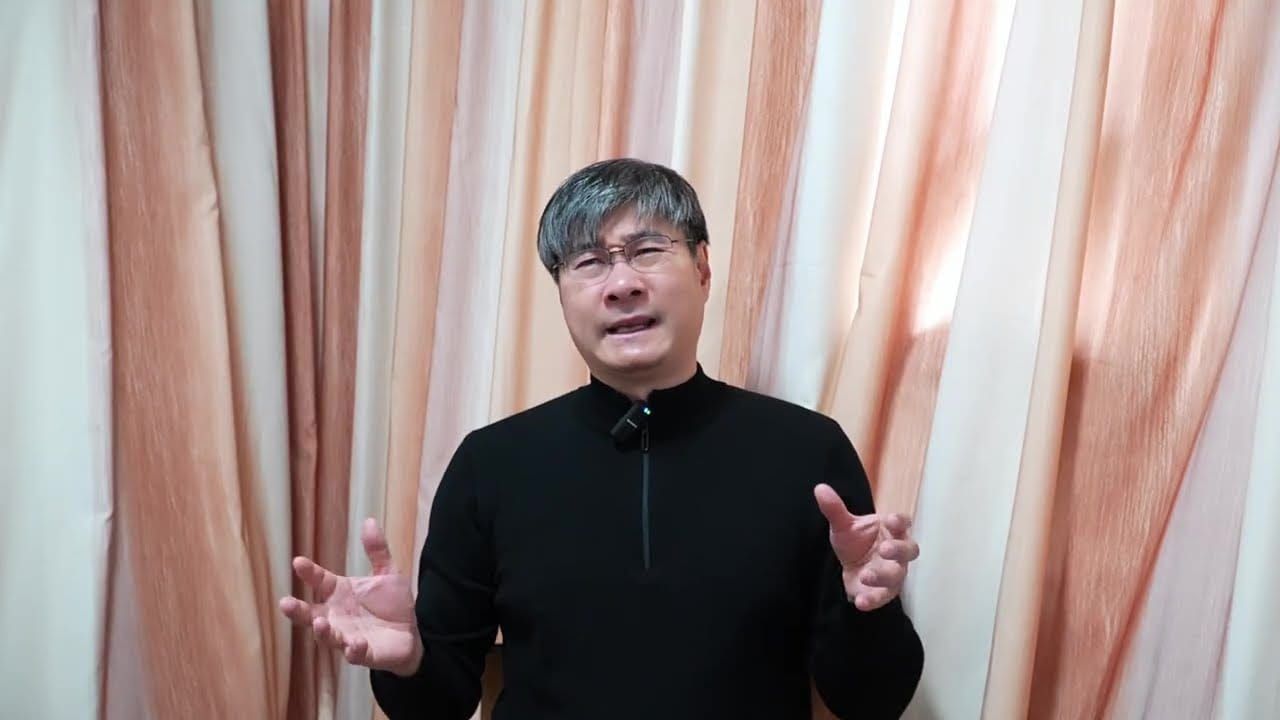
Imagine the modern world is a giant machine with lots of moving parts — planes, banks, emails, AI. One week, several parts broke at once: planes stopped flying for four hours, banks went offline, and Microsoft's email had problems. Even Jensen Huang, the boss of Nvidia, suddenly resigned.
1. The puzzle he sets
The week's reported disruptions, per Prof Jiang:
| Event | Detail as stated |
|---|---|
| FAA shutdown | All US air traffic halted for 4 hours; ~1.5 million passengers stranded across American airports |
| Bank outages | Same day; people unable to access bank accounts and e-payment systems |
| Microsoft | Outlook email down the previous week; Microsoft "continuing to report outages" |
He identifies three popular explanations on social media and rejects all three:
- Foreign attack (Russia, China, Iran) — "the least likely of all possibilities"; he doubts these states have the capacity, political will or motive to attack the American homeland.
- False flag — either Israel pushing the US into a Middle East war, or the US itself "to introduce the AI control grid", since desperate, anxious people accept more surveillance and government control.
- Hype — the situation is not as bad as claimed and social media amplifies fear "because that's what sells".
His own thesis, which he calls the scariest option: the world is simply breaking down because the elite is corrupt and incompetent — hence systemic, not one-off, collapse.
2. Why complex systems fail: three mechanisms, all decaying
Modernity is "a very complex, very complicated, very fragile system"; flying is a "miracle" of safety that depends on three supports:
| Mechanism | What it means | What it is decaying into |
|---|---|---|
| Redundancy | Ideally three people doing one person's job, so a single error is survivable | Efficiency — cost-cutting, staff cuts to maximise revenue |
| Ductility (engineering sense: the system bends without snapping) | Decentralisation, organic parts operating independently — e.g. isolate one airport section for a bomb threat rather than closing the whole airport | AI centralisation ("a time of AI and 'pivotisation'") |
| Professionalism | Workers wanting to do a good job because their work feels valued | Quiet quitting (US) / tang ping ("lying flat"), bai lan ("let it rot") in China |
He links all three to "this pervasive breakdown of safety standards", asking how many planes have gone down in recent years.
2.1 Three macro drivers
- Financialisation — firms maximise profit, cut costs carelessly; his example is US tech companies laying off experienced local staff and hiring cheaper H-1Bs who "don't really have good grasp of the professionalism and the expertise" needed.
- Bureaucratisation / monopolisation — Microsoft, OpenAI and Nvidia are "essentially monopolies", so staff are incentivised towards bureaucratic infighting rather than good work, and become apathetic: "They don't really care if planes crash or there's banking outages."
- The ageing crisis — baby boomers still hold power; an elite in its 70s and 80s is less energetic, less sharp, more authoritarian, and promotes flatterers and "psychopaths" who lie to them. His example: Trump surrounded by loyalists such as Pete Hegseth.
2.2 Three accelerants
- 2008 subprime crisis — Wall Street "bankrupted the global economy" with no consequences; Obama campaigned on cleaning up the oligarchy but appointed Larry Summers and Tim Geithner, architects of the crisis from the Clinton years. Result: inequality, political corruption, popular apathy.
- COVID — governments became authoritarian, locked populations down, mandated, and did not engage with public concerns (vaccine efficacy, whether lockdowns worked, children out of school, depression, lost friendships). He argues the West's professionalism rested on democracy and agency — "voters feel as though they have a say" — and that COVID made people, especially medical professionals, apathetic.
- Trump's 2024 win — an "extremely corrupt" and "extremely incompetent" administration; DOGE staff in their twenties fired "tens of thousands" of people.
3. The FAA explanation and the analogy
He cites a Trump White House press conference: the air-traffic communication hardware was old — copper wires — and the attempt to run new AI software overloaded it. His analogy: "you have this old Nokia phone from 20 years ago and you're trying to play Call of Duty on your phone." The same logic, he says, explains the bank and email outages.
4. The Jensen Huang test case
Competing explanations he lists for Huang's resignation:
- circumventing export controls to get chips into China for profit ("a huge scandal");
- extramarital affairs breaching the board's code of conduct;
- a political hit job — the explanation he favours.
The hit-job account as he tells it: Nvidia sells the hardware and so wants many software users; Anthropic and OpenAI want closed systems and monopolies to justify valuations. Anthropic was due to go public on 19 November seeking to raise $1.5 trillion, yet has "no revenue model" beyond subscriptions and no moat. He cites reporting that the New York Times broke the story in late October, that the leak came from Anthropic co-founder Jack Clark, and that Marco Rubio supplied him with the information — "deep state actors working with private individuals in order to take down" Huang.
Why Huang was so powerful (his core argument):
- Nvidia, like Apple, wins by organising the global supply chain, not merely by engineering. Apple's model was just-in-time inventory: designed in California, components made worldwide, assembled by Foxconn in China.
- Nvidia went further: chips designed in California; lithography machines from the Netherlands shipped to Taiwan for fabrication; value added in Malaysia and the Philippines; assembly in China; inputs of copper, lithium, silver and germanium drawn from around the world.
- What held this together was Huang's personal relationships — guanxi — and charisma. Taiwan is "one of the lynch pins", hence his frequent presence there. Without him, expect "much more friction, much more disagreements, much more misunderstandings" across the chain.
- He was also "a godfather of the AI system": the bubble runs on circular financing — Nvidia sells chips to Anthropic and OpenAI and lends them the money to buy them, with Huang convening the players to build a monopoly and capture the government.
His self-comparison: as a teacher he was repeatedly pushed out because he was "too good at my job", too popular with students and too opinionated — not a conspiracy, just colleagues subconsciously uniting against someone who made them look bad. He reads Huang's removal the same way: a charismatic visionary is inconvenient.
Silicon Valley founders, he says, want Huang reinstated because only he can hold the ecosystem together.
5. Predictions
| # | Prediction | Reasoning |
|---|---|---|
| 1 | Huang will not be reinstated as Nvidia CEO — "he will lose his company and he will be cast aside" | Those in power "fear competence and vision"; they dislike him personally |
| 2 | The AI bubble will burst very soon, accelerating into "massive economic collapse throughout the United States" | Without Huang to negotiate between players, the ecosystem fragments; he floats next January–February, and notes the Anthropic IPO may instead go well |
| 3 | A government bailout will follow the burst | "Because the worst people are in charge, mistakes failures will be rewarded as opposed to being punished" |
He explicitly flags his own fallibility — "I've been wrong a lot recently… I got the demographic midterms wrong" — and concedes the Sam Altman precedent (board fires CEO, employees and investors force reinstatement) could repeat. His distinction: Altman is "the worst of the worst… a liar… a deceiver… a manipulator" who cooperates to build a monopoly, whereas Huang is a visionary focused on innovation — and in "a time when things fall apart, the worst people rise to the top and the best people are cast aside."
6. Logistics mentioned
- Friday livestream on the Trump–Putin–Xi trilateral summit in Shenzhen — described as the first such meeting of all three leaders in a long time.
- Saturday 21 November lecture in Tokyo, for paid subscribers to his Substack (predictive-history.substack.com, ~$5/month: weekly essay, livestreams, Zoom discussions).
- He notes he is unwell after a "rigorous and tiring" Central Asia tour.