Question everything
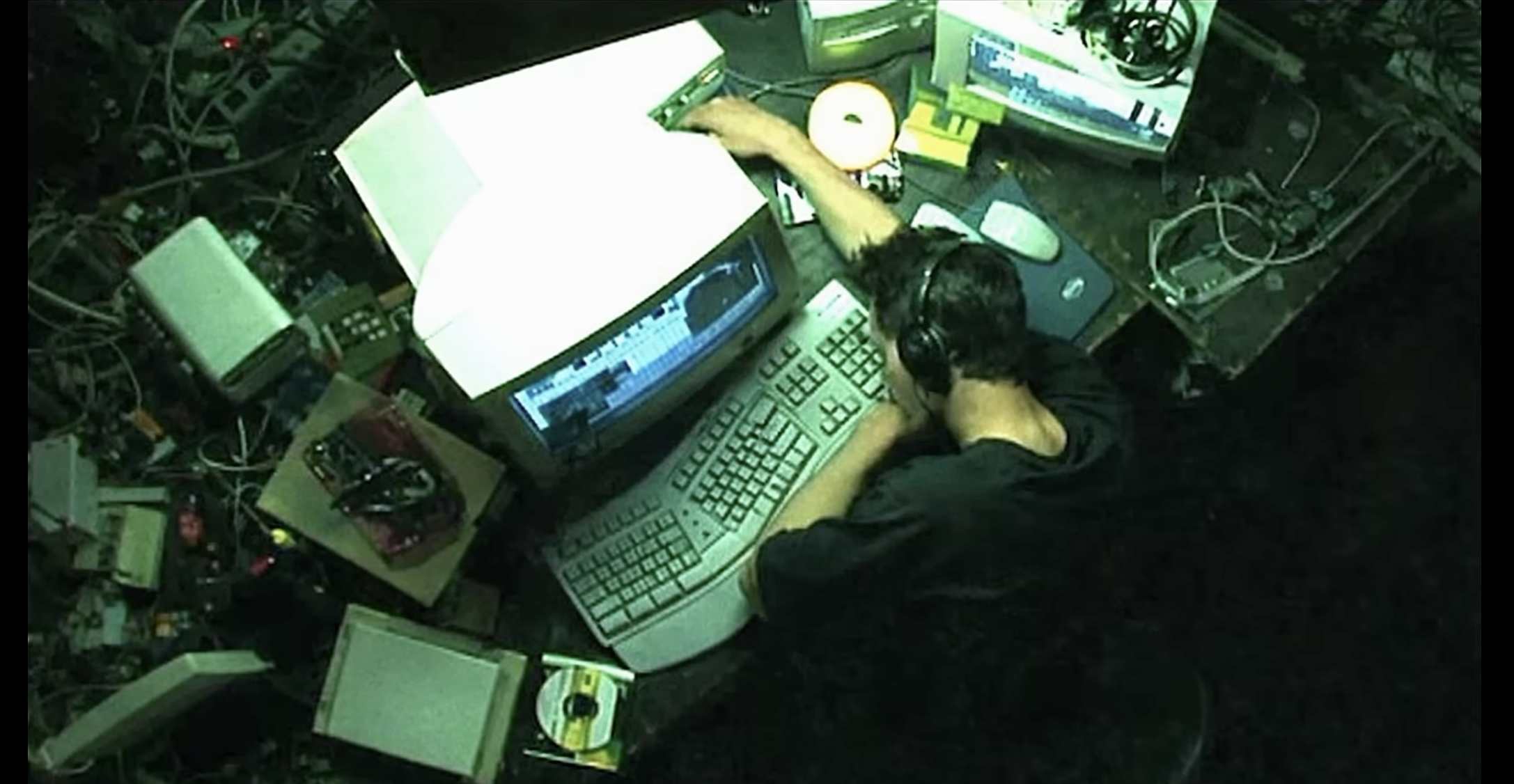
The Matrix (1999) is summarised here not just as a landmark action and effects film but as a sustained Gnostic allegory. The Wachowskis packaged ancient Gnostic cosmology and soteriology inside a cyberpunk blockbuster: the plot and characters map almost point-for-point onto Gnostic categories and processes. What most viewers noticed were the visuals and action; what the film offers at a deeper level is a compact initiation narrative about ignorance, revelation, and liberation (gnosis).
Core plot and overt thesis
Thomas Anderson (Neo) is a programmer who discovers his everyday reality is a sophisticated computer simulation—the Matrix—built to keep humans docile while machines harvest their bioelectric energy. Rescued by rebels led by Morpheus, Neo faces a deliberate choice (red pill vs. blue pill) and eventually awakens, learns to manipulate the simulation, and becomes a liberating figure. The film stages an arc from ignorance to initiation to mastery, culminating in death and resurrection and an explicit promise to awaken others.
The main Gnostic correspondences
- The Matrix = the material world
- A constructed, deceptive reality that hides true being.
- Sensory appearances are illusory, sustained by a controlling intelligence.
- Machines = demiurge and archons.
- Controllers and jailers who maintain the false world and feed off human life.
- Their instrumental, managerial view of humanity echoes archonic contempt.
- Neo = the revealer / Gnostic saviour (one who brings gnosis).
- He is the awakened consciousness who perceives and transcends the illusion.
- His arc models gnosis: questioning, initiation, experiential knowledge, and the ability to act within the illusion while not being bound by it.
- Morpheus = initiator / guide.
- Presents choice and offers entry into the path of awakening (red pill).
- Teaches the recruit how to recognise and then bend the fabricated laws of the system.
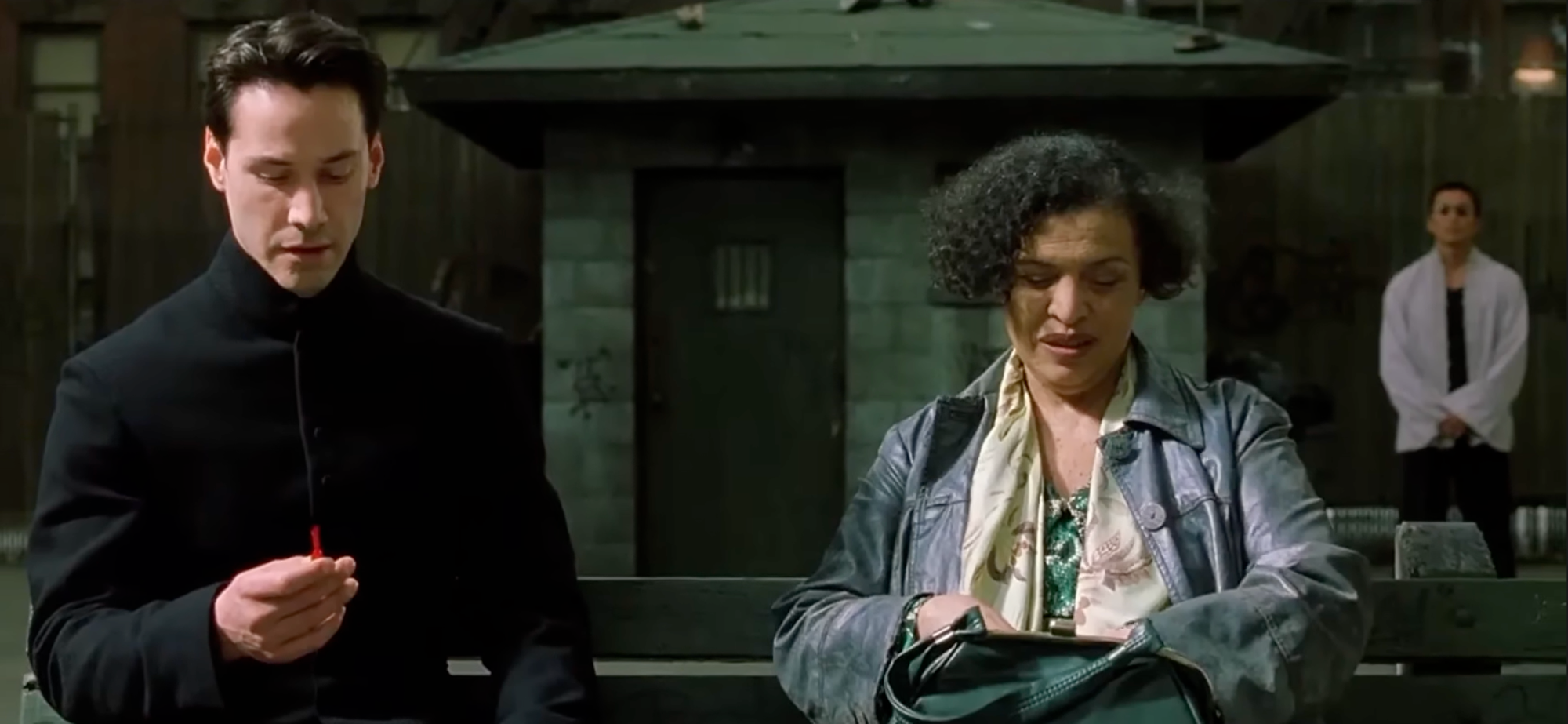
- Oracle = Sophia (divine wisdom).
- Femininely embodied wisdom hidden in ordinary guise, guiding without coercion.
- Provides knowledge that must be integrated personally; cannot be transmitted as doctrine.
- Trinity = the feminine counterpart / sacred marriage.
- Completes Neo’s realisation; love functions like the Hieros gamos that restores wholeness and enables resurrection.
- Agent Smith = archon/demiurgic enforcer.
- Embodies the system’s pathogenic view of humanity (“a plague”).
- Can possess users still attached to the Matrix—analogous to archonic influence mediated through unenlightened people.
- Pods and amniotic prisons = the material body and human entrapment.
- Literalises images in Gnostic texts: humans suspended, their consciousness occupied elsewhere while their bodies are consumed.
Key Gnostic themes and cinematic moments
- The question as initiatory spark: “What is the Matrix?” functions like the Gnostic existential question: is what I experience the true or a fabricated reality? Asking it initiates awakening.
- Red pill vs. blue pill = decisive initiation choice.
- Blue pill: continue comforting illusion, consent to ignorance.
- Red pill: accept disruptive truth, endure disorientation and suffering for the sake of knowledge.
- Awakening sequence = disintegration of symbolic forms.
- Mirrors liquefy, reflections distort, bodily continuity breaks. This visualises the dissolution of the consensus ontology and the exposure of the underlying artifice.
- Training and “free your mind” = practical Gnostic pedagogy.
- Instruction emphasises that rules of the fabricated world are contingent; the awakened can manipulate them. Fear and disbelief are the restraints Gnostic practice seeks to release.
- Bullet-time and other effect-driven scenes = epistemic demonstrations.
- Visualised as the new possibilities opened by gnosis: perceiving and acting beyond imposed limits.
- Death and resurrection = gnostic Christology.
- Neo’s death is not substitutionary atonement but a moment of full self-realisation; his return is mastery of both the liberated and imprisoned domains.
- Seeing code = direct knowledge (gnosis).
- The ability to perceive the Matrix’s source code is the cinematic homologue of direct gnosis—seeing the underlying structure and thereby exercising creative freedom within it.
The film’s pedagogy: experience over doctrine
The Oracle’s role, Morpheus’s guidance, and Neo’s personal testing underscore a central Gnostic point: true knowledge is not propositional or secondhand. It’s an experiential reveal that cannot be transferred merely by instruction. The film dramatises initiation: a teacher can show the doorway, but the seeker must walk through. The red pill is not information; it’s the condition for experiential transformation.
Feminine wisdom and wholeness
The film foregrounds a necessary feminine principle. Sophia (Oracle) and Trinity provide two aspects: wisdom that encodes fate and possibility and love that restores wholeness. Trinity’s declaration of love and Neo’s return through that love enact the alchemical conjunction - masculine and feminine reunified -necessary for complete awakening in many Gnostic and hermetic systems.
The archonic worldview and modern tech metaphors
Agent Smith’s rhetoric - humanity as disease - mirrors archonic texts that depict the rulers as parasitic controllers. The film updates ancient motifs for a technological age: servers, code, and simulation replace lesser-known pagan or mythic imagery while preserving theological function. The machines’ energetic parasitism functions as a metaphor for how material systems can exploit life-force and attention, a concern resonant in contemporary critiques of technology.
Why the allegory worked in mainstream cinema
- Visual-kinetic translation: Gnostic abstractions are embodied as striking images (pods, code, bullet-time), making subtle metaphysics immediately perceivable.
- Initiatory structure fits blockbuster pacing: choice, learning, tests, transformation, and mission align with narrative expectations.
- Ambiguity and plurality: the film gives only enough to provoke questioning without proselytising, allowing viewers to consume it as action, philosophy, or mythic allegory.
- Explicit links: references (eg, Baudrillard’s Simulacra and Simulation) anchor the film in philosophical discourse and encourage deeper reading for those predisposed.
Limitations and sequel complications
The first film is the most straightforward and concentrated Gnostic presentation. The sequels complicate the theology - introducing possible meta-levels of control and negotiating coexistence with machines - prompting readings that the “true world” might itself be another layer of artifice. This twist is itself Gnostic in spirit (the suspicion that revealed reality may still be partial), but it diffuses the purity of the first film’s initiation narrative and turns liberation into negotiation rather than transcendence.
Cultural and pedagogical irony
A central irony: the film functions as a red pill while also being part of the Matrix (mainstream entertainment). Millions could watch and still choose the blue pill—enjoying spectacle without internalising the question that drives everything. Thus the movie both wakes and can be consumed in ways that avoid awakening. That irony mirrors Gnostic concerns that revelation can be available yet remain unrecognised by the majority.
Bottom line: The Matrix as modern gnosis
The Matrix translates Gnostic cosmology into contemporary symbols: technology replaces mythic demiurges, code replaces cosmic hierarchies, and cinematic spectacle replaces arcane allegory. It stages the Gnostic path: the existential question, the choice for truth, the dissolution of consensual reality, experiential knowledge (gnosis), the reunification of complementary principles, resurrection as realisation, and the mission to awaken others.
For viewers attuned to these motifs, the film operates as an initiatory teaching; for others, it remains a revolutionary science-fiction thriller. The Wachowskis’ fusion of ancient insight and modern myth-making ensured the film’s lasting capacity to prompt the essential inquiry Gnostics prized: what if the world you inhabit is not the world?