SAP Migration scandal
Background: How SAP Became Unavoidable
- Founded in 1972 by Hasso Plattner and four ex-IBM engineers who left after IBM scrapped their real-time financial accounting project for ICI (Imperial Chemical Industries). SAP stands for the German Systemanalyse und Programmentwicklung; ICI became their first customer.
- Their innovation: real-time financial visibility rather than overnight batch processing.
- R/3 (1992) moved SAP off mainframes onto standard computers, opening it to companies of almost any size; the Y2K scramble then won SAP thousands of contracts.
- Today: 425,000+ customers, including 90% of the Fortune 500.
Lock-In by Design
- Implementations took 18–36 months, cost tens of millions, and SAP encouraged heavy customisation — deepening customer dependency.
- Roughly 80% of large enterprises' core transactional data lives inside SAP; annual maintenance fees of 22% of net licence value; full switching costs of $500m to several billion dollars.
The Lawsuits Against Customers
- Diageo (2015): SAP claimed ~£55m because Diageo's distributors accessed SAP-derived data via Salesforce without logging into SAP directly. The UK High Court ruled for SAP in February 2017; Diageo settled.
- Anheuser-Busch InBev: SAP sought over $600m for the same type of indirect-access violations; settled out of court in 2018.
- Both companies accelerated their moves to SAP's newer cloud system under legal threat. Analysts called the practice "predatory" and a "licensing time bomb".
- 2018 "Digital Access" licensing: SAP moved from counting users to counting nine document types (sales orders, invoices, purchase orders, etc.) — critics called it "the same problem with a different name".
The 2027 Deadline
- Support for ECC ends 31 December 2027 — no security patches, regulatory or compliance updates afterwards.
- No free extensions; extra time requires a 2% premium and committing to the new system by 2027.
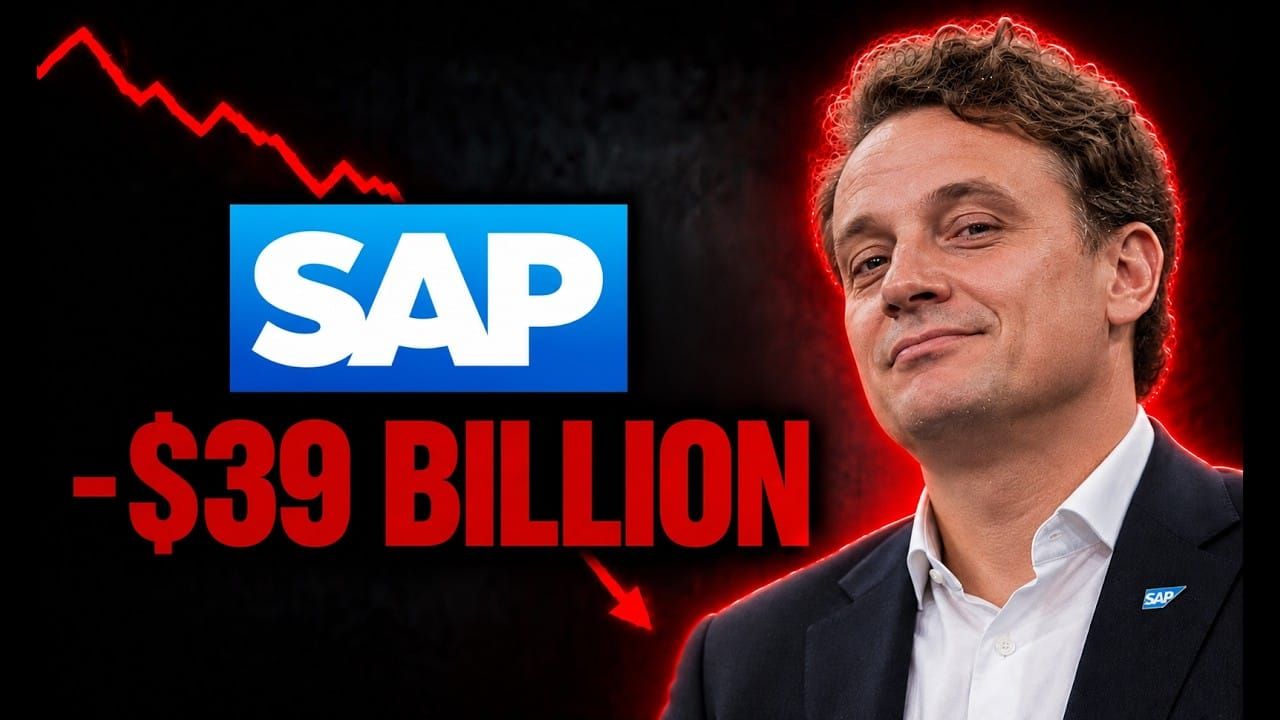
- Migration to S/4HANA costs large enterprises $50m–$500m+; Halliburton disclosed $46m in a single quarter (2025); the SAP consulting market hit $16bn in 2025, projected $39bn by 2035.
- With ~17 months left, ~65% of customers (~17,000 organisations) haven't completed migration; German customer group DSA found 61% hadn't even started.
- Consultant day rates have risen 30–100%; over 60% of migrations run over budget or late.
- The "clean core" mandate forbids customising S/4HANA's core as customers did with ECC — all customisation must move to the separately-priced BTP (Business Technology Platform).
- Big-firm architects charge $1,800–$3,000/day, with consulting fees consuming 60–80% of total migration cost — and hourly billing creates incentives to stretch projects. SAP also takes a fee via its Partner Edge programme regardless of success.
Historical Implementation Failures
| Company | Year | Outcome |
|---|---|---|
| Hershey | 1999 | $112m project compressed to 18 months; order failures before Halloween; ~$100m lost revenue; stock dropped 19% |
| Nike | 2000 | Bad demand forecasts from SAP supply-chain system; $90m excess inventory; ~$100m lost sales; 20% stock decline |
| Lidl | 2011 | Abandoned after 7 years and ~€500m, mostly written off |
| Revlon | 2018 | Couldn't fulfil $64m of orders in one quarter; $70m net loss; shareholder class action |
Restructuring and AI
- January 2024: €3bn restructuring, up to 10,000 job cuts, citing AI. CFO Dominik Asam described annual job cuts as routine, "like brushing your teeth".
- At-risk staff were told to pitch an AI-powered version of their own role. By April 2025 only ~3,000 of 10,000 had been let go.
- German labour law protections meant cuts fell harder abroad: 82 employees cut at SAP's Palo Alto research facility in November 2025.
- CEO Christian Klein calls AI a "once-in-a-lifetime opportunity", but independent analysts describe the Joule AI tool as useful for simple queries yet immature on complex processes and behind Microsoft Copilot.
SAP's Paradoxical Financial Health
- 2025 revenue: €32.5bn; cloud revenue up 27% YoY; cloud backlog €23bn (up 27%); 2026 free cash flow projected ~€10bn; market cap ~$244bn (September 2026).
- July 2026: the European Commission closed an antitrust investigation after SAP agreed 10-year binding commitments — abolishing reinstatement fees, allowing split support contracts, removing all-or-nothing policies — but the 2027 deadline and cloud pricing were untouched.
- Both bearish and bullish analysts agree: customers have no realistic alternative, and complaints coincide with record revenue.
Is There an Exit?
- Full exits to Oracle, Microsoft Dynamics or Workday take 5–10 years and hundreds of millions to billions — unrealistic for most.
- Shifts are emerging: smaller firms choosing cloud-native alternatives from the start; some large enterprises keeping SAP only for core finance while Microsoft handles everything else.
The Video's Central Argument
In a healthy market, a vendor that sues loyal customers, forces billion-dollar upgrades and treats layoffs as routine would lose customers — but SAP hasn't, because switching costs engineered over decades work exactly as intended. The closing question posed to viewers: will SAP's customers still be on SAP in 20 years, or is this the beginning of the end of its dominance?
Here are external references for the two claims from the video.
1. The 2027 upgrade requirement (ECC end of maintenance)
SAP's own announcements:
- SAP announced (February 2020) that mainstream maintenance for core applications of SAP Business Suite 7 / ECC ends end of 2027, with optional extended maintenance (for an additional fee) until end of 2030, and a maintenance commitment for S/4HANA until 2040 [1], [2], [3].
- SAP confirms that continuing on-premise paths still require a shift to S/4HANA by 2027 or 2030, otherwise customers fall into customer-specific maintenance with limited support [4].
Independent commentary on what it means for customers:
- Analysis of the four post-2027 options (migrate, extended maintenance, third-party support, or customer-specific maintenance) and why none is cost- or risk-free [5], [6].
- Detail on extended maintenance pricing — reported as an additional ~9% premium for ECC 6.0 EHP 6–8 through 2030 [7] (note: some sources cite different figures for the premium, so treat the exact percentage with caution).
- Reports that 60%+ of ECC customers had not yet migrated as of 2026 [8].
2. The court cases against customers
SAP v Diageo (UK High Court, February 2017):
- The High Court ruled in SAP UK Ltd's favour on 16 February 2017, finding Diageo liable for additional licence and maintenance fees — commonly reported as in excess of £54m, with SAP's calculation reaching ~£55m on top of the ~£50–60m Diageo had already paid [9], [10], [11], [12].
- Legal analysis: Diageo's customers and distributors accessed SAP-derived data via Salesforce (the "Gen2" system), which the court held went beyond the licence scope; the exact damages were to be set at a later quantum trial unless settled [13], [14].
- The case was widely described as the UK's first major "indirect access" ruling and a warning for all SAP customers [15], [16], [11:1].
SAP v AB InBev (US arbitration, 2017; settled 2018):
- AB InBev disclosed in an SEC filing that SAP was seeking US$600m for unlicensed direct and indirect use of its software, filed as a US arbitration claim against an AB InBev unit [17], [18], [19].
- The parties settled out of court in March 2018 (some reports date the settlement to 30 June 2017 per AB InBev's annual report), without clarifying SAP's indirect-access position [17:1], [19:1].
- The case echoed the Diageo dispute — Salesforce integration with SAP data was again the trigger [20], [21].
Aftermath:
- Reuters reported that SAP revised its pricing (introducing the Digital Access model) after the crackdown on large customers backfired [18:1], [22].
Verification notes
- The video's claim of "£55m" for Diageo matches SAP's own calculation in court filings [10:1]; most press reported "over £54m" [9:1], [15:1].
- The video's "over $600m" claim for AB InBev is confirmed by the SEC filing disclosure [17:2], [19:2].
- One correction to the video's framing: extended maintenance to 2030 exists as an official paid option [1:1], rather than there being "no extensions" — though it does carry a premium.
References
- SAP Extends Its Innovation Commitment for SAP S/4HANA, ... (12%) ↩︎ ↩︎
- Updated SAP S/4HANA Transition Policy (4%) ↩︎
- Interview on Extended Maintenance for SAP S/4HANA | SAP News Center (11%) ↩︎
- Guided Paths to the Cloud with SAP | SAP News Center (7%) ↩︎
- SAP ECC End of Life: What Happens After 2027? | Rialtes (4%) ↩︎
- SAP ECC End Of Support: A 2027 Decision Framework (6%) ↩︎
- SAP S/4HANA Migration Strategies for Customers After 2027 (1%) ↩︎
- SAP ECC Support End Date 2027: What Businesses Need to Know | SAVIC (7%) ↩︎
- The Scope Of 'Indirect Access' To Software: SAP UK ... (2%) ↩︎ ↩︎
- The SAP v. Diageo decision – a realistic approach to ... (5%) ↩︎ ↩︎
- SAP's Licensing Time-Bomb (2%) ↩︎ ↩︎
- Drinks company Diageo loses battle with SAP, indirect ... (2%) ↩︎
- SAP v Diageo – the UK’s first software over-deployment case: takeaways ... (4%) ↩︎
- Software licensing - ‘direct and indirect access and use’ SAP UK ... (2%) ↩︎
- Indirect Software Licensing: SAP v Diageo – 3 Years Later (2%) ↩︎ ↩︎
- Five Shades Darker? – What The Diageo “Indirect Access” ... (2%) ↩︎
- AB InBev settles out of court in $600m SAP licensing dispute (9%) ↩︎ ↩︎ ↩︎
- SAP revises pricing after crackdown on big customers ... (2%) ↩︎ ↩︎
- A List of SAP Implementation Failures - Brightwork Research & Analysis (6%) ↩︎ ↩︎ ↩︎
- SAP goes after world’s largest brewing company in $600m licence dispute (2%) ↩︎
- When the World's Largest Brewer Faced a $600 Million SAP Bill (2%) ↩︎
- SAP vs. AB InBev: What Every SAP Customer Needs to Know Now (6%) ↩︎