Society runs on Fear
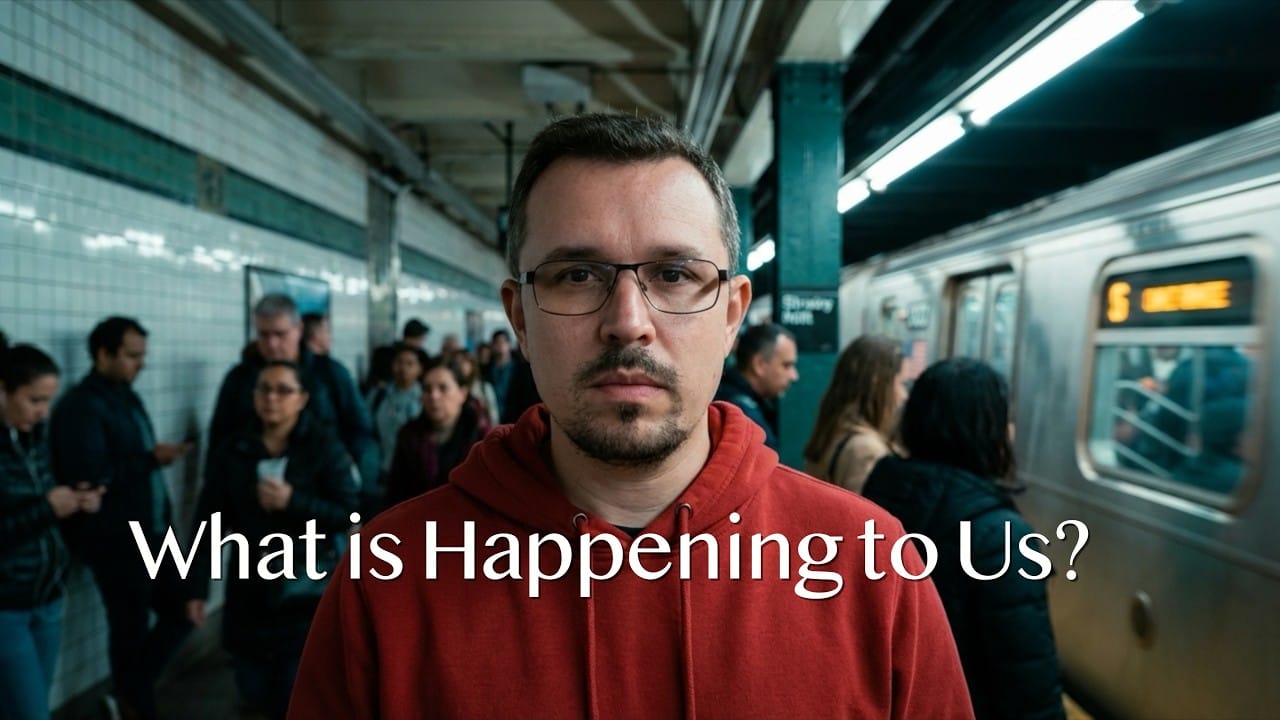
Tom opens with his father's story: an engineer who spent decades building houses for resentful bosses, chasing a receding retirement. Late in life, his father discovered his true passion—building with his own hands—and began constructing rental apartments for independent income. Cancer struck before completion. Tom sees this tragedy replicated everywhere, identifying the mechanism: systematically designed fear that keeps people locked in place.
Manufactured Fear
Daily life bombards us with threats—climate collapse, economic ruin, war, AI displacement. Yet this narrative omits crucial salvation: the 9-to-5 job as refuge. Job security becomes ultimate virtue even when work destroys the worker. Risk becomes recklessness; safety becomes wisdom. Fear has grown more profitable than truth.
Statistically, the world has never been safer—starvation, poverty, war, and crime have declined; medicine advances. Yet anxiety surges. Fear functions specifically: dangerous worlds make us cling to stability; fragile selves outsource decisions; lurking disasters prevent risk-taking. This is the trap's mechanism.
The Fear Economy
News optimizes attention, not clarity. Storms become "events that change everything"; conflicts become "collapse's beginning." Headlines hold rather than inform. Tom confesses his own complicity—using terror in titles because attention demands it. Your attention is the market; competition is brutal.
Meanwhile, unmentioned apocalypses persist: millions of work-related deaths, job dissatisfaction, burnout, broken marriages, stress-induced illness. Tom's own emergency room visit for chest pains at age 30 revealed high blood pressure. He felt anger, not relief—his body had signaled distress from work stress, perfectionism pressure, fear carried so long it felt normal.
Fear as Control
Anxiety creates obedience. Anxious people don't risk; they grip paychecks tighter; they stay. The system needs only constant reminders of what could go wrong. Medieval churches used damnation; factories used starvation; today uses screen-broadcast instability. Fear keeps people manageable. The feed delivers curated threat narratives implying: "This exceeds you. Trust experts. Stay in your lane." Helplessness follows—people cope rather than build, shrink rather than change.
Breaking Free
Tom's January experiment: complete news cessation. Predictable calm arrived, then something unexpected—quiet. Just him, his work, his building. The noise hadn't merely anxioused him; it had immobilized him. Fear of the world meant fear of destination, so no movement occurred.
Results astonished: decade-unseen focus, two to three videos weekly, subscriber growth from 63,000 to 90,000 in weeks. The barrier wasn't talent, time, or resources—it was manufactured fear.
Dependency Economics
Tom watched a colleague's destruction—perpetually discussing departure, Monday defeat, yet staying for raises barely matching inflation. Working harder, earning technically more, never advancing, always dependent. Tom reconsidered: if savings actually accumulated, options would emerge—less work, departure, waiting capacity. But inflation outpaces wages, ensuring perpetual return. "You can almost suspect it's by design."
Ambient fear replaces explicit threats: "You know what happens if you lose this job with your rent, your debts." Internalized threat masquerades as prudence, realism, maturity—training people to see danger everywhere except their actual location.
Personal Transformation
Starting his business, Tom heard his father's voice: "People like us don't find out. People like us play safe. People like us stay put." Three weeks with an open registration form brought physical anxiety—4 AM wake-ups, pounding heart, stomach pain. But he recalled conquering heights fear by climbing despite shaking hands. Now he climbs "like a spider monkey." Imagined catastrophe never arrived; fear had protected against nonexistent danger.
Registration day brought nausea, not confidence—cliff-stepping sensation. The world persisted. Last year, consulting full-time while weekend-building his channel, breakdown seemed certain. Instead: strengthening, growing confidence. At 44, more capable, clear, and controlled than ever. By January, YouTube income matched salary; February, it doubled. Creating escape-from-wage-slavery content now outearns wage slavery itself—work feeling "like the thing I was supposed to be doing all along."
The Path Forward
Tom advocates neither immediate quitting nor fear dismissal. Fear signals; it doesn't command—perceived threat information, not objective danger truth. Start small, build alongside, prove independent income generation. His "$1 challenge" builds untethered skills, creates options. Exit capacity transforms present relationship.
He abandoned compartmentalized life—work here, rest there, passion elsewhere. Integration became the goal: a life actually feeling like yours. His father understood, perhaps too late. Fear claims world-ending (false), personal inadequacy (false), class exclusion (system's oldest lie). The world isn't collapsing; perfection never existed. Progress occurs in imperfect conditions. Lasting builders don't await storm passage—they learn rain construction.
Fear's safety pull persists, but Tom now recognizes its nature, origin, protection target. It isn't him. The media withholds: life finds way. Imperfectly, unplanned, untimely—but it finds way. That's enough.