Sovereign Individual - today
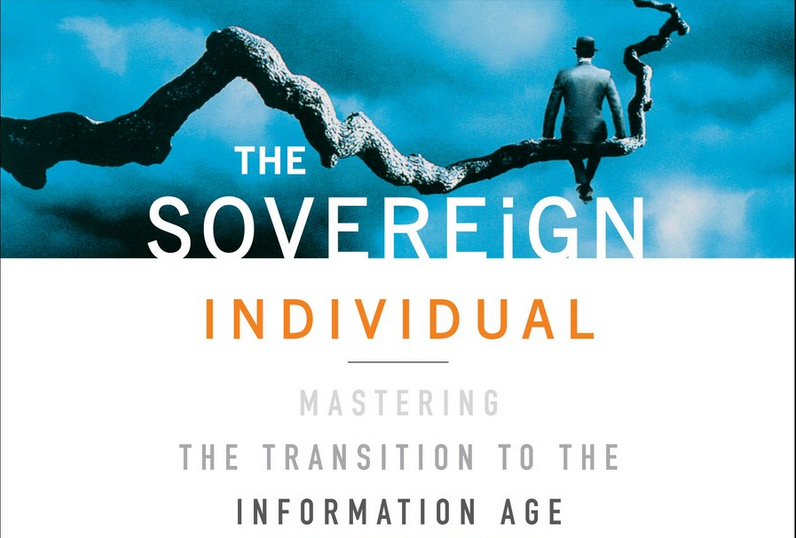
I have reviewed and recommended The Sovereign Individual book before. It is such an important and foundational read. Written back in 1997, it foresaw so many of the elements that have transformed society, including: cryptocurrency, mobile computing and mobile phones, remote work, and the erosion of traditional state power in the digital age.
It also foresaw that legacy Western Nations would collapse under their own weight of bureaucracy, taxation and regulation and that failing governments would use all available techniques to suppress and control their populations including excessive taxation, manipulative propaganda and even "Pandemics, travel restrictions and capital controls".
If you have not read it yet, get your copy and you can skip along to Chapters 8 and 9 that are playing out around you now. Chapters 10 and 11 are still to come.
Chapter 8: The End of Egalitarian Economics
This chapter argues that the Information Age fundamentally undermines the economic basis for egalitarian, nation-state-driven redistribution. The authors contend that as technology advances, physical location becomes far less important for economic activity. Organizations tied to geography—governments, labor unions, and regulated professions—will consequently lose influence. Since governments can no longer control resources through force as easily, their power to redistribute wealth will decline significantly. The chapter predicts that earning disparities will massively increase based on talent and mobility rather than being flattened by state intervention.
Chapter 9: Nationalism, Reaction and the New Luddites
This chapter explores the backlash against technological transformation. As individual sovereignty increases through technology, new Luddites will emerge who rebel against the advances enabling individual autonomy. The authors anticipate a nostalgia for the past, fueled by crisis during the transition period. The greatest resentment will likely come from the middle class in wealthy countries, who will feel they have the most to lose from these changes. Anyone receiving government handouts will resent sovereign individuals who no longer support them through traditional tax mechanisms.
Chapter 10: The Emergence of Cyber-Sovereignties
Chapter 10 examines the rise of cyber-sovereignties—entities that exist largely in the digital realm and operate without the constraints of physical geography. These new forms of organization challenge traditional territorial nation-states by creating spaces where individuals can conduct affairs with minimal government interference. The authors suggest these digital jurisdictions will become increasingly attractive to high-value individuals seeking to optimize their economic and legal arrangements.
Chapter 11: The Transition to Micro-Sovereignties
This chapter addresses the turbulent transition from established nation-states to new micro-sovereignties. The authors warn this shift will not occur without conflict, as existing power structures resist dissolution. They anticipate a period of significant geopolitical realignment as the monopoly of traditional states over governance and violence erodes. The chapter explores how smaller, more nimble jurisdictions might compete for productive citizens by offering superior governance services.
Core Themes Across Chapters 8-11
- Declining state power: Governments lose their ability to tax and control as economic activity becomes more mobile and digital
- Rising inequality based on merit: Those with valuable skills can command dramatically higher returns, while those without face obsolescence
- Geographic arbitrage: Physical location becomes a choice rather than a constraint
- Violence becomes localized: As national authority declines, coercion becomes more fragmented and regional
- The "return on violence" (ROV): The authors' framework for understanding when coercion pays—and when technology makes it unprofitable
The book, originally published in 1997 with a Peter Thiel preface in later editions, has proven remarkably prescient in anticipating cryptocurrency, remote work, and the erosion of traditional state power in the digital age.