SpaceX IPO
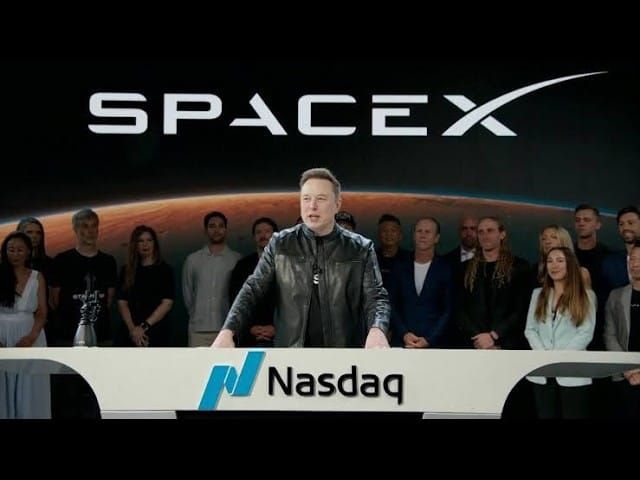
Dagogo (host of Cold Fusion) argues that SpaceX's IPO is fundamentally misleading: a healthy rocket company has been used as a wrapper for a loss-making AI business, and investors are largely unaware. He presents this as emblematic of an overheated financial market driven by AI hype.
1. SpaceX Filed as a Data Processing Company, Not a Space Company
In its S-1 filing, SpaceX chose industry code 7370 (computer programming and data processing), rather than the expected spacecraft (3760) or defence/aeronautical (3182) codes used by peers like Virgin Galactic and Boeing. This signals SpaceX is officially positioning itself as an AI data centre company.
2. 85% of SpaceX's TAM Is AI — Only 15% Is Space
The Total Addressable Market (TAM) is stated as $28.5 trillion — roughly the GDP of the United States. Crucially, only 15% of this relates to space and communications; 85% is AI. As Dagogo puts it: "85% of the company is essentially just a wrapper for yet another LLM and data centre business like Anthropic or OpenAI."
3. Largest IPO in History
SpaceX's IPO was the largest launch of any company in the history of financial markets, surpassing Amazon, Google, Alibaba, and Saudi Aramco. It hit a valuation of $2.3 trillion in the first few hours, making it the seventh most valuable company on Earth — worth approximately as much as Canada.
4. S&P 500 Rejected SpaceX; NASDAQ Accepted
- SpaceX attempted to fast-track into the S&P 500, which would have forced every 401(k) and pension fund to buy the stock — roughly $14 billion in automatic passive inflows.
- The S&P committee said no, citing SpaceX's lack of profitability in its most recent four quarters.
- Despite $18 billion in revenue in 2025 (a 33% YoY increase), SpaceX lost $5 billion that same year.
- The NASDAQ said yes, so some passive fund inflows will still be forced.
5. The xAI Merger Destroyed SpaceX's Profitability
- In 2024, SpaceX was profitable, clearing $791 million in net income — remarkable for a rocket company. Capex was a manageable 42% of revenue.
- In February 2026, SpaceX merged with xAI. Retrospective accounting then attributed a $5 billion net loss to 2025.
- xAI was losing $2 for every dollar earned, burning through ~$28 million per day.
- By Q1 2026, xAI's capex alone reached $7.7 billion (annualised pace: $30.8 billion — more than double the prior year).
- SpaceX's capex rocketed from 42% of revenue to 215% of revenue.
6. All 11 xAI Co-Founders Have Left
Musk founded xAI with 11 co-founders in 2023. All 11 have departed. Zero remain — a damning signal about internal confidence.
7. Grok Has Negligible Enterprise Market Share
Grok reportedly holds only 0.4% of enterprise use in the AI sector. Enterprise is where the revenue is. Nobody outside the X platform considers Grok a market leader.
8. Suspicious Revenue Deals
- Google partnership: Leasing GPU compute for $920 million/month, but either party can terminate with just 90 days' notice, and Google holds a 6% stake in xAI. Dagogo characterises this as circular financing designed to boost revenue numbers for the IPO.
- Anthropic deal (May 2026): xAI botched the design of its first mega data centre by using three different types of GPUs, meaning the fastest GPUs sat idle waiting for the slower ones. AI training ran at only 11% of full capacity. xAI then decided to rent out the data centre and move Grok training elsewhere.
9. Orbital Data Centres — Massive Engineering and Financial Risks
SpaceX filed with the FCC to build a space cloud of up to 1 million satellites for orbital AI compute, targeted to begin by 2028. Challenges flagged:
- Scale: The current Starlink constellation is 9,000 satellites; this would be over 100× that number.
- Space debris: Coordinating 1 million objects is fundamentally different from coordinating 9,000.
- Obsolescence: GPU technology will be outdated in ~3 years, making the orbital data centre progressively less competitive with every new Nvidia release.
- Heat dissipation: In space there is no air, water, or convection — radiating heat away is very inefficient.
- Radiation hazards:
- Cosmic rays and protons cause bit-flipping errors in memory
- Energetic solar particles can destroy unshielded GPUs
- Van Allen belt electrons degrade solar panels over time
- Solar flares can cause massive radiation spikes, potentially destroying GPUs
- Heavy radiation shielding and redundant systems would be required, adding mass and cost
10. SpaceX Itself Doesn't Believe in the Space Thesis
Even asteroid mining and Mars colonies — the visionary projects SpaceX is known for — represent only a subset of the 15% non-AI portion of the TAM. By the company's own filing, they don't really believe space is the primary business.
11. xAI as a "Trojan Horse"
Investors must scroll through 11 pages of rockets and reaching-for-the-stars imagery before reaching the financial details revealing the company is essentially floating an AI business. "xAI is essentially a Trojan horse."
Dagogo's Concluding Assessment
- The general consensus is the stock will rocket up at launch, then slowly grind downwards.
- SpaceX was a genuine world-class aerospace company with a profitable, zero-competition satellite internet business (Starlink: $11.4 billion revenue, $4.4 billion operating profit in 2025). It could have IPO'd on steady growth alone.
- Instead, the AI bug meant AI had to become 85% of the business, and a company losing nearly $1 billion/month was bundled inside a healthy one to secure public funding.
- He acknowledges he could be wrong — SpaceX could rise to a $100 trillion valuation — but as of now, it seems "very risky" with "a bad financial smell".