The System is Rigged
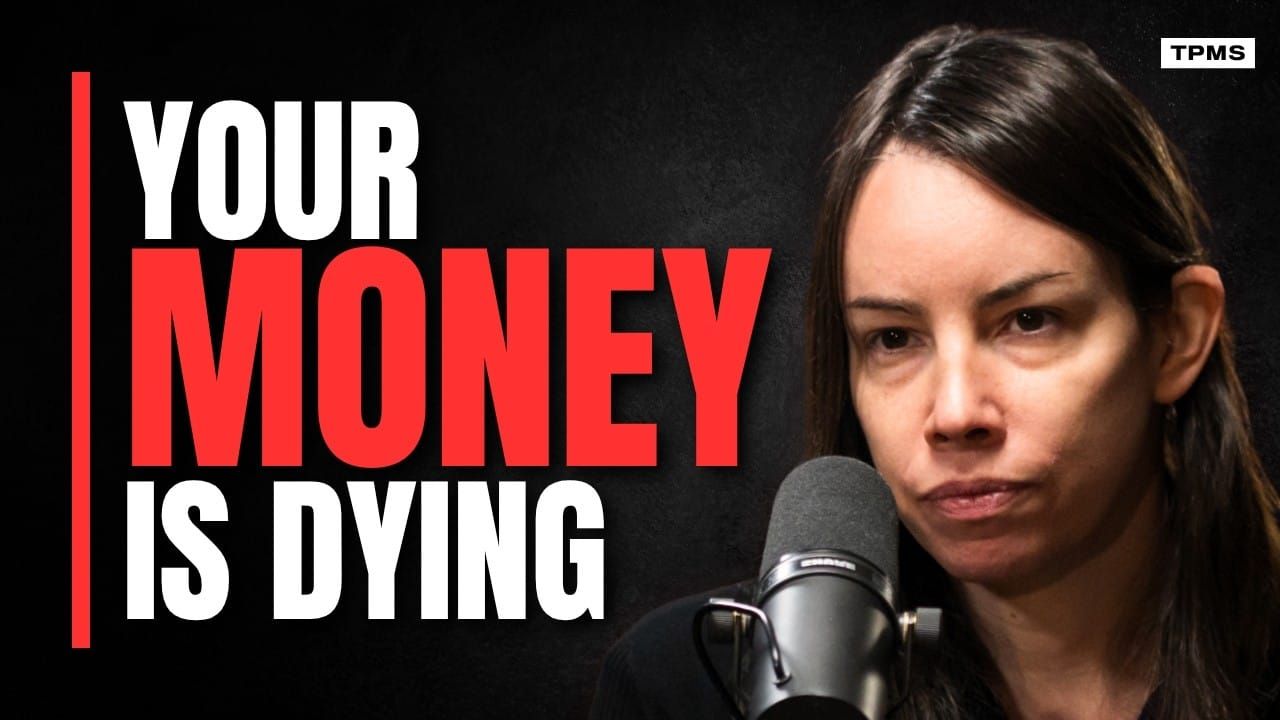
In this wide-ranging discussion, financial analyst Lyn Alden and podcast host Peter McCormack explore the mechanics of the modern financial system and why most people fail to recognize the slow-motion collapse underway. The conversation reveals uncomfortable truths about how currency debasement systematically transfers wealth upward while remaining largely invisible to the public.

The Hidden Financial Collapse
Alden argues that a "silent financial collapse" is already happening—visible not in dramatic bank failures but in the gradual erosion of purchasing power. People sense something is wrong when "everything's more expensive" and their wages "don't feel like they go as far," yet they cannot identify the cause [1]. The crisis manifests through rising populism, stagnant real wages, and savings that quietly lose value. Alden emphasizes this isn't a future prediction: "It has been mattering... currency and bonds have underperformed most other assets just because they've been devalued".
How the System Actually Works
The modern financial system operates as "one giant ledger" with two tiers: central banks manage the base ledger while commercial banks build fractional-reserve layers on top, creating roughly five times more currency than base money exists to support. This design contains a fundamental flaw: "Every currency system in the world has to grow or die, at least the way they're currently designed". Money enters existence as debt, but the interest owed is never created simultaneously—requiring perpetual expansion or collapse.
Governments almost never balance taxes with spending. Instead, they "monetize" deficits by creating new money to purchase government bonds, leaking debasement into the currency itself. This represents what Alden calls "an invisible tax on top of their normal taxing and spending authority"—one that separates "in time the downsides of decisions from those decisions being made" .
The Gold Constraint and Its Removal
For millennia, gold and silver served as "natural ledgers"—scarce, verifiable, and divisible stores of value. Governments gradually abandoned this constraint between World War I and the 1970s, first through devaluations, then by restricting gold access to foreign entities only, and finally defaulting entirely on convertibility in the 1970s. Alden notes: "Now... we just have a ledger. It's just a computer system. It's just kind of a list of ones and zeros that we use for our money".
A crucial and often overlooked factor enabled this transition: telecommunications technology. The telegraph and telephone allowed "money to flow around the world at the speed of light" while gold remained "very physical... hard to audit". This gave enormous power to financial intermediaries who could settle transactions rapidly while holding the underlying gold—a power imbalance that ultimately allowed the complete decoupling from precious metals.
The Demographic Ponzi Scheme
A significant driver of unsustainable debt levels is the structure of social insurance systems. These programs were designed assuming "every generation is going to be kind of bigger than the prior generation". When fertility rates collapsed throughout the developed world, the pyramid inverted: fewer young workers now support larger aging populations. Politicians face an impossible trilemma—cutting programs or raising taxes to pay for them is politically toxic, so "it tends to come out in the form of debt... and then debasement". Alden describes this frankly as "basically a Ponzi scheme at the end of the day".
Who Actually Wins
Perhaps the most surprising revelation concerns who profits from this system. Alden states: "The best product Coca-Cola ever sold was their bonds, not their Coke". Corporations with decades of unbroken profitability maintain massive debt loads not from necessity but from "arbitrage"—they can borrow at 2-3% while money supply grows at 7% annually, literally "shorting the currency".
This creates a stark divide:
- Governments, corporations, and wealthy individuals short currency (borrow cheaply) while owning scarce assets (real estate, equities)
- The bottom of the income stack lacks access to leverage and asset ownership, absorbing "the full damage of the inflation" through devalued wages and savings
The system requires this asymmetry. As Alden observes: "The system is based on having people hold the currency and the bonds while other people are literally shorting it". If everyone attempted to short currency simultaneously, "that would just essentially crash the system".
The Inevitable Default
Once sovereign debt reaches current levels, "there's really no way out of it other than they're going to default". In developed countries, this occurs through purchasing power destruction rather than nominal failure—paying all promised currency units that buy dramatically less than when borrowed. The process typically unfolds in two phases:
- Private sector bubble pops (2008-style crisis)
- Public sector absorbs losses through fiscal injections and quantitative easing, socializing private debt onto public balance sheets
Historical parallels suggest the current environment resembles the 1940s more than the 1930s—a period of public debt crisis, inflation, and war-driven productivity destruction.
Bitcoin's Role
Alden presents Bitcoin as occupying a unique position in the monetary hierarchy. Where developing market currencies expand at ~20% annually, developed currencies at ~7%, and gold at ~2%, Bitcoin has "zero long-term supply growth" after its issuance schedule completes. It functions as "another way of running a ledger"—decentralized rather than managed by "a council of a handful of people"—where "no one has that capability" to arbitrarily expand supply, "even the creator of it".
Legitimacy emerges through the Lindy effect: "The longer it has existed, the longer it will continue to exist". Seventeen years of operation demonstrates stability through multiple economic cycles. The trade-off is volatility—holders exchange short-term price stability for long-term scarcity protection.
Practical Advice
For individuals navigating this environment, Alden recommends:
- Taking appropriate risks to boost income
- Cutting spending on "unnecessary things" and "keeping up with the Joneses" purchases
- Investing surplus into scarce assets to escape "financial repression"
She concludes with measured optimism: despite financial system decline, "technology on average gets better over time," and "people have a lot more options now than they did decades ago". The key is understanding the game being played—recognizing that money itself has become a mechanism of wealth transfer, and positioning accordingly.