What is Gnosticism
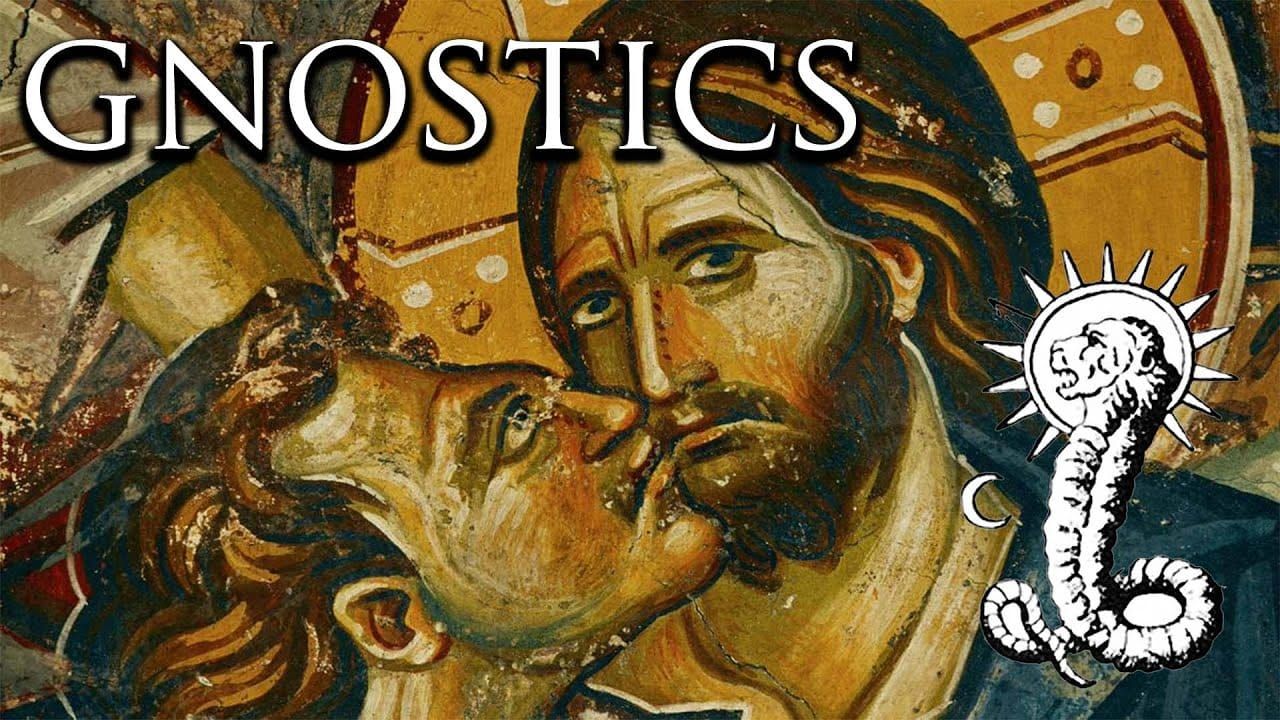
The video explores the Gnostics — an early Christian movement — drawing on the latest scholarship, especially David Brakke's The Gnostics. It argues for a narrow definition of Gnosticism: a specific school of thought within early Christianity, identified chiefly with the Sethians.

Key Points
1. Sources and the Nag Hammadi discovery
- For most of history, the only sources on the Gnostics were hostile "heresiologists" such as Irenaeus (writing c. 180 CE).
- The 1945 discovery of the Nag Hammadi library in Egypt uncovered Coptic texts written by these groups themselves, revolutionising scholarship.
- Irenaeus's polemical reports turn out to align reasonably well with the Gnostics' own writings, so he remains a relatively reliable — if biased — source.
2. "Gnosticism" is a contested category
- The word derives from Greek gnosis — intuitive, spiritual knowledge, not everyday information. Broadly used, it has covered Sufis, Hermeticists, even Clement of Alexandria.
- Three scholarly approaches:
- Universalist: Gnosticism as a wide ancient movement including Valentinians, Marcionites, Mandaeans, Manichaeans and Hermeticists.
- Sceptical: Gnosticism never existed — it is a modern, anachronistic construct.
- Middle position (David Brakke, followed in this video): a narrow definition identifying Gnosticism with the Sethian school.
3. Early Christianity was diverse, not "Orthodoxy plus heresies"
- The old model of one true church from which sects diverged has been abandoned.
- Andrew Henry (Religion for Breakfast) contributes a segment: Athanasius's 367 CE letter fixing the 27-book canon was written from a precarious position, not a dominant one (per Brakke's research). Competing Christianities thrived side by side — e.g. Valentinians formed study circles around charismatic teachers rather than parish structures.
- Epiphanius of Cyprus (Panarion) accused Gnostics of ritual cannibalism — lurid fabrications. David Frankfurter notes that accusing rivals of ritualised sex or cannibalism was a classic strategy to ostracise opponents.
- These groups were not underground: Tertullian records that Valentinus nearly became bishop of Rome; Valentinians attended ordinary churches.
- Scholars now speak of varieties of early Christianity rather than an Orthodoxy-vs-heresy binary.
4. Core Sethian Gnostic myth
Drawn chiefly from the Secret Book of John (Apocryphon of John), plus Zostrianos, Hypostasis of the Archons, Zoroaster and the later-discovered Gospel of Judas:
- At the apex is the unknowable ultimate God — the One/Monad, "the invisible Spirit", described apophatically (unnameable, immeasurable, eternal).
- From its self-contemplation emanates the Pleroma (fullness) of divine aeons, often paired male–female, totalling around 24 — aeons such as Truth, Mind, Life and above all Wisdom (Sophia).
- The first emanation is Barbelo (Forethought), the most consistently attested figure across texts. With the invisible Spirit she begets the Self-Originate (Christ), forming a triad of Father, Mother and Son.
- Sophia's fall: she creates without her partner's or the Spirit's consent, producing a misshapen pseudo-divine being — Yaldabaoth (also Saklas or Iao), snake-bodied, lion-faced — hidden in a cloud.
- Yaldabaoth, ignorant of the true Pleroma, creates the material world, believing himself the only god. Hence the God of the Hebrew Bible is not the true God — a radical rereading. His jealous boast "there is no other God apart from me" paradoxically gives him away.
- Adam receives a divine spark when Yaldabaoth is tricked into breathing his spirit into him.
- Seth, conceived purely (unlike Cain and Abel), is the bearer of gnosis — the ancestor of the Gnostics, who call themselves the "seed of Seth".
- The serpent is a helpful messenger from the Pleroma, not a deceiver — the mainstream reading inverted.
5. Christology and salvation
- The Gnostics were Docetists: Jesus only seemed to have a material body and did not truly suffer on the cross.
- Jesus saves not by his death but by teaching gnosis — knowledge of humanity's true identity and divine home, freeing us from the material prison.
6. Practices
- A distinctive baptism involving the "five seals" (exact meaning uncertain), possibly repeated at successive spiritual stages.
- Ascent practices: contemplation of progressively higher aeons, up to Barbelo and, imperfectly, the invisible Spirit itself; combined with asceticism and study of mystical-philosophical works.
- They rejected the Eucharist as foolish — mocked in the Gospel of Judas, where Judas alone recognises Jesus's true origin ("the immortal realm of Barbelo").
7. Related movements
- Valentinians (after Valentinus of Alexandria): borrowed and simplified the Gnostic myth in more Christian terms; less world-negating; blended into ordinary congregations; Irenaeus's chief target. Texts: Gospel of Truth, Tripartite Tractate.
- Marcionites: shared the demiurge idea, but their creator was "unrelentingly just" rather than evil; the highest God is "the Stranger"; Marcion rejected the Old Testament entirely (unlike the Gnostics, who kept it for teaching) and produced the first attempted New Testament canon.
- Later echoes: Manichaeism, Mandaeism, and possibly the medieval Cathars; the video closes by noting modern revivals of interest and even self-identified Gnostics today.
Citations (as given in the video)
- David Brakke, The Gnostics — narrow definition; Athanasius writing from a precarious position; aeons as the invisible Spirit's self-knowledge.
- Andrew Henry (Religion for Breakfast) — Athanasius's 39th Festal Letter (367 CE) and canon formation; competing varieties of Christian authority.
- David Frankfurter — ritual-slander as a social strategy against religious rivals.
- Primary texts: Secret Book of John, Gospel of Judas, Gospel of Truth, Tripartite Tractate, Gospel of Thomas, Zostrianos, Hypostasis of the Archons; Irenaeus, Detection and Overthrow of Gnosis Falsely So-Called (Against the Heresies, c. 180); Epiphanius, Panarion; Tertullian.