What is keeping you back?
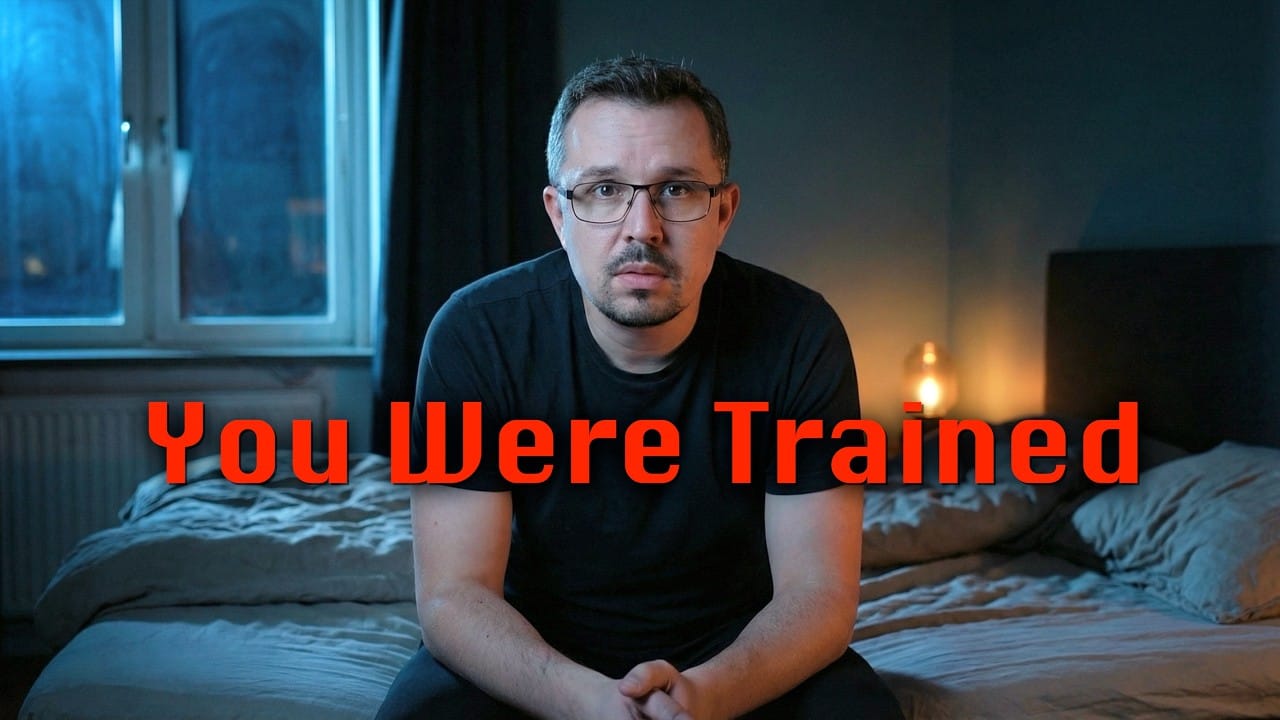
Tom's monologue is a deeply personal reflection on how fear keeps people trapped in jobs they hate, drawing from his father's experience and his own journey toward entrepreneurship. The speech weaves together family history, media critique, and practical advice about breaking free from what he calls the "fear economy."

The Core Argument
Tom argues that people stay in miserable jobs not because of laziness or lack of ambition, but because of systematically manufactured fear. He describes how constant media narratives about climate disaster, economic collapse, war, and health crises create an ambient anxiety that makes "job security" feel like the ultimate virtue—even when that job is actively destroying your health and happiness.
Significant and Surprising Points
- The fear is infrastructure, not emotion: Tom describes fear as "the invisible architecture holding your entire working life together"—a deliberate system that keeps people obedient without anyone needing to explicitly threaten them.
- Statistical reality contradicts perceived danger: Despite constant apocalyptic messaging, Tom notes that by almost every measurable standard—starvation, extreme poverty, war, violent crime, medical advances—the world has never been safer. Yet people feel more anxious than ever.
- The "fear economy" serves employers: Tom suggests that anxious employees don't take risks, grip their paychecks tighter, and stay put. The system doesn't need to threaten workers explicitly when ambient fear does the work automatically.
- Inflation as a control mechanism: Tom presents a provocative theory that inflation running faster than wages keeps people perpetually dependent—always one step behind, always needing the next paycheck, never building real savings that would create options.
- His personal health crisis at work: Tom reveals he experienced stress-induced high blood pressure with chest pains at age 30, went to the emergency room thinking he was dying, and felt angry at himself rather than relieved—because his body had been warning him.
- The $1 challenge and rapid success: After quitting news consumption and focusing on his YouTube channel, Tom's subscriber count grew from 63,000 to 90,000 in weeks. By February, he earned twice his consulting salary from YouTube alone.
- His father's final project: Tom's father, an engineer who spent decades building houses for others under bosses he resented, finally discovered his true passion was building on his own terms. He constructed rental apartments on his property to generate passive income—but died of cancer before completing it. Tom reframes this not as tragedy but as "a warning" and "a gift" showing what a lifetime of fear looks like, and what ignoring it looks like.
- The ladder metaphor: Tom shares that he overcame a severe fear of heights by climbing a ladder to clean gutters despite shaking hands and dizziness. This experience taught him that "the catastrophe that I had imagined never happened"—a lesson he applied to starting his business.
- Age and capability: At 44, Tom reports feeling "more capable, more clear, and more in control than I have ever been in my entire life"—directly contradicting narratives about declining potential with age.
- The honest response to his boss finding out: When asked if he fears his employer discovering his channel, Tom says "I hope they find out" because "the one thing I want more than anything is more time to work on this."
The Central Insight
Tom's key message is that fear is information, not command. You don't need fear to disappear—you just need it to lose the power to decide for you. His closing line encapsulates this: "The ones who built something lasting didn't wait for the storm to pass. They learned to build in the rain."